
If your garden sits on heavy clay soil, you already know the feeling: in spring it’s a sticky lump you can’t dig, and in summer it bakes into a cracked plate that sheds water. I inherited exactly that when I took over a narrow backyard bed, and my first season was a failure — I dumped a bag of sand into a wet hole, tried to plant tomatoes, and watched them sulk and rot at the stem while the soil turned to something between glue and concrete. Clay is not a death sentence, though; it’s actually full of nutrients, it just needs structure. The fix is not one magic product but a handful of amendments added in the right order and, above all, time. In this guide I’ll walk you through what I add to clay now, why sand alone is a trap, and the realistic timeline for turning it into soil your plants actually like.
Quick answer: the single best thing to add to clay soil is organic matter — compost, shredded leaves, and bark — worked in yearly, because it opens the structure so air and water move. Add gypsum only if a soil test shows sodium or your clay is the tight, dispersive kind; it won’t help every clay. Use coarse sand or grit, never fine sand, and only alongside plenty of organic matter. Expect the first season to feel softer and drain better, but real structural change takes two to three years of repeated addition, not one weekend. Everything below explains the order and the timing.
- 1. Knowing You Actually Have Clay Soil
- 2. Organic Matter Is the First Thing to Add
- 3. Gypsum: What It Does and When It Helps
- 4. Coarse Sand and Other Mineral Amendments
- 5. How to Actually Mix Amendments Into Clay
- 6. How Long Before You See a Difference
- 7. What NOT to Add (and Mistakes I Made)
- 8. Using Improved Clay in Containers and Beds
- 9. Troubleshooting: Symptoms, Causes and Fixes
- 10. FAQs
- 11. Sources and Further Reading
Knowing You Actually Have Clay Soil
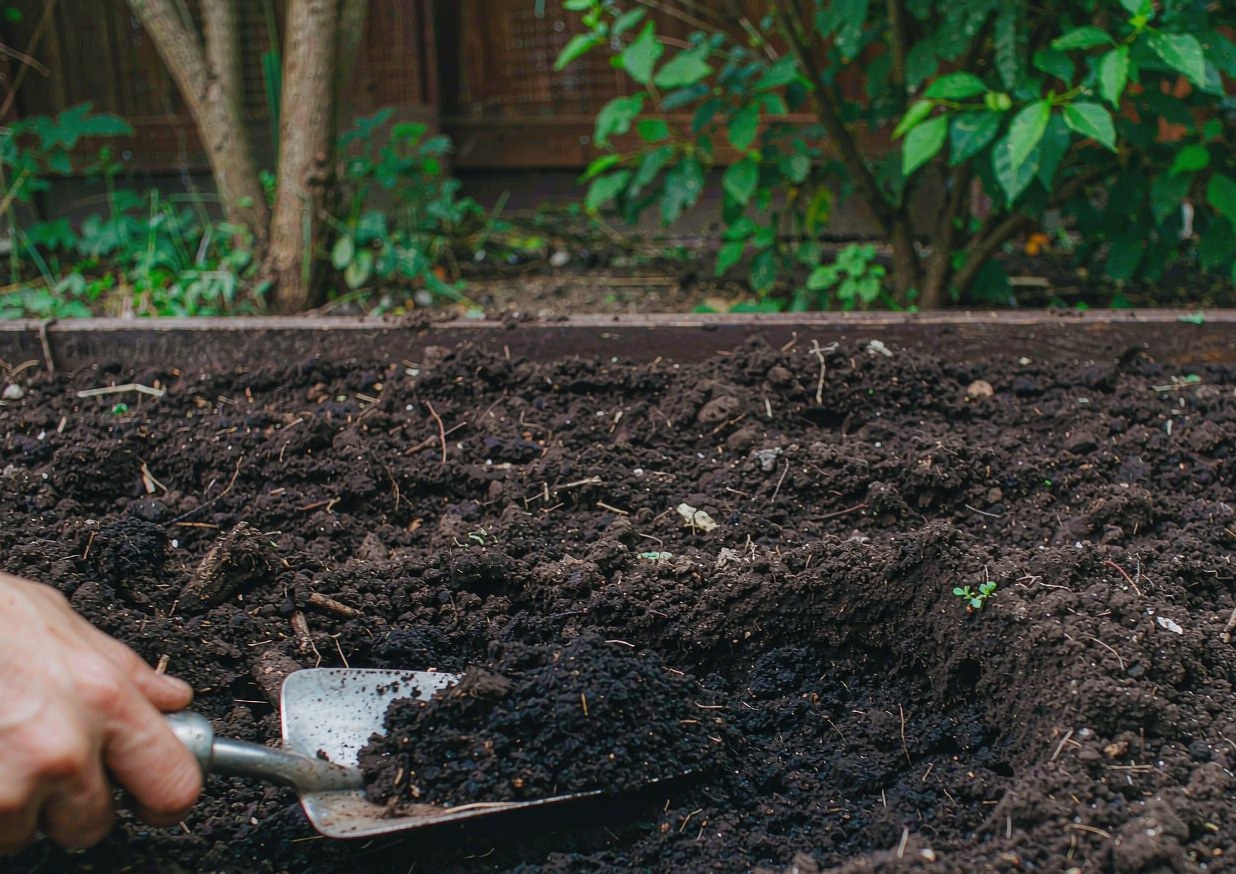
The ribbon test and the squeeze test
Before you spend a cent on amendments, confirm you actually have clay and not just compacted dirt. The cheapest test is in your hand. Take a moist handful of soil, squeeze it, and try to roll it into a ribbon between thumb and finger.
I did this the first year and was surprised: my “hard” soil rolled into a long ribbon that held its shape — that’s the clay signature. Sandy soil falls apart and won’t ribbon at all; loam makes a short ribbon that breaks easily; clay makes a long, sticky one. The University of Illinois Extension soil page walks through exactly this. A second check is the jar shake: soil in a jar of water, shaken and left overnight, layers into sand at the bottom, silt in the middle, and clay as a thin film on top — a thick clay film confirms it. Confirm the type first because the treatment for sand and the treatment for clay are opposites, and guessing wastes a season. Get the diagnosis right and every product you buy after this actually fits your ground.
Why clay holds water and nutrients (the double-edged sword)
The reason clay behaves the way it does is particle size. Clay particles are tiny and plate-like, so they pack tight and leave almost no air space, which is why water sits on top instead of soaking in, and why roots struggle to push through.
But there’s a real upside, and it’s why I didn’t rip mine out: those same tiny particles carry a huge surface charge that holds onto nutrients better than any sandy soil. Clay is naturally fertile — it just locks the fertility behind bad structure. Once I understood that, my goal changed from “replace the clay” to “open the clay up,” because the nutrition was already there. The NC State Extension Gardener Handbook explains how clay’s cation exchange works without the jargon. Work with that double edge — keep the fertility, fix the structure — and you end up with better soil than a sandy yard ever gives you for free.
Organic Matter Is the First Thing to Add
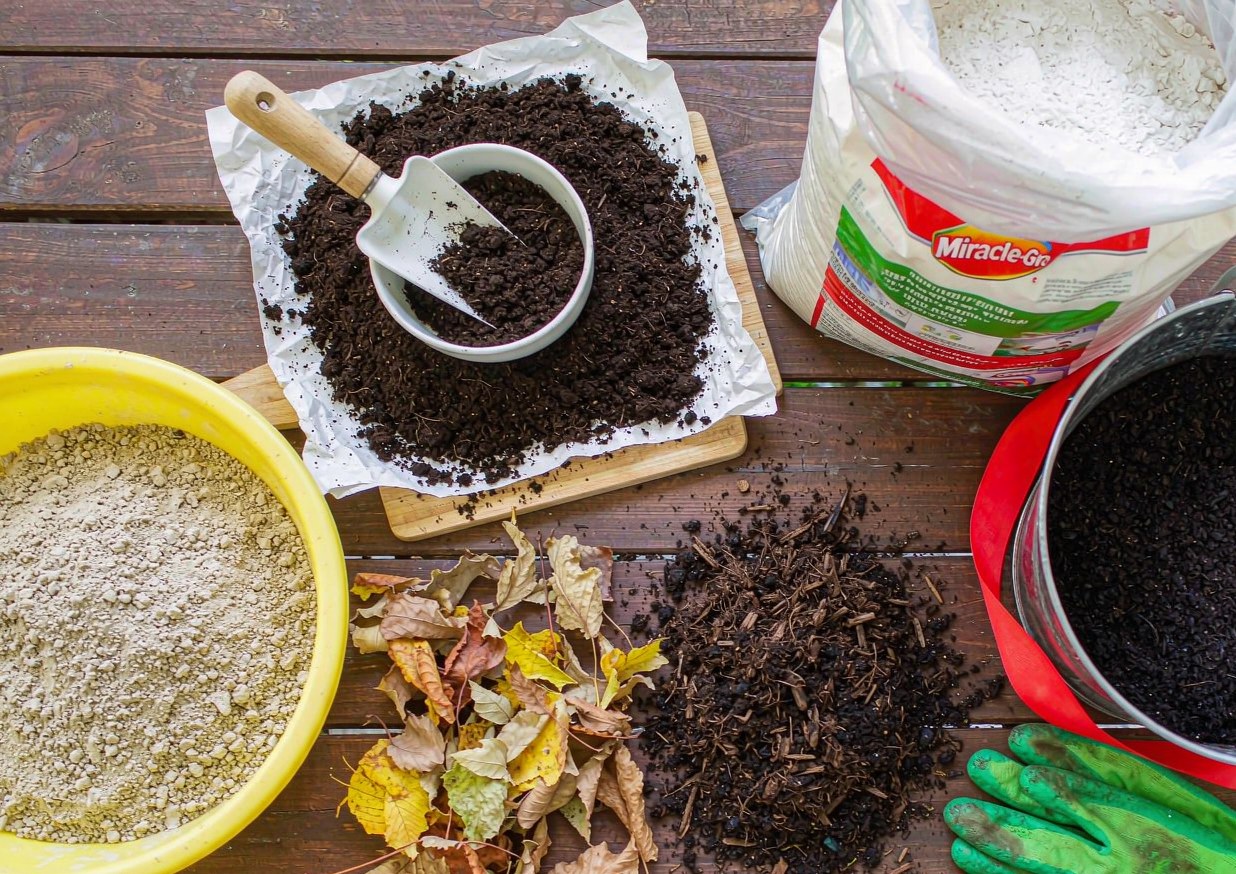
Compost: how much and how often
If you add only one thing to clay, make it compost. Finished compost is the single most reliable structure-builder: its particles glue clay plates into clumps (aggregates), opening pores for air and water. I add a 2- to 3-inch layer of compost to my beds every fall and again lightly in spring.
How much is enough? For a new bed I work in roughly one part compost to three parts native soil the first year, then top-dress an inch or two annually after that. The Michigan State guide to improving clay soils recommends exactly this steady, repeat approach rather than one giant dose. My first bed got a single spring dumping and looked great for a month, then re-compacted — I’d under-done it. Now I treat compost like an annual subscription, not a one-time fix, and the beds stay open year after year. Buy it by the cubic yard if you have the space, or make your own in a worm bin or pile; either way, compost is the foundation everything else builds on.
Shredded leaves, bark and grass clippings
Compost is the headline, but other organic matter does the day-to-day work of keeping clay loose. Shredded leaves are my favorite free amendment — I run fall leaves through a mower, pile them on the beds, and let winter break them down. Bark (not fresh, which steals nitrogen) adds long-lasting structure to the bottom of a bed.
I also use grass clippings in a thin layer, but never thick and never from a lawn recently sprayed with herbicide — that’s how I once set back a whole pepper row. The key is variety: leaves feed the soil food web, bark holds pores open for years, and green clippings add quick nitrogen. A friend swore by fresh wood chips dug into clay and wondered why nothing grew for a season; the chips tied up nitrogen as they broke down. Use aged or shredded material on the surface and you avoid that trap. Mix these in with your compost and the clay stops being a monolith and starts behaving like soil.
Gypsum: What It Does and When It Helps
Gypsum vs. lime — they are not the same
Gypsum (calcium sulfate) is the amendment people reach for next, but it’s the most misunderstood. Gypsum does one specific job: it supplies calcium that can displace sodium on clay particles, letting tight, sodic clay disperse and loosen. It does not change pH, and that’s the part everyone mixes up with lime.
I keep the two straight by remembering that garden lime raises pH (sweetens acid soil) and gypsum does not — so if your clay is already alkaline, lime will make it worse while gypsum may still help structure. The Michigan State gypsum explainer is blunt that gypsum is useless on most home gardens that don’t have a sodium problem. I tested my soil before buying any, and that test saved me from a pointless bag. Know which one you need — and whether you need either — before you spend, because gypsum is a targeted tool, not a default clay cure.
When gypsum is worth it (and when it isn’t)
The honest answer is that gypsum helps only certain clay. If a soil test shows high sodium or your clay forms a surface crust that seals water out, gypsum can break that crust and improve infiltration. On ordinary, non-sodic clay, research and my own beds show it does little you couldn’t get from compost.
In my yard gypsum was a dud — no sodium issue, so the beds looked the same after two applications, and I’d wasted the money. Where it shines is the tight, pan-like clay that sheds water in beads; there, a few pounds per hundred square feet can open the top inch. The Oregon State Extension gardening resources echo that organic matter should come first and gypsum only when a test points to sodium. Spend on the test, not the guess, and gypsum earns its place only if the numbers say so.
Coarse Sand and Other Mineral Amendments
Why fine sand makes clay worse
Here is the trap I fell into on year one, and it’s the most common clay mistake: adding fine sand. Mixed into clay in small amounts, fine sand fills the gaps between clay particles and, with a little water, sets into something close to concrete. You literally make brick.
The rule I now follow is that if you use sand at all, it must be coarse builder’s sand or grit, and it must go in at a high ratio — roughly half sand to half soil — alongside heavy organic matter, not a hopeful sprinkle. My first “sand fix” used play sand by the cupful and turned a corner of the bed into the hardest lump in the garden. The MSU clay-soil guide warns explicitly against small sand additions for this reason. If you can’t commit to a large volume of coarse sand plus compost, skip sand entirely — compost alone outperforms a bad sand job every time.
Grit, perlite and biochar
If you want a mineral that opens clay without the brick risk, reach for grit or horticultural perlite. Coarse grit (sharp sand, poultry grit) holds pores open like sand should, and perlite is light and never sets up. For containers I lean on perlite because it keeps mixes airy without weight.
I’ve also started mixing a little biochar into my clay, and it’s a quiet winner: the charcoal chunks hold both water and microbes in their pores and resist compaction for years. A caution, though — raw biochar can tie up nitrogen for a season, so I “charge” it first by soaking it in compost tea or mixing it with finished compost before it goes in. A friend added dry biochar straight to seedlings and they yellowed from nitrogen starvation, so learn from that. Use grit, perlite, or charged biochar and you get the pore-opening of mineral amendments without the concrete risk of fine sand.
How to Actually Mix Amendments Into Clay
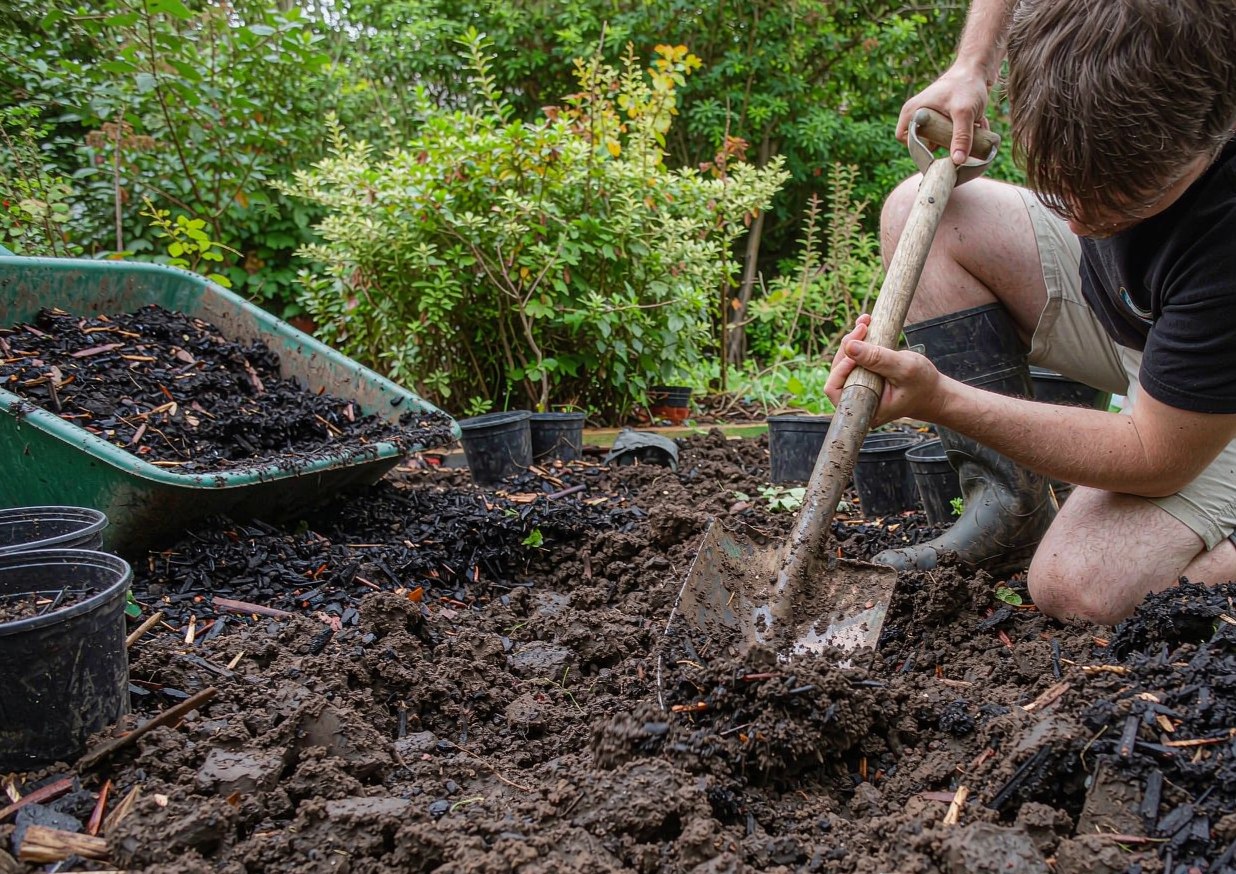
The no-till / lasagna layering method
When it’s time to actually combine amendments with clay, the gentlest method is lasagna layering (also called no-dig). You lay compost, leaves, and a little grit on top of the bed and let worms and weather pull it down, instead of churning the soil.
I switched to lasagna layering after years of fighting a fork through wet clay, and my back thanks me. The approach: in fall, lay cardboard over weeds, then 3 inches of compost, then a leaf layer, repeated. By spring the bottom is dark and crumbly without me ever flipping the clay. The NC State handbook notes that minimizing disturbance protects soil structure and the life in it. One year I tried to “help” by tilling the layers in and just re-compacted the wet clay underneath — less is more here. Layer on top and let biology do the mixing; it’s slower to start but builds better soil than any digging.
Digging and double-digging for a new bed
Sometimes you do need to dig — a brand-new bed on untouched clay, or a spot so tight that layering alone won’t open it in one season. For those, double-digging (loosening two spade-depths and working amendments into the lower layer) is the thorough route.
I double-dug one bed when I installed a perennial border, because I wanted roots to reach deep from day one. The method: lift the top spit of soil, loosen the clay below with a fork, mix compost and grit through both layers, then replace the top. It’s hard work but it transforms the structure immediately rather than over years. The catch — and it’s the one that bit me — is to dig only when the soil is damp, not wet; squeezing a clod that smears means stop. Dig wet clay and you polish it into a slick, impermeable pan. Dig at the right moisture and you get a bed that drains from the first rain.
How Long Before You See a Difference
What changes in the first season
The question everyone asks is how long, and the honest first answer is: you’ll feel a difference in one season but you won’t have “fixed” clay in one season. After the first compost addition, the surface digs easier, water stops pooling, and seedlings emerge better.
On my worst bed, year one brought the biggest visible win — the top 6 inches went from a sticky ball to something I could actually fork, and my beans stopped rotting at the stem. But the subsoil was still clay, and a heavy rain still puddled for a day. The MSU guide is clear that one application changes the top layer, not the whole profile. Set your expectations at “better this year, transformed later,” and you won’t quit in frustration when the deep clay reminds you it’s still there. The first season is proof the method works; the rest is repetition.
The three-year timeline to real structure
The realistic timeline for real structural change in clay is two to three years of steady amendment. Each year’s compost feeds the soil food web — earthworms, fungi, bacteria — that physically glues clay into stable aggregates, and that biology takes seasons to establish. A useful way to picture it: in year one you’re loosening the top few inches; in year two the aggregation reaches deeper as roots and worms pull organic matter down; by year three the whole cultivated layer holds its crumb structure through both a soaking rain and a dry spell, which is the moment clay stops fighting you.
I mark progress by the worm count: year one had maybe one worm per forkful; by year three my beds had several, and the soil smelled earthy and broke into crumbs instead of clods. That’s the signal the structure has truly changed, not just the surface. A friend expected a single spring of work to “fix” her clay and gave up when August still cracked — she’d misjudged the clock. Another signal I watch is how far a screwdriver pushes in after a rain: on untouched clay it stops cold at an inch, while an improved bed lets it slide in to the hilt. Commit to three autumns of compost and you cross a line where the bed largely maintains itself. Plan for years, not weekends, and clay becomes a feature, not a flaw.
What NOT to Add (and Mistakes I Made)
Too much sand, too little organic matter
The first mistake to avoid is the sand trap I described: a little fine sand plus no compost equals concrete. The second is the mirror image — piling on sand or grit without the organic matter that actually builds structure, so you get a gritty but still-tight mix.
My rule now is organic matter first, always. Every mineral I add — grit, perlite, gypsum — goes in on top of a compost base, never instead of it. The one bed where I cheated and used mostly sand “to save money” is still the worst in the garden three years later; the compost beds sailed past it. The Oregon State gardening resources consistently rank organic matter above any mineral fix for clay. Keep minerals as a supporting actor and compost as the star, and you won’t repeat my expensive mistake.
Tilling wet clay into a brick
The second mistake is a timing one: tilling or digging clay when it’s wet. Wet clay smears instead of breaking, and a tiller smears it into a slick pan that sheds water worse than before you started. I did this once with a rented tiller in April mud and spent the next two seasons undoing a sealed surface.
The test is simple — grab a handful and squeeze. If it forms a shiny, smeary ribbon that holds a thumbprint, it’s too wet; wait for the day it crumbles at the edges but doesn’t dust away. Dry clay is nearly as bad to work, so aim for that damp-spongy window. Also, go easy on repeated deep tilling even when dry: every pass destroys aggregates and buries organic matter too deep. A friend tilled his clay three times in a season “to be sure” and ended up with the hardest bed on the block. Till once, at the right moisture, then leave it alone and let the worms finish.
Using Improved Clay in Containers and Beds
Raised beds vs. in-ground clay
If your native clay is truly punishing, the fastest path is a raised bed filled with a good mix on top of it, rather than fighting the ground itself. You still improve the clay underneath over time, but your plants grow in imported soil from day one.
I built two raised beds over my worst clay and filled them with a third compost, a third coarse sand, and a third of the native soil I’d forked and amended — and those beds outperformed my in-ground ones for the first two years. The MSU guide notes raised beds sidestep drainage problems that clay causes. The trade-off is cost and the fact you’re not fixing the underlying soil, just bypassing it — so I still top-dress the in-ground areas to slowly catch up. Choose raised beds when you want results this season and don’t mind the build; choose in-ground amendment when you want to improve the whole yard for the long haul.
Reading your soil each season
Once clay is on the mend, the habit that keeps it there is reading the soil every season rather than following a fixed recipe. Spring tells you drainage; summer tells you if it baked; fall is the time to add more organic matter.
I keep a one-line note per bed each fall — “still puddles after rain” or “crumbles nicely now” — and let that drive what I add. This caught a spot where gypsum had done nothing and compost was lagging, so I doubled the leaf mulch there and it caught up. The NC State handbook treats soil management as an ongoing observation, not a one-time job. Watch your own beds and you’ll add exactly what each one needs, instead of what a blog said worked for someone else’s ground. That feedback loop is what finally turned my concrete yard into a garden.
A simple check I do each spring is the screwdriver test: after a soaking rain, push a long screwdriver into the bed. On heavy clay it stops within an inch and refuses to go further; on soil that’s improving, it slides down to the handle with only modest pressure. I write the depth next to my note, and over three years I watched that number climb from one inch to eight — the most honest measure of structure I have, because it tests the whole cultivated layer, not just the top I can see. Do that twice a year and you’ll know, without guessing, whether this autumn’s compost actually moved the needle.
Troubleshooting: Symptoms, Causes and Fixes
Most clay-soil problems show up within a season, and nearly all trace back to structure, not fertility. This is the table I keep by the shed.
| Symptom | Likely cause | Fix |
|---|---|---|
| Water pools on top for a day after rain | Surface crust or un-amended clay | Top-dress 2-3 in compost; avoid fine sand; aerate with a fork when dry |
| Soil bakes into cracks in summer | Low organic matter, no mulch | Add compost annually; keep a leaf or bark mulch layer through heat |
| Soil sets harder after tilling | Dug or tilled when wet | Wait for damp-not-wet; fork only the top; let worms do the rest |
| Clay got tighter after adding sand | Fine sand in small amounts | Stop sand; add compost heavily; use coarse grit only in large volume |
| Seedlings yellow after adding biochar | Uncharged biochar tied up nitrogen | Charge biochar in compost tea first; top-dress with compost next season |
| Nothing changed after gypsum | No sodium problem; gypsum not needed | Soil test; switch spend to compost and leaf mulch instead |
FAQs
What is the best thing to add to clay soil?
Organic matter — finished compost above all, plus shredded leaves and aged bark. Compost glues clay particles into aggregates that let air and water move, which is the structural change clay actually needs. Add a 2- to 3-inch layer each fall and a light top-dress in spring, and the beds open up over two to three years. Minerals like coarse grit or gypsum are supporting actors, not the main fix. The mistake is reaching for sand or lime first; compost is what reliably works on every clay. Build the habit of yearly compost and you’ll see the biggest, most lasting improvement.
Will sand break up clay soil?
Only if it’s coarse sand or grit, and only in a large amount mixed with plenty of compost. A small amount of fine sand added to clay fills the gaps between particles and, with water, sets into something like brick — worse than you started. I learned this the hard way with play sand in year one. If you can’t commit to roughly half coarse sand to half soil plus heavy compost, skip sand entirely and use compost, grit, or perlite instead. Coarse builder’s sand or poultry grit holds pores open; fine sand seals them. Choose the right grade and the right ratio, or don’t use sand at all.
How long does it take to improve clay soil?
You’ll feel a real difference in the top layer within the first season after adding compost — easier digging, less pooling, better seedlings. But true structural change through the root zone takes two to three years of steady amendment, because the soil life that builds stable aggregates needs seasons to establish. One application changes the surface; repetition changes the profile. Mark progress by worm count and how the soil breaks into crumbs rather than clods. Plan for autumns of compost, not a single weekend, and clay becomes a manageable, fertile feature instead of a flaw.
Should I add gypsum or lime to clay?
They do different things, so the answer depends on your soil test. Gypsum (calcium sulfate) can help tight, sodic clay by displacing sodium and loosening the surface, but it does nothing for most home clay that isn’t sodium-heavy. Lime raises pH and should only be used if a test shows your soil is too acidic — on already-alkaline clay, lime makes things worse. I tested my soil before buying either and found gypsum was a dud for my yard. Get a soil test first; spend on compost unless the numbers point to a specific mineral need. Don’t guess between the two, because they’re not interchangeable.
Can I just build a raised bed over clay instead?
Yes, and for a punishing clay it’s the fastest route to results this season. Fill raised beds with a mix of compost, coarse sand, and a little of your amended native soil, and plants grow in good ground from day one while you slowly improve the clay underneath. The trade-off is cost and that you’re bypassing, not fixing, the underlying soil — so keep top-dressing the in-ground areas too. I built two raised beds over my worst clay and they outperformed my in-ground beds for the first two years. Choose raised beds when you want speed and don’t mind the build; choose in-ground amendment when you want to improve the whole yard long-term.
Sources and Further Reading
- Michigan State University — Improving Clay Soils
- University of Illinois Extension — Soil
- Oregon State University Extension — Gardening
- NC State Extension Gardener Handbook
- Michigan State University — Gypsum for Lawns and Gardens
About the author
Samantha has been gardening and arranging her own cut flowers for more than ten years, and has built more than 30 centerpieces from grocery-store bunches, clippings off the cedars behind her house, and a handful of dollar-store experiments that didn’t work. She writes practical, low-cost guides for beginners, including the versions that failed. Prices quoted in her articles are what she actually paid at US grocery and craft stores; nothing is sponsored and no brand pays for a mention. She is not a certified florist, a veterinarian or a horticulturist, and says so wherever a topic touches on plant safety or pet health.
Published: Oct 28, 2026 · Last updated: Oct 28, 2026.
{
“@context”: “https://schema.org”,
“@graph”: [
{
“@type”: “Article”,
“headline”: “What to Add to Clay Soil and How Long It Takes to Improve”,
“description”: “The best thing to add to clay soil is organic matter such as compost, added yearly; gypsum only helps sodic clay, and fine sand makes clay worse. Expect the top layer to improve in one season and real structure in two to three years.”,
“image”: [
“images/clay-soil-hero-clean.jpg”,
“images/clay-soil-materials-clean.jpg”,
“images/clay-soil-process-clean.jpg”
],
“author”: { “@type”: “Person”, “name”: “Samantha” },
“publisher”: { “@type”: “Organization”, “name”: “Samantha” },
“datePublished”: “2026-10-28”,
“dateModified”: “2026-10-28”,
“mainEntityOfPage”: {
“@type”: “WebPage”,
“@id”: “https://gmmur.com/2026/10/28/what-to-add-to-clay-soil-and-how-long-it-takes”
}
},
{
“@type”: “FAQPage”,
“mainEntity”: [
{
“@type”: “Question”,
“name”: “What is the best thing to add to clay soil?”,
“acceptedAnswer”: {
“@type”: “Answer”,
“text”: “Organic matter, finished compost above all, plus shredded leaves and aged bark. Compost glues clay particles into aggregates that let air and water move. Add a 2- to 3-inch layer each fall and a light top-dress in spring. Minerals like coarse grit or gypsum are supporting actors, not the main fix. Build the habit of yearly compost and you see the biggest, most lasting improvement.”
}
},
{
“@type”: “Question”,
“name”: “Will sand break up clay soil?”,
“acceptedAnswer”: {
“@type”: “Answer”,
“text”: “Only coarse sand or grit, and only in a large amount mixed with plenty of compost. A small amount of fine sand fills the gaps between clay particles and sets into something like brick. If you cannot commit to roughly half coarse sand to half soil plus heavy compost, skip sand and use compost, grit, or perlite. Fine sand seals clay; coarse grit holds pores open.”
}
},
{
“@type”: “Question”,
“name”: “How long does it take to improve clay soil?”,
“acceptedAnswer”: {
“@type”: “Answer”,
“text”: “You feel a real difference in the top layer within the first season after adding compost, but true structural change through the root zone takes two to three years of steady amendment, because the soil life that builds stable aggregates needs seasons. One application changes the surface; repetition changes the profile. Plan for autumns of compost, not a single weekend.”
}
},
{
“@type”: “Question”,
“name”: “Should I add gypsum or lime to clay?”,
“acceptedAnswer”: {
“@type”: “Answer”,
“text”: “They do different things. Gypsum can help tight, sodic clay by displacing sodium, but does nothing for most home clay without a sodium problem. Lime raises pH and should only be used if a test shows the soil is too acidic; on already-alkaline clay, lime makes things worse. Get a soil test first and spend on compost unless the numbers point to a specific mineral need.”
}
},
{
“@type”: “Question”,
“name”: “Can I just build a raised bed over clay instead?”,
“acceptedAnswer”: {
“@type”: “Answer”,
“text”: “Yes, and for punishing clay it is the fastest route to results this season. Fill raised beds with a mix of compost, coarse sand, and a little amended native soil, and plants grow in good ground from day one while you improve the clay underneath. The trade-off is cost and that you bypass rather than fix the underlying soil. Choose raised beds for speed; choose in-ground amendment to improve the whole yard long-term.”
}
}
]
}
]
}