
If you have ever pinned a “perfect companion planting chart” to your fridge and then watched half your crops still get eaten, you know the feeling I had my second summer gardening. I had planted marigolds by every single vegetable, tucked basil under every tomato, and interplanted so aggressively that I could not tell where one bed ended and the next began. The pests still came, the yields were middling, and I had wasted a season chasing a system I did not understand. The truth — the one I wish someone had handed me — is that companion planting works, but only for a handful of pairings with a real mechanism, and most of the famous charts are folklore dressed up as fact. In this article I walk through what I now plant next to what, what I keep far apart, how I test a pairing in a tiny space, and the pet-safety rule I refuse to skip, all from my own small-yard trials.
Quick answer: companion planting helps most when it does one of three jobs — confuses pests, attracts pollinators and beneficial insects, or makes efficient use of space. The pairings worth your time in a small garden are basil with tomatoes, carrots with onions or leeks, marigolds and nasturtiums as trap crops, and a border of pollinator flowers around the bed. What to avoid is just as important: keep fennel isolated, do not crowd two heavy feeders like corn and tomatoes together, and ignore any chart that promises pest-proofing with no mechanism. Everything below explains how I run it in a 4×4 bed and a few pots.
- 1. What Companion Planting Actually Means
- 2. The Pairings That Genuinely Work in a Small Garden
- 3. Flowers That Earn Their Space
- 4. What to Keep Apart
- 5. Companion Planting in Containers and a Tiny Yard
- 6. Pet Safety When You Plant Alliums and Nightshades
- 7. Common Mistakes That Waste the Season
- 8. How to Test a Pairing Yourself
- 9. Do “Smell Masking” Claims Hold Up?
- 10. Companion Planting for Pest Control vs. Pollinators
- 11. When a Single Crop Beats the Mix
- 12. Troubleshooting: Symptoms, Causes and Fixes
- 13. FAQs
- 14. Sources and Further Reading
What Companion Planting Actually Means (and the Hype to Ignore)
Where the idea came from
Companion planting is older than any seed catalog. The classic example everyone cites is the Three Sisters — corn, beans and squash grown together by many Indigenous North American growers, where the corn gives the beans a pole, the beans fix nitrogen, and the squash shades the soil. That system has a real logic to it. What got lost in translation is that modern “companion charts” inflated a few solid examples into a hundred rules, many of which nobody has ever tested. I fell for the charts first, and my over-planted beds were the price of that faith. The Oregon State Extension gardening pages are refreshingly blunt that many companion claims lack evidence and should be tested, not assumed.
My own first season was a textbook case of chart-following. I printed a single graphic that promised twenty pairings, taped it to the fridge, and obeyed it line by line: beans next to onions (they sulked), cabbage next to tomatoes (they fought for light), dill next to everything (it bolted and shaded the lettuce). By midsummer the bed was a tangle and my harvest was the smallest of the three years I have gardened. The lesson landed hard: a chart is someone else’s untested opinion unless it names a mechanism. After that season I threw the printout away and rebuilt my plan from the three mechanisms above, and the next year’s yields recovered. I tell that story because the temptation to trust a pretty infographic is exactly what costs beginners a season.
What the science actually supports
When you strip away the folklore, three mechanisms show up again and again. First, pest confusion: strong-scented plants can mask the smell of a crop from insects. Second, trap cropping: a plant pests prefer more than your crop draws them away. Third, habitat for beneficials: flowers bring in the predators that eat your pests. Those are the only three I trust, and every pairing I keep has to do at least one of them. The Michigan State Extension companion-planting overview lays out the same cautious framing: use it where it works, skip the superstition. That mindset turned companion planting from a chore into a tool.
 Photos provided by Pixabay
The Pairings That Genuinely Work in a Small Garden
 Photos provided by Pixabay
Basil and tomatoes — the classic that holds up
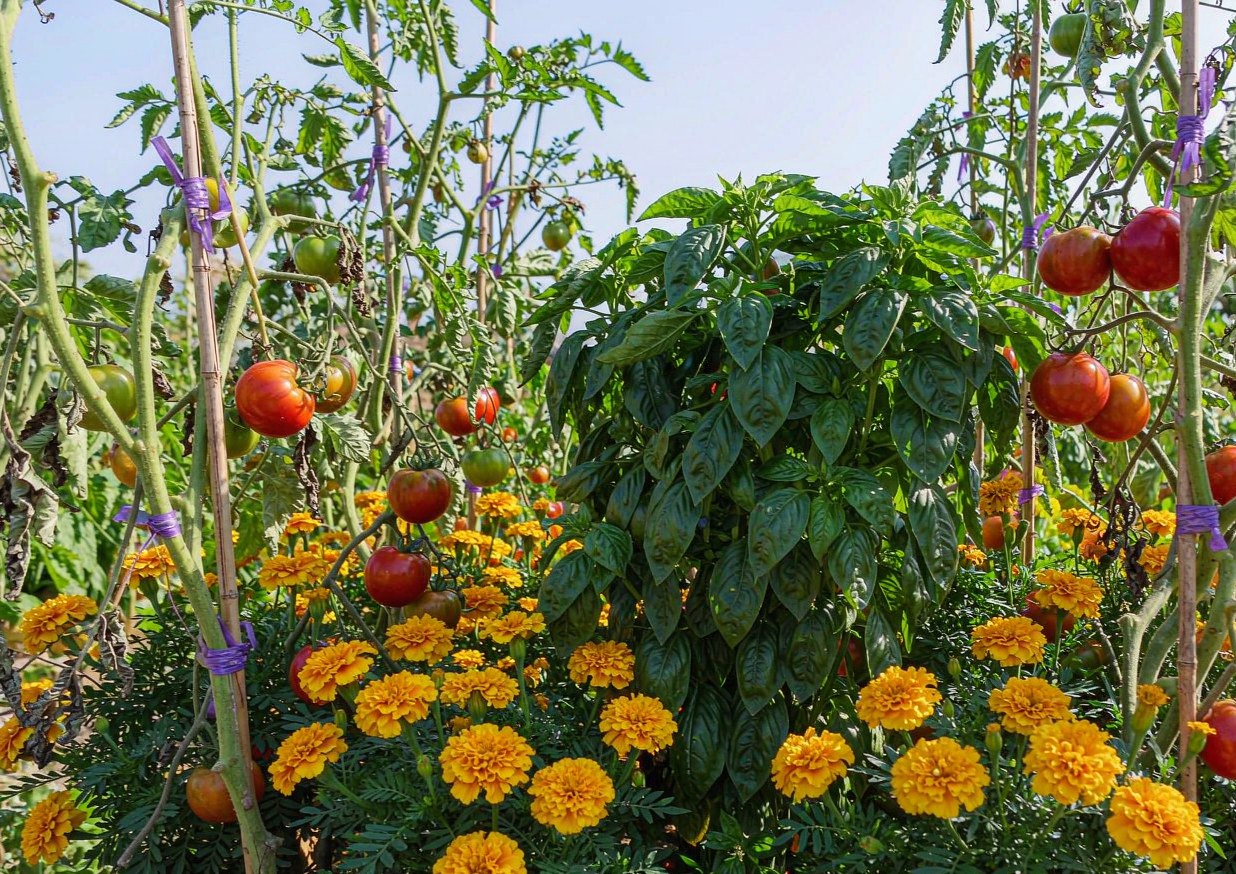
Basil with tomatoes is the one pairing I would defend to anyone. It is not magic pest control, but basil is compact, likes the same warm conditions as tomatoes, and fills the space under the plant that would otherwise grow weeds. In my beds, a basil planted at the base of each tomato meant less bare soil, fewer weeds to pull, and a steady supply of pesto. The often-claimed “basil repels tomato hornworms” is overstated — I still hand-pick the occasional hornworm — but the space-sharing alone earns the basil a spot. The NC State Extension Gardener Handbook covers the cultural needs of both crops and confirms they share the same warm-season profile, which is why they sit well together.
Carrots and onions — confusing the pests
Carrots and alliums (onions, leeks, scallions) are my second reliable pair. The mechanism is pest confusion: the carrot fly homes in on the smell of carrot foliage, and the onion’s scent masks it, while the carrot in turn helps disguise the onion. I plant a row of scallions down the center of a carrot block and get noticeably fewer carrot-fly issues than in the all-carrot bed next to it. The Illinois Extension vegetable pages discuss rotation and spacing for both crops, and the pairing respects those needs as long as you thin the carrots properly. One caution: do not let the alliums shade the carrots, since carrots want full sun to size up.
Flowers That Earn Their Space
Marigolds and nasturtiums as trap crops
In a small garden, every square foot matters, so a flower has to earn its place. Marigolds are worth it for the pollinators and for a mild pest-disrupting scent, but the flower I lean on hardest is the nasturtium, which acts as a trap crop for aphids. Aphids will swarm nasturtiums before they touch my brassicas, and because nasturtiums are sprawling and cheap to grow, I let them take the hits and then cut back the worst leaves. The Wisconsin Extension horticulture site and similar services consistently recommend flowering borders for beneficial insects, and I have seen the predator bugs show up within days of the first blooms.
Why I plant a border of blooms
Rather than dotting flowers through every gap, I plant a deliberate border of blooms around the bed — marigolds, nasturtiums, a few cosmos — so the whole plot reads as one pollinator target. This single change brought in more bees than any scattered planting had, and more bees means better fruit set on my squash and tomatoes. The border also acts as a visual and olfactory buffer that seems to slow some pest scouting. The Missouri Botanical Garden Plant Finder is where I check mature size and sun needs before committing a flower to the edge, so nothing in the border ends up shading the vegetables behind it.
Two flowers I have added to the border over time are cosmos and borage, and both earn their row. Cosmos bloom for months and feed a steady stream of small pollinators without getting tall enough to shade most vegetables if I pinch them back. Borage is a bee magnet and its leaves are edible, but it self-seeds aggressively, so I now treat it as a one-plant anchor at the sunny corner rather than a row. The trick with any bloom border is timing: I start the marigolds and nasturtiums from seed a few weeks before the warm crops go in, so the border is flowering by the time the squash and tomatoes need pollinators. A border that flowers a month late does almost nothing for fruit set, which is the mistake I made the year I sowed everything on the same day.
What to Keep Apart
The fennel rule
If you remember one “keep apart” rule, make it fennel. Fennel is a poor neighbor to almost everything — it exudes compounds that can stunt nearby plants, and it attracts the same pests as many crops without giving much back. I learned this the hard way when a fennel I tucked beside my dill and peppers dragged all three down; the peppers sulked and the fennel bolted. Now fennel gets its own pot, far from the beds. Most extension guidance treats fennel as a loner, and my garden agrees. If you love fennel, grow it in isolation and enjoy it; just do not ask it to share.
The flip side is that the crop people pair with fennel most often is dill, and dill is actually a friendly, useful companion when kept to itself. I grow dill in its own pot at the edge of the patio, where it draws in predatory wasps that help with caterpillars and gives me seeds for pickling. The lesson generalizes: when a “bad neighbor” crop is one you still want, the fix is usually isolation in a container, not abandonment. A lone pot costs little and keeps both the plant and the rest of the bed happy, which is far better than the sulking peppers I got from my first, over-ambitious fennel corner.
Heavy feeders that fight each other
The other separation rule is about competition. Two heavy feeders planted tight — corn and tomatoes, for example — will both underperform because they want the same nutrients and water at the same time. In a small bed this matters more than in a field, because there is no slack in the soil. I keep my heavy feeders spread across the rotation and pair them instead with light feeders like lettuce or radishes that appreciate the partial shade the big plants cast. The NC State handbook is explicit about feeding and rotation for these crops, and following it kept my compact beds from starving each other out.
Companion Planting in Containers and a Tiny Yard
Pots limit what pairs make sense
Containers change the math. A pot has finite soil and finite water, so a pairing that works in a bed can starve in a container. My rule for pots is one “star” crop plus one low-footprint companion: a tomato with a basil, a pepper with a marigold, a carrot pot with a scallion or two. I avoid putting two big plants in one pot unless it is huge. The Oregon State gardening resources have good container guidance, and the takeaway is that volume is the constraint — a 5-gallon pot supports one heavy feeder comfortably, not two.
A 4×4 bed plan I actually use
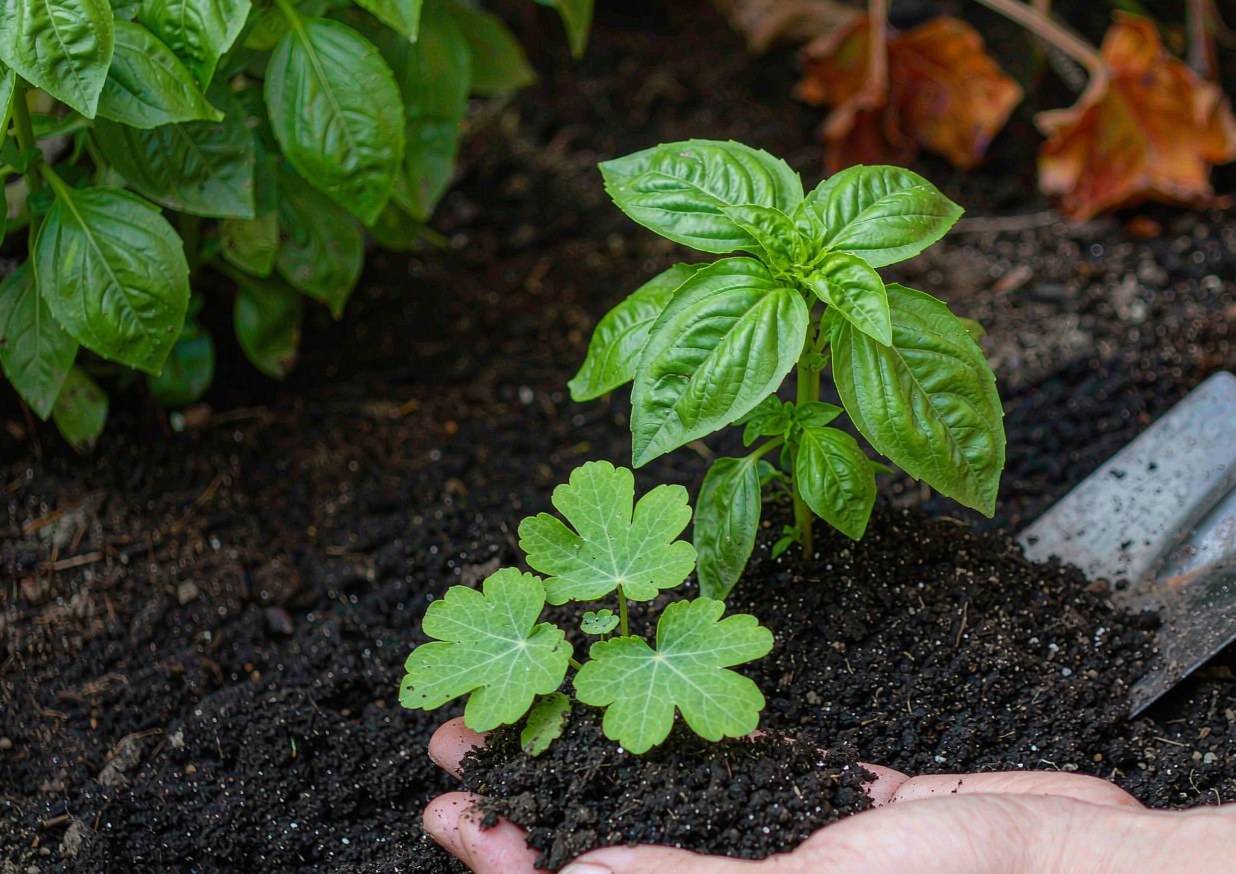
For a single 4×4 raised bed, here is the layout I run: a center square of two tomato plants with a basil at each corner of that square; a block of carrots with a scallion row through the middle on one side; a border of marigolds and nasturtiums all the way around. That gives me the two proven pairs (tomato-basil, carrot-onion) plus the trap-crop border, inside sixteen square feet. It is not fancy, but every plant in it has a job, and I am not wasting squares on pairings I cannot defend. If your space is one balcony, shrink this to two pots and the border in a window box — the principles travel.
The plan also includes a simple succession so the bed never sits half-empty. The carrot block is sown in two waves three weeks apart, so the first harvest opens space that the second wave fills before the tomatoes peak. After the early tomatoes in the center square finish, I pull them and drop in a quick crop of bush beans in the same footprint, because beans add nitrogen the tomatoes used up — a quiet companion swap that keeps the bed productive into fall. The NC State handbook covers succession and rotation in detail, and the gist is that a small bed should always have something growing, with each occupant chosen to follow the last one sensibly. That rhythm turned my single 4×4 from a summer tomato patch into a near-year-round producer.
 Photos provided by Pixabay
Pet Safety When You Plant Alliums and Nightshades
The scraps and plants that are toxic to pets
This is the part I will not skip, because my garden is also my dogs’ playground. Garlic, onions, chives and leeks (the allium family) are toxic to dogs and cats, and they show up constantly in companion planting as scallions and chives tucked by carrots. Tomato foliage and green fruit (the nightshade parts, not the ripe red fruit) are also toxic if a pet chews them. None of this means avoid these crops — I grow all of them — but it means keep the beds where pets cannot freely graze, and clean up trimmed foliage rather than leaving it where a nose finds it. The ASPCA toxic and non-toxic plant list is my check before anything new goes in, and I keep it bookmarked.
The non-veterinary rule I follow
Plain boundary: this article is general gardening information, not veterinary advice. I am not a vet, and no plant list — including the ASPCA database — is complete medical guidance. If you think a pet has actually eaten allium scraps, tomato foliage, or anything questionable from the garden, call your veterinarian or the ASPCA Animal Poison Control Center at (888) 426-4435 rather than waiting to see what happens. Fencing the veggie bed and raking in trimmings is all it takes to stay safe, and it costs nothing.
Common Mistakes That Waste the Season
Believing every chart on the internet
The biggest mistake is treating a companion chart as gospel. Half of them contradict each other, and many pairings have no mechanism at all — “plant X near Y for bigger harvests” with no explanation is a red flag. My first season died on this hill: I interplanted so much that airflow collapsed and disease spread. Now I ask one question for every pairing — what is the mechanism? — and if I cannot answer it, the pairing does not go in the bed. The Michigan State overview makes the same point: test, don’t trust.
Ignoring light and water needs
The second mistake is pairing plants with conflicting needs. A shade-lover next to a sun-worshipper means one of them suffers, no matter how good the “companionship” sounds. Carrots and scallions share sun and water fairly well; basil and tomato share heat and water; but a water-hungry cucumber next to a drought-tolerant herb is a fight waiting to happen. I check the sun and water line for both crops before pairing, using the Illinois vegetable guidance as a quick reference. Match the needs, then add the companion benefit — not the other way around.
How to Test a Pairing Yourself
A simple side-by-side I ran
You do not need a lab to know if a pairing works; you need a comparison. Two summers ago I ran a side-by-side: one tomato with basil, one tomato alone, same pot size, same feed, same sun. The paired plant had fewer weeds at the base and gave me usable basil, with no yield penalty on the tomatoes. That was enough to keep the pairing. A less successful test was beans with onions — the beans sulked, and I dropped it. Side-by-sides take almost no extra effort because you are already growing both crops; just leave one unpaired as the control.
What to record
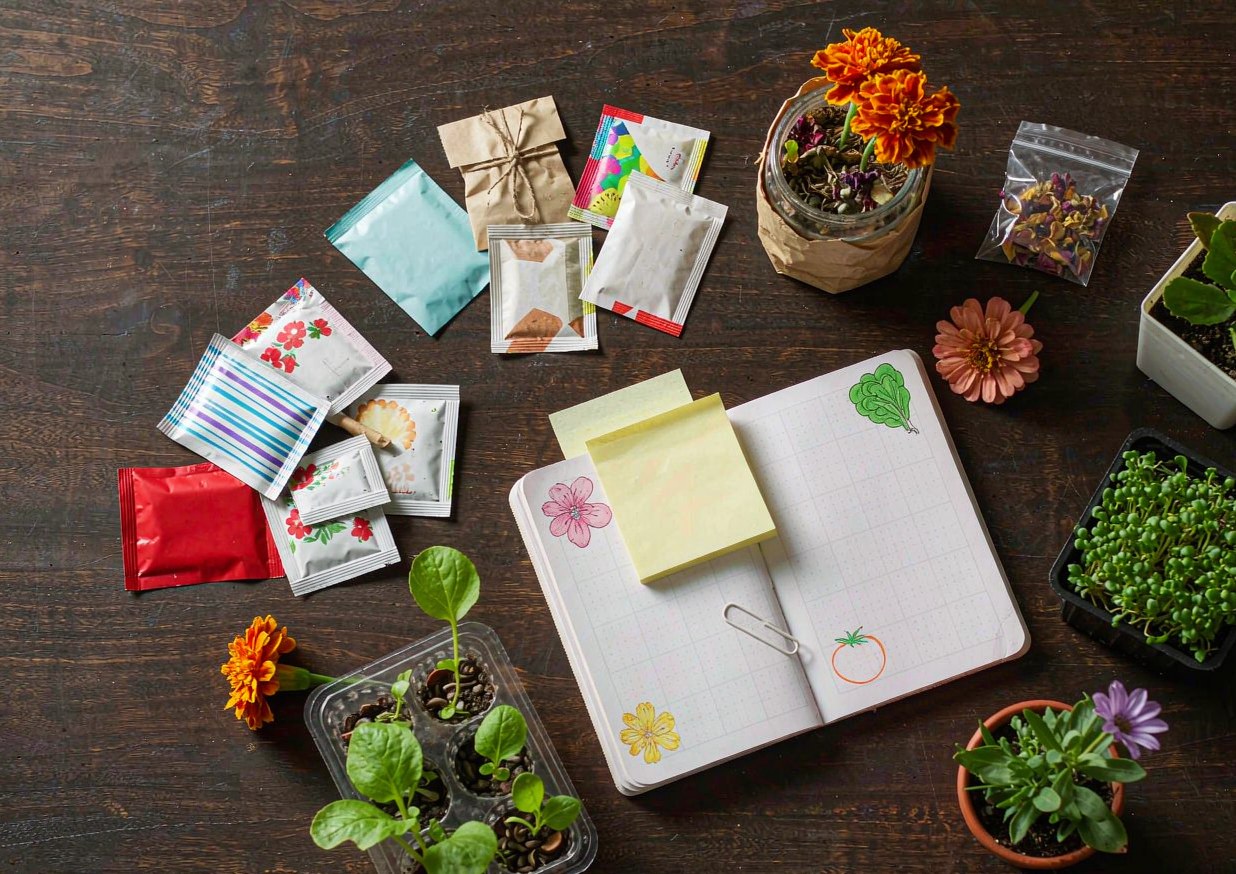
To make a test meaningful, jot down four things: planting date, any pest you noticed, harvest amount, and any obvious health difference. I keep a cheap notebook by the door. After a season you have real data instead of folklore, and you can repeat what worked. The Wisconsin Extension horticulture pages and similar services are good for confirming what “healthy” should look like for each crop, so your notes have a baseline. A few lines per bed, once a week, turns guesswork into a system you trust.
To show how little data you need, here is a real line from my notebook: “Tomato A (with basil), planted May 4, hornworm seen 1x, harvested 14.2 lb; Tomato B (alone), planted May 4, hornworm seen 3x, harvested 13.8 lb.” The yields were nearly identical, which told me basil was not a fertilizer — but Tomato A needed less hand-picking and gave me free pesto, so the pairing stayed. The beans-with-onions line read “Beans sulked, yellow lower leaves, harvested 0.4 lb vs 1.1 lb alone,” which is why that pairing is gone. Those two sentences per crop were enough to make a confident call. You do not need a spreadsheet; you need a comparison and a number, written down before you forget.
Do “Smell Masking” Claims Hold Up?
“Plant X masks the smell of crop Y so pests can’t find it” is the most common companion claim, and it partly holds up — but only partly. Strong scents like onion, garlic and some herbs can reduce pest location in some trials, yet the effect is modest and inconsistent, not a force field. I treat smell-masking as a helpful nudge, not a control method, and I always pair it with the harder mechanisms (trap crops, beneficial habitat). The honest version: masking helps at the edges, so use it where it fits, but keep your real pest plan built on the pairings that have a track record.
Companion Planting for Pest Control vs. Pollinators
There are two goals people confuse: repelling pests and attracting pollinators, and they are not the same plant job. Pest-control companions (alliums, trap-crop nasturtiums) work by confusing or drawing pests; pollinator companions (marigolds, cosmos, borage) work by feeding bees that then visit your squash and tomatoes. A good small garden uses both, but I plan them separately — a trap-crop ring on the outside, a pollinator patch where it will not shade vegetables. The Missouri Botanical Garden Plant Finder helps me pick blooms that flower when my crops need pollination, so the timing lines up instead of missing.
A concrete example: my winter squash needs bees hard for about three weeks in midsummer, and in years past the fruit set was poor because my blooms had already finished. Once I staggered a second sowing of borage and cosmos to flower right in that window, the squash fruit set jumped and I stopped losing female flowers to a lack of visits. The same thinking applies to cucumbers and pole beans — match the bloom to the crop’s pollination peak rather than assuming one border serves all seasons. It is a small scheduling habit, but in a small garden where every fruit counts, timing the pollinators is the difference between a handful of squash and a pile of them.
When a Single Crop Beats the Mix
Finally, the unpopular truth: sometimes a single well-grown crop beats a clever mix. If your space is one pot and your goal is “one big tomato,” just grow the tomato well — adding a basil is fine, but do not sacrifice the tomato’s root room for the sake of companionship. Companion planting is a tool for efficiency and pest help, not a religion. I grow straight rows of lettuce with no companions at all because lettuce is fast, space-efficient, and pest-trap flowers would just shade it. Use the pairs that pay; skip the ones that don’t, and your small garden will thank you with less work and better harvests.
If you take only one thing from this whole article, let it be the question “what is the mechanism?” before you plant anything next to anything. A pairing with a clear job — confuse a pest, trap a pest, feed a bee, share space without fighting — is worth the square foot. A pairing borrowed from a pretty chart with no explanation is a coin flip that usually lands on wasted space. My garden got noticeably more productive the year I stopped collecting pairings and started collecting reasons, and that is the habit I would hand to any beginner with a 4×4 bed and a dream of fewer bugs.
Troubleshooting: Symptoms, Causes and Fixes
Most companion-planting failures show up within weeks and trace back to one of six causes. This is the table I keep by the seed drawer.
| Symptom | Likely cause | Fix |
|---|---|---|
| Both plants in a pair look weak | Conflicting light or water needs | Re-pair by matching sun/water; separate the mismatched two |
| Pests still heavy despite flowers | Relying on masking alone, no trap crop | Add nasturtium trap crop; hand-pick; improve beneficial habitat |
| Foliage yellowing near fennel | Fennel allelopathy on neighbors | Move fennel to its own isolated pot immediately |
| Poor fruit set on squash/tomatoes | Not enough pollinator visits | Plant a timed bloom border; avoid shading the flowers |
| Crowded, disease-prone bed | Over-interplanted from a chart | Thin to proven pairs; restore airflow between plants |
| Pet interest in the bed | Allium or nightshade foliage accessible | Fence the bed; rake in trimmings; call vet if ingested |
FAQs
What companion planting actually works?
The pairings with a real mechanism: basil with tomatoes (space-sharing and weed suppression), carrots with onions or leeks (pest confusion), marigolds and nasturtiums as trap crops and pollinator draws, and a border of blooms to bring in beneficial insects. Keep fennel isolated and do not crowd two heavy feeders together. The Oregon State and Michigan State Extension services both stress testing rather than trusting charts, which is exactly how I settled on this short list for a small garden.
Does planting marigolds really keep pests away?
Partly. Marigolds attract pollinators and some beneficial insects, and their scent may mildly disrupt a few pests, but they are not a standalone pest cure. The flower I rely on harder is the nasturtium, which acts as a trap crop that pulls aphids off my vegetables. Use marigolds for the pollinator and habitat benefit and nasturtiums for trap cropping, rather than expecting marigolds alone to protect a bed. A border of both, refreshed through the season, is the practical setup.
Can I companion plant in containers?
Yes, with tighter rules. A pot has finite soil and water, so pair one star crop with one low-footprint companion — a tomato with a basil, a pepper with a marigold, a carrot pot with a scallion or two. Avoid two heavy feeders in one container unless it is very large. Oregon State’s container guidance is a good reference: a 5-gallon pot supports one heavy feeder comfortably. Shrink a 4×4 bed plan to two pots plus a window-box border and the principles still hold.
Are companion-plant crops safe around pets?
Many are, but watch the alliums (garlic, onion, chives, leeks) and tomato foliage or green fruit, which are toxic to dogs and cats if eaten. Grow them, but fence the bed and clean up trimmings so pets cannot graze. This is general information, not veterinary advice: if a pet actually eats allium scraps or tomato foliage, call your vet or the ASPCA Animal Poison Control Center at (888) 426-4435 rather than waiting. Most pairings are pet-safe once the garden is fenced.
How do I know if a pairing is working?
Run a side-by-side: grow one crop with its companion and an identical crop alone, same pot or bed, same care. Record planting date, pests noticed, harvest amount, and plant health, and compare at season’s end. My tomato-with-basil test showed fewer weeds and free herbs with no yield loss, so I kept it; a beans-with-onions test showed sulking beans, so I dropped it. A few notes per week turn folklore into a system you can trust, and the Wisconsin Extension pages help you set a healthy baseline.
Sources and Further Reading
- Oregon State University Extension — Gardening
- NC State Extension Gardener Handbook
- University of Illinois Extension — Vegetables
- Missouri Botanical Garden — Plant Finder
- Michigan State University Extension — Companion Planting in the Vegetable Garden
- University of Wisconsin Extension — Horticulture
- ASPCA — Toxic and Non-Toxic Plants List
- ASPCA — Animal Poison Control Center
About the author
Samantha has been gardening and arranging her own cut flowers for more than ten years, and has built more than 30 centerpieces from grocery-store bunches, clippings off the cedars behind her house, and a handful of dollar-store experiments that didn’t work. She writes practical, low-cost guides for beginners, including the versions that failed. Prices quoted in her articles are what she actually paid at US grocery and craft stores; nothing is sponsored and no brand pays for a mention. She is not a certified florist, a veterinarian or a horticulturist, and says so wherever a topic touches on plant safety or pet health.
Published: Nov 1, 2026 · Last updated: Nov 1, 2026.
{
“@context”: “https://schema.org”,
“@graph”: [
{
“@type”: “Article”,
“headline”: “Companion Planting: What Actually Works in a Small Vegetable Garden”,
“description”: “Companion planting helps most through pest confusion, trap cropping, and pollinator habitat. Reliable pairs: basil with tomatoes, carrots with onions, marigolds and nasturtiums as trap crops, plus a bloom border. Keep fennel isolated; skip pairings with no mechanism.”,
“image”: [
“images/companion-hero-clean.jpg”,
“images/companion-materials-clean.jpg”,
“images/companion-process-clean.jpg”
],
“author”: { “@type”: “Person”, “name”: “Samantha” },
“publisher”: { “@type”: “Organization”, “name”: “REPLACE_WITH_SITE_NAME” },
“datePublished”: “2026-11-01”,
“dateModified”: “2026-11-01”,
“mainEntityOfPage”: {
“@type”: “WebPage”,
“@id”: “https://REPLACE_WITH_DOMAIN/companion-planting-what-works-small-vegetable-garden”
}
},
{
“@type”: “FAQPage”,
“mainEntity”: [
{
“@type”: “Question”,
“name”: “What companion planting actually works?”,
“acceptedAnswer”: {
“@type”: “Answer”,
“text”: “The pairings with a real mechanism: basil with tomatoes for space-sharing and weed suppression, carrots with onions or leeks for pest confusion, marigolds and nasturtiums as trap crops and pollinator draws, and a border of blooms to bring in beneficial insects. Keep fennel isolated and do not crowd two heavy feeders together. Test rather than trust charts.”
}
},
{
“@type”: “Question”,
“name”: “Does planting marigolds really keep pests away?”,
“acceptedAnswer”: {
“@type”: “Answer”,
“text”: “Partly. Marigolds attract pollinators and some beneficial insects and their scent may mildly disrupt a few pests, but they are not a standalone pest cure. Nasturtiums are the stronger trap crop for aphids. Use marigolds for pollinator and habitat benefit and nasturtiums for trap cropping, rather than expecting marigolds alone to protect a bed.”
}
},
{
“@type”: “Question”,
“name”: “Can I companion plant in containers?”,
“acceptedAnswer”: {
“@type”: “Answer”,
“text”: “Yes, with tighter rules. A pot has finite soil and water, so pair one star crop with one low-footprint companion: a tomato with a basil, a pepper with a marigold, a carrot pot with a scallion or two. Avoid two heavy feeders in one container unless it is very large. A 5-gallon pot supports one heavy feeder comfortably.”
}
},
{
“@type”: “Question”,
“name”: “Are companion-plant crops safe around pets?”,
“acceptedAnswer”: {
“@type”: “Answer”,
“text”: “Many are, but watch the alliums (garlic, onion, chives, leeks) and tomato foliage or green fruit, which are toxic to dogs and cats if eaten. Grow them, but fence the bed and clean up trimmings so pets cannot graze. This is general information, not veterinary advice: if a pet eats allium scraps or tomato foliage, call your vet or the ASPCA Animal Poison Control Center at (888) 426-4435.”
}
},
{
“@type”: “Question”,
“name”: “How do I know if a pairing is working?”,
“acceptedAnswer”: {
“@type”: “Answer”,
“text”: “Run a side-by-side: grow one crop with its companion and an identical crop alone, same pot or bed, same care. Record planting date, pests noticed, harvest amount, and plant health, and compare at season’s end. A tomato-with-basil test showed fewer weeds and free herbs with no yield loss, so I kept it; a beans-with-onions test showed sulking beans, so I dropped it.”
}
}
]
}
]
}