
If you planted a blue hydrangea last year and watched it bloom pink this summer, you are not losing your mind — and neither is the plant. I did exactly the same thing the first time I bought a bigleaf hydrangea. I paid extra for a deep blue mophead at the garden center, tucked it into a raised bed I was proud of, and the following June it opened the most bubblegum-pink flowers on the block. I assumed the nursery had mislabeled it. They had not. What changed was the soil, not the genetics. The color of most hydrangea flowers is one of the few things in the garden you can actually steer, and the lever is soil pH plus a little aluminum. Once I understood that, I turned the pink back to blue in a single season — and I have done it both directions for neighbors since. In this article I walk through exactly what I do, including the mistakes that cost me that first year.
Quick answer: the flower color of bigleaf and mountain hydrangeas (Hydrangea macrophylla and H. serrata) is controlled by soil pH and aluminum availability, not by the variety you bought. In acidic soil (pH roughly 5.0–6.0), aluminum becomes available and the blooms turn blue. In alkaline soil (pH roughly 6.5–7.0+), aluminum locks up and the blooms turn pink. To go pink → blue, lower the pH and add aluminum sulfate; to go blue → pink, raise the pH with garden lime. White hydrangeas do not change color. Test your soil first, amend in early spring, and give it a full season — results are rarely instant.
- 1. Why Hydrangea Flowers Change Color at All
- 2. The pH and Aluminum Relationship
- 3. How to Turn Pink Hydrangeas Blue
- 4. How to Turn Blue Hydrangeas Pink
- 5. When to Apply and How Long It Takes
- 6. Reading Your Soil First
- 7. Common Mistakes That Ruin the Effort
- 8. Choosing the Right Variety So You Are Not Fighting It
- 9. What About White Hydrangeas and Coffee Grounds
- 10. Keeping the Color Stable Year After Year
- 11. Using the Same Soil Logic for Other Acid-Loving Plants
- 12. Troubleshooting: Symptoms, Causes and Fixes
- 13. FAQs
- 14. Sources and Further Reading
Why Hydrangea Flowers Change Color at All
Is it the variety or the soil?
The single most confusing thing about hydrangeas is that the same plant can wear two completely different colors. Bigleaf hydrangeas (Hydrangea macrophylla) are the classic example: a plant sold as “blue” and a plant sold as “pink” can be the same cultivar grown in different soil. The pigment in the sepals (the petal-like parts we call the flower) reacts to how much aluminum the plant can pull from the ground. So the answer to “variety or soil?” is: for blue-versus-pink it is almost always the soil, and the variety only decides the shape of the bloom and the range it can reach.
I learned this the hard way. My first “blue” hydrangea had been grown in a peat-based, acidic potting mix at the nursery — that is why it was blue in the pot. The moment I planted it in my neutral clay bed, the roots met a higher pH and the next flush of flowers came out pink. Nothing about the plant changed; everything about its food supply changed. That is the whole mechanism in one sentence, and it is why you can reliably shift color if you are patient.
Which hydrangeas actually change color?
Not every hydrangea plays this game, and assuming yours does is the fastest way to waste a season of effort. The color-shifting trick is reliable only on bigleaf (H. macrophylla) and mountain (H. serrata) hydrangeas — the mophead and lacecap types. Oakleaf (H. quercifolia), panicle (H. paniculata) such as ‘Limelight’, and smooth (H. arborescens) such as ‘Annabelle’ do not change from pink to blue; they open cream or green-white and age to pink or red on their own schedule regardless of pH. White bigleaf hydrangeas are also off the table — see section 9.
Before you buy a single bag of amendment, confirm which type you have. The quick tells: mophead and lacecap have big rounded or flat flower heads on a shrub with glossy, toothed leaves; panicle types have conical flower spikes and often peeling bark; oakleaf has, well, oak-shaped leaves. If you are not sure, the NC State plants database hydrangea page has photos of each group side by side. Identify first, amend second — I cannot count how many forum posts I have read from someone trying to blue-up an ‘Annabelle’.
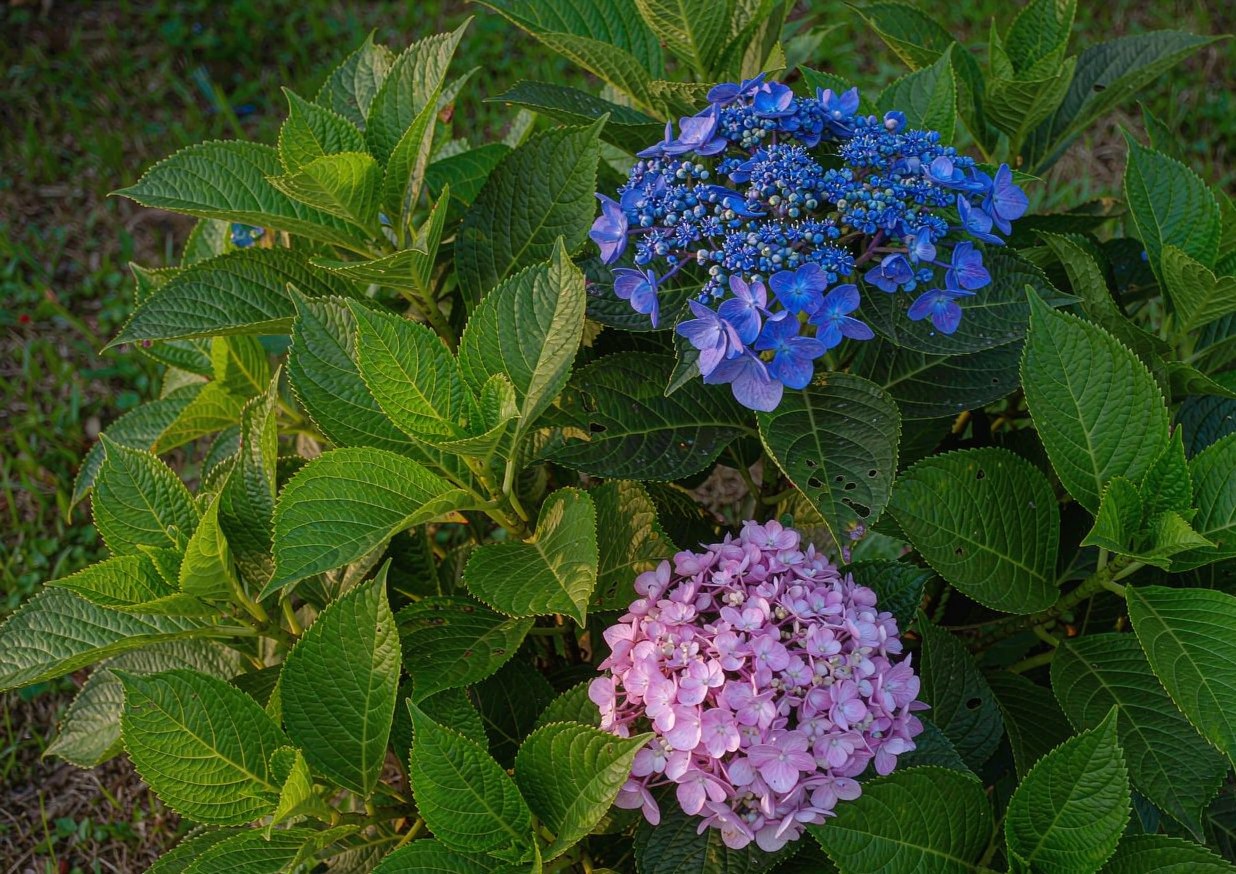 Photo provided by the author’s garden
The pH and Aluminum Relationship
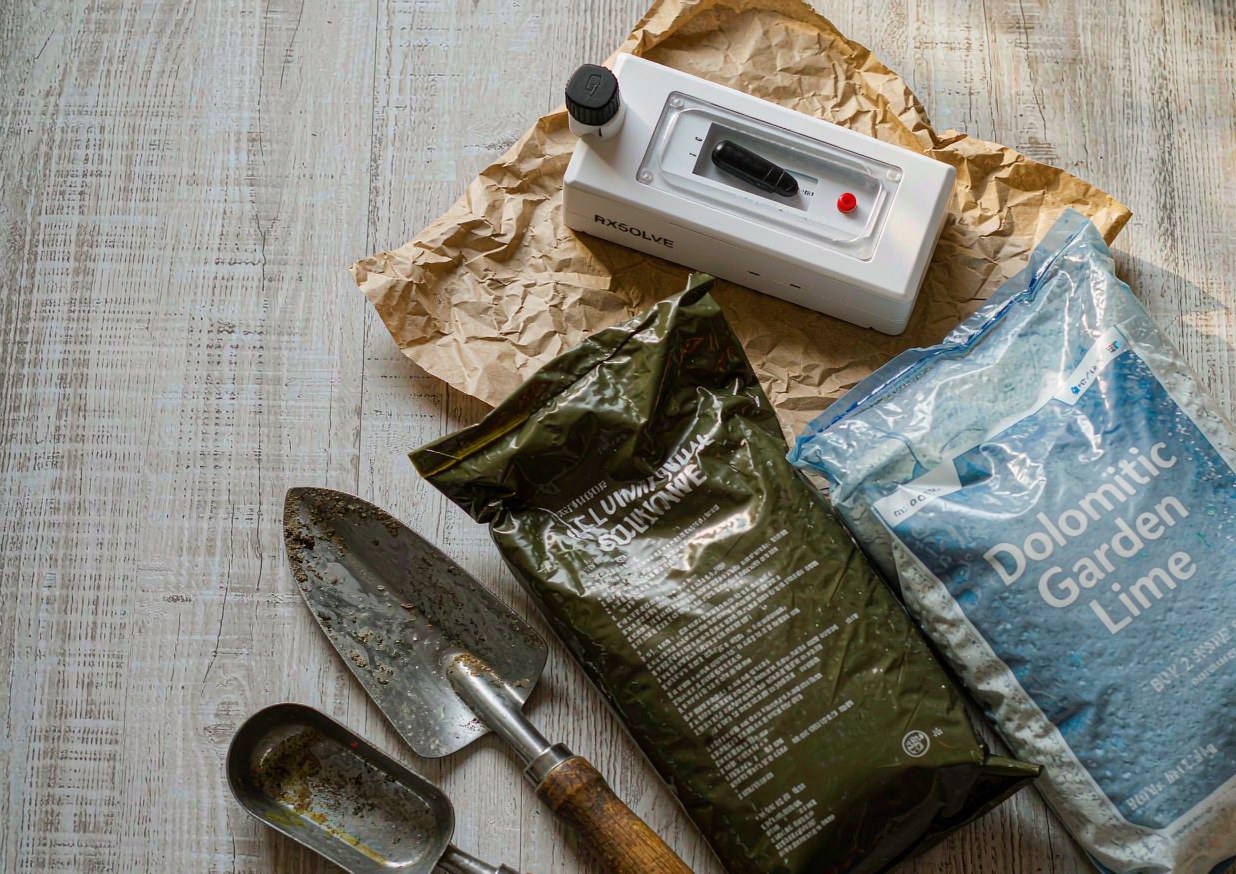 Photo provided by the author’s garden toolkit
What pH actually does to the bloom
Soil pH is just a measure of how acidic or alkaline the ground is, on a scale from 0 (very acidic) to 14 (very alkaline), with 7 as neutral. For hydrangeas the interesting zone is roughly 5.0 to 7.0. Below about 6.0 the soil frees up aluminum; above about 6.5 it locks aluminum away. The plant does not taste the pH directly — it tastes the aluminum — but pH is the gatekeeper. So when people say “acid soil makes blue hydrangeas,” what they really mean is “acid soil lets the plant eat aluminum, and aluminum paints the flowers blue.” A pH sitting right on the boundary (around 6.2) gives wishy-washy purple or muddy mauve, so commit clearly to one side rather than hovering at the line.
Why aluminum is the real switch
Aluminum gets a bad reputation — and for good reason in drinking water — but hydrangeas are unusual in that they need a little of it to turn blue. The aluminum ions bind in the sepals and shift the pigment toward blue. Two things have to be true at once: the soil must be acidic enough to free the aluminum, and there must actually be aluminum in the soil. Some naturally low-aluminum gardens simply will not go blue no matter how much you acidify them, because there is nothing to unlock. In those cases you have to add aluminum sulfate rather than rely on what is already there.
The practical takeaway: if your soil is already acidic but your blooms are still pink, the missing ingredient is almost certainly aluminum, not more acid. That is the distinction that saves people a second failed season. Add aluminum sulfate (which is both acidifying and aluminum-bearing) rather than, say, just piling on more peat. The RHS plant pages and most university extension sheets describe this exact blue-requires-aluminum point, and it is the part beginners skip.
How to Turn Pink Hydrangeas Blue
The aluminum sulfate method
To move pink toward blue, the standard, proven approach is aluminum sulfate. It does double duty: it lowers pH and it supplies the aluminum the plant needs. The common home-garden rate is about 1 tablespoon of aluminum sulfate dissolved in a gallon of water, used as a soil drench around the drip line of the plant, applied a few times across spring and early summer. Some gardeners also scratch a small amount of dry aluminum sulfate into the soil in early spring. The key word is small — this stuff is salty and can burn tender roots if you overdo it, which is the mistake I made the year I got impatient and doubled the dose. Half my plant sulked for a month.
Spread the drench over the whole root zone, not just at the stem, and water it in well. Aluminum moves slowly, so you are not going to see blue next week; you are setting up the chemistry the plant will use for the blooms it is already forming. A good rule I follow: start the drenching program in early spring as the plant breaks dormancy, repeat every three to four weeks through late spring, and stop once the flower buds are set. The Oregon State Extension gardening pages and similarExtension sheets repeat this timing because aluminum has to be present before the color is laid down.
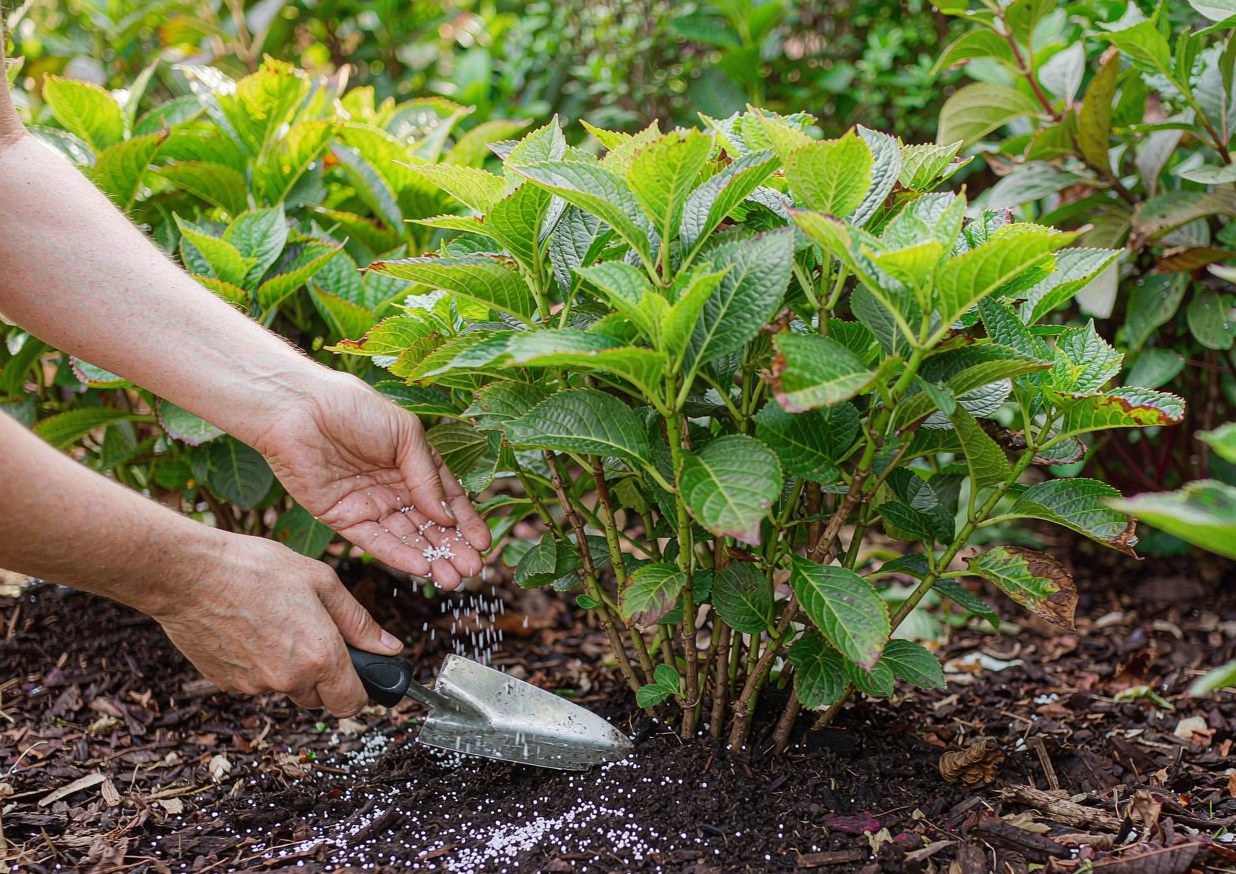 Photo provided by the author’s garden
Testing and adjusting in steps
Do not guess at the dose — guess at the goal and measure your way there. After you begin, re-test the soil pH every month or so during the active season. You are aiming for about 5.2 to 5.5 for a reliable blue. If you are at 6.4 and want blue, dropping to 5.5 is a big swing and will take several applications, so give it a season rather than a weekend. I keep a cheap soil pH test kit in the shed and check the bed where the hydrangea sits, not the lawn twenty feet away — pH varies across a yard and the plant only cares about its own footprint.
One more lever: aluminum is more available in moist, organic-rich soil, so a layer of acidic mulch (pine bark or pine needles) around the base helps hold the conditions you are trying to build. It is a slow helper, not a shortcut, but it keeps the pH from bouncing back up between treatments. The pattern that worked for me was aluminum sulfate drenches plus a pine-bark top dressing, and within one full season the pink had shifted through mauve to a credible blue. Patience is most of the method.
How to Turn Blue Hydrangeas Pink
Using garden lime to raise pH
Going the other direction — blue to pink — is generally easier, because you are not waiting on a specific mineral to appear; you are just locking aluminum away by raising the pH. The tool for this is garden lime (dolomitic or agricultural lime). Spread it over the root zone according to the package rate in early spring, and water it in. As the pH climbs above about 6.5, the aluminum the plant could reach gets tied up, and the next blooms open pink. This is the gentler of the two conversions, and in my experience it shows up faster because you are removing a factor rather than adding one.
A caution worth stating plainly: lime is slow and it is easy to over-apply, which can push the soil so alkaline that the hydrangea itself starts to struggle (iron and other nutrients get locked up too). I add lime in modest annual increments and re-test, rather than dumping a whole bag at once. The goal is a pH around 6.5 to 7.0, not 8. The NC State Extension Gardener Handbook walks through how lime moves through soil and why “a little, often” beats “a lot, once.”
When blue simply will not hold
Sometimes you do everything right and the plant still drifts back toward blue. The usual culprit is the water. If your municipal water is alkaline (common in areas with limestone bedrock), every time you irrigate you are quietly nudging the pH back down toward blue — the opposite of what you want for pink. In that situation, collecting rainwater for the hydrangea, or at least backing off the lime, is what finally holds the pink. I have a friend whose blue-to-pink conversion failed three years running until she stopped watering that one plant with the hose and switched to a rain barrel; the fourth year it stayed pink.
The other reason blue “will not hold” is that the underlying native soil is strongly acidic, so the lime keeps getting eaten up. There you have to re-apply lime every spring as maintenance. It is not a one-time fix; it is a standing appointment. Knowing which of these two you are dealing with — alkaline water versus acidic native soil — tells you whether to add lime or just change your water source, and that distinction keeps you from wasting a second season.
When to Apply and How Long It Takes
The season timeline
Timing is the part that surprises people. The color you see this summer is decided by the chemistry while the buds are forming, which for bigleaf hydrangeas happens in late summer of the previous year and early spring of the current year. That means if you wait until you see pink flowers to start treating, you are already too late for this season — you are setting up next year’s show. I start my aluminum or lime program in early spring and keep it going through late spring, which is the window that actually feeds the buds that become the blooms.
Concretely, for a blue conversion I begin drenches when the plant leafs out and stop by early summer. For a pink conversion I spread lime at the same early-spring moment. Mark it on the calendar the way you would a pruning date. The plants are slow, deliberate things, and they reward the gardener who plans a season ahead instead of reacting to what is already open.
How many weeks to expect a change
Realistically, plan on one full growing season to see a clean, complete color shift. You may see hints of change on the late blooms of the first year, but the reliable, even color shows up the second year after a full year of consistent treatment. Anyone promising “blue in two weeks” is selling something. The first year I converted pink to blue, the earliest flowers were still pinkish-mauve, but by late summer the new flushes were clearly blue, and the following year the whole plant was blue. So judge the project over twelve months, not twelve days.
If you need a guaranteed color for a specific event — a wedding, a photo, a garden tour — buy a plant that is already showing the color you want in similar soil, or grow it in a container where you fully control the mix. In-ground conversions are a patience game, and betting a one-time event on them is how people end up disappointed. Containers let you nail the pH from day one.
Reading Your Soil First
Cheap kits versus a lab test
Before you spend a dollar on amendment, test the soil. A $10 to $15 probe or capsule kit from a garden center is fine for telling you the rough pH, and that is all you need to pick a direction. For more precision — and to find out whether aluminum is even present — a county extension soil test (often a few dollars) is the gold standard; many state universities mail you a kit and return numbers you can actually act on. I use the cheap kit for in-season checks and a lab test every couple of years to reset my baseline.
The reason this matters: if your soil is already at 5.3 and you want blue, you may barely need to do anything except confirm aluminum is present. If it is at 7.2, you have a real project. Testing tells you which of those you are in, and it prevents the classic beginner error of amending soil that did not need it and shocking the plant. The Oregon State gardening pages and every extension service I have read start their pH advice with “test first.”
What the numbers mean for your goal
Here is the cheat sheet I keep in my head: below 5.5 = blue territory, 6.0–6.5 = the muddy purple transition, above 6.5 = pink territory. Your job is to land clearly inside the zone you want and stay there. When you get the test back, write the number on a label stuck in the bed so you are not guessing next April. I started doing this after I forgot what my starting pH was and could not tell whether the lime was even working.
Also note that pH drifts on its own — rain, fertilizer, and decomposing mulch all nudge it. So a single test is a snapshot, not a permanent fact. That is why the in-season re-check with the cheap kit is worth the two minutes. Treat soil pH like a thermostat you are nudging, not a light switch you flip once.
Common Mistakes That Ruin the Effort
Overdoing the aluminum sulfate
The most damaging mistake is too much aluminum sulfate too fast. Because people are impatient for blue, they double or triple the recommended rate, and the salt concentration burns the roots, drops leaves, and can set the plant back for a year. I did this myself the first time and spent a month nursing a sulky, half-bare shrub. Aluminum sulfate is a tool, not a fertilizer — more is not better. Follow the label, dilute it, and spread the applications out.
The second version of this mistake is treating the foliage. Aluminum sulfate is a soil drench; it does nothing sprayed on leaves and can scorch them. Keep it on the root zone and water it in. If a plant looks stressed after treatment, flush the bed with plain water a couple of times to dilute the salt, and back off the program for a few weeks. The plant recovers; the season, less so.
Assuming white hydrangeas will change
The other common waste-of-a-season error is trying to blue or pink a white hydrangea. White bigleaf varieties (and most white panicle or oakleaf types) simply do not have the pigment pathways that respond to aluminum, so no amount of pH wrangling will tint them. They may pick up a faint pink or green blush as they age, but they will never go true blue or rich pink. I have fielded more than one plaintive question from a neighbor who spent a year liming a white hydrangea for nothing.
Before you start, confirm the plant is a bigleaf or mountain type and that it carries color genes (most named blue/pink cultivars do). If it is white-flowered, enjoy the white, or replace it with a colored cultivar. Knowing this up front saves the entire effort of section 3 and 4. As the NC State hydrangea page makes clear, flower color response is cultivar-dependent, and white types are the exception.
Choosing the Right Variety So You Are Not Fighting It
Cultivars bred for a fixed color
If you would rather not play soil chemist every spring, the modern fix is to buy a cultivar bred for a dependable color. Many newer bigleaf hydrangeas — the ‘Endless Summer’ series and its relatives, for example — are selected to hold blue in acid soil and pink in alkaline soil but are far more forgiving than old varieties, and some are even marketed as “re-blooming” so a bad winter does not cost you the season. Choosing one of these means you steer the color with light, occasional treatment instead of a constant battle.
My practical advice to a beginner: pick a cultivar whose default color matches what your soil naturally produces, then fine-tune. If your yard runs acidic and you want blue, you are home free with almost any bigleaf. If your yard runs alkaline and you want pink, same deal. The gardener who fights their native pH every year is the one who burns out. Work with the soil you have, and treat color-shifting as a fun experiment rather than a requirement.
Matching the plant to your bed
Beyond color, match the type to the site. Bigleaf hydrangeas want morning sun and afternoon shade and consistent moisture; they scorch in hot full sun and sulk in deep dry shade. Plant them where they are happy and the color work becomes a side quest instead of damage control. I put mine on the east side of the house where they get gentle sun and the soil stays cooler and more consistently moist, which also helps hold whatever pH I am aiming for.
A plant that is stressed from the wrong light or a too-dry bed will drop buds and give you fewer flowers to color in the first place, so siting is the quiet foundation under all of this. Get the location right, test the soil, and only then decide whether you are going blue or pink. The order matters: location, then soil, then color.
What About White Hydrangeas and Coffee Grounds
The coffee-grounds myth
You will see advice all over the internet to “just sprinkle used coffee grounds to turn hydrangeas blue.” It is not wrong, exactly, but it is weak. Coffee grounds are only mildly acidic and they break down slowly, so they nudge pH down a little over a long time — they will not perform the dramatic swing that aluminum sulfate does, and they will not add aluminum at all. I tried the coffee-grounds-only route for a season and got maybe a slight mauve tint, nothing like the blue I got once I added aluminum sulfate. Treat coffee grounds as a gentle soil conditioner, not a color changer.
If you like the idea, work them into the mulch layer as a slow acidifier and combine them with the real treatment rather than substituting. They improve organic matter, which helps aluminum stay available, but on their own they are the tortoise with no finish line. The honest framing is: coffee grounds help hold acid soil; they do not create blue flowers by themselves.
Why white stays white
To close the loop on white hydrangeas: they lack the delphinidin pigment that aluminum binds to, so there is literally nothing for the chemistry to change. No pH, no aluminum, no lime will tint a true white hydrangea. Some white varieties develop a pink or green flush with age, but that is the flower maturing, not your soil. If color is the goal, choose a cultivar that already expresses it. I keep one white hydrangea precisely because it stays white against all my pH games — it is the control plant in my little experiment, and it is a relief not to have to manage it.
Keeping the Color Stable Year After Year
Maintenance that holds the line
Once you have the color you want, the work shifts from converting to holding. For blue, that means an annual early-spring aluminum sulfate drench and an acidic mulch top-up; for pink, an annual light lime application and avoiding alkaline water. I set a phone reminder for the first warm week of spring so I never miss the bud-forming window. Consistency beats intensity: a small dose every year holds the color far better than a heroic one-off effort.
Watch your water source, too. As noted in section 4, alkaline tap water quietly undoes pink; acidic rainwater or a pH-adjusted supply protects blue. I keep a rain barrel partly for this. The goal is to make the color self-sustaining so that by year three you are barely thinking about it — which is exactly where my blue hydrangea is now.
Recording what worked
Keep a one-line note each spring: starting pH, what you applied, and what color came out. After two or three years you will have a personalized recipe for your exact bed, which is worth more than any generic advice. Mine says “pH 6.8 start, 2 aluminum drenches by May, pine bark top dress → blue by July.” That note has saved me from re-learning the whole thing every season, and it is the difference between a hobby and a system.
Using the Same Soil Logic for Other Plants
Other acid-lovers in the garden
The pH-and-aluminum lesson is not only about hydrangeas. The same acid-soil principle governs a whole crew of acid-loving plants: blueberries, azaleas, rhododendrons, camellias, and gardenias all want a low pH to take up nutrients properly (though they do not change flower color the way hydrangeas do). The soil-test habit and the lime-versus-acid intuition you build on your hydrangea transfers directly. I now test the bed where my blueberries sit with the same kit, because the logic is identical.
The transferable skill is really “read the soil before you feed the plant.” Hydrangeas just happen to make the chemistry visible, which is why they are such a good teacher. Once you have turned a pink hydrangea blue, acidifying a blueberry bed feels obvious rather than mysterious. The NC State handbook covers soil pH for all of these crops in one place.
When to leave pH alone
Just as important: most vegetables, lawns, and perennials want a near-neutral pH, and chasing hydrangea-blue conditions around the whole yard would harm them. Keep your pH experiments to the beds that actually want them. I learned this after I acidified a little too enthusiastically one spring and noticed my nearby lavender — which hates acid soil — looking unhappy. Containment is part of the method: treat the hydrangea’s footprint, not the neighborhood.
Troubleshooting: Symptoms, Causes and Fixes
Most hydrangea color problems trace back to one of six causes. This is the table I wish I had before that first pink surprise.
| Symptom | Likely cause | Fix |
|---|---|---|
| You applied aluminum sulfate but blooms stay pink | Soil lacks aluminum, or pH never dropped below ~6.5 | Re-test pH; ensure you are actually below 6.0 and that the product is aluminum sulfate, not just acidifier |
| Flowers are muddy purple / mauve, not clean blue or pink | pH stuck in the 6.0–6.5 transition zone | Commit to one side: push clearly acidic for blue or clearly alkaline for pink |
| Leaves brown at edges or plant looks stressed after treatment | Aluminum sulfate over-applied (salt burn) | Flush bed with plain water; reduce dose; spread applications out |
| You limed for pink but it drifts back to blue | Alkaline tap water or strongly acidic native soil | Use rainwater for that plant; re-apply lime each spring as maintenance |
| White hydrangea will not change color at all | It is a white cultivar lacking color pigment | Accept the white, or replace with a blue/pink bigleaf cultivar |
| No color change after a full season of treatment | Wrong hydrangea type (panicle, oakleaf, smooth) or treatment started too late | Confirm type; begin amendments in early spring before bud set |
FAQs
Why did my blue hydrangea turn pink?
Because the soil pH around its roots rose above roughly 6.5, which locked away the aluminum the plant needs to paint the flowers blue. This almost always happens after planting a nursery-grown (acidic-potting-mix) blue hydrangea into neutral or alkaline garden soil. The plant did not change variety; its food supply changed. Test the soil pH, and if you want blue back, lower the pH and add aluminum sulfate in early spring, then give it a full season.
How long does it take to change hydrangea color?
Plan on about one full growing season to see a clean, even shift. You might notice hints on the late blooms of the first year, but the reliable color shows up the second year after consistent treatment, because the chemistry has to be in place while the buds form. Anyone promising blue or pink in two weeks is overselling it. Start in early spring, maintain through late spring, and judge the result the following summer.
Will coffee grounds turn my hydrangeas blue?
They help a little but will not do it alone. Used coffee grounds are only mildly acidic and break down slowly, so they nudge pH down slightly over time without adding any aluminum. At best they are a gentle soil conditioner that supports acid conditions; at worst they give you a faint mauve and a false sense of progress. For a real blue, use aluminum sulfate and treat coffee grounds as a supporting mulch, not the main treatment.
Can I change the color of a white hydrangea?
No. White bigleaf hydrangeas — and white panicle, oakleaf, and smooth types — lack the pigment that responds to aluminum, so pH and aluminum cannot tint them true blue or rich pink. They may develop a faint pink or green blush as the flowers age, but that is maturation, not your soil working. If you want a colored hydrangea, choose a blue or pink bigleaf or mountain cultivar; otherwise enjoy the white.
Is it safe to have hydrangeas around pets?
Hydrangeas contain cyanogenic glycosides and are mildly toxic to dogs, cats, and horses if eaten in quantity — the leaves and flowers are the parts of concern. They are not usually deadly, but ingestion can cause stomach upset, and a dog that munches a whole bloom head should be watched. This is general gardening information, not veterinary advice: if you think a pet has eaten hydrangea or anything else questionable, call your veterinarian or the ASPCA Animal Poison Control Center at (888) 426-4435 rather than waiting to see what happens. I keep hydrangeas where my dog does not graze, and I check the ASPCA hydrangea listing whenever I add a new shrub near animals.
Sources and Further Reading
- ASPCA — Hydrangea (Toxic and Non-Toxic Plants)
- ASPCA — Toxic and Non-Toxic Plants List
- RHS — Plants (care and cultivation guides)
- NC State Plants Database — Hydrangea
- Oregon State University Extension — Gardening
- NC State Extension Gardener Handbook
About the author
Samantha has been gardening and arranging her own cut flowers for more than ten years, and has built more than 30 centerpieces from grocery-store bunches, clippings off the cedars behind her house, and a handful of dollar-store experiments that didn’t work. She writes practical, low-cost guides for beginners, including the versions that failed. Prices quoted in her articles are what she actually paid at US grocery and craft stores; nothing is sponsored and no brand pays for a mention. She is not a certified florist, a veterinarian or a horticulturist, and says so wherever a topic touches on plant safety or pet health.
Published: Oct 30, 2026 · Last updated: Oct 30, 2026.
{
“@context”: “https://schema.org”,
“@graph”: [
{
“@type”: “Article”,
“headline”: “Hydrangea Color: Why Blue Turns Pink and How to Change It”,
“description”: “Hydrangea flower color is controlled by soil pH and aluminum availability, not genetics. Learn exactly how to shift pink blooms blue and blue blooms pink, and the mistakes that waste a season.”,
“image”: [
“images/hydrangea-hero-clean.jpg”,
“images/hydrangea-soil-clean.jpg”,
“images/hydrangea-process-clean.jpg”
],
“author”: { “@type”: “Person”, “name”: “Samantha” },
“publisher”: { “@type”: “Organization”, “name”: “gmmur” },
“datePublished”: “2026-10-30”,
“dateModified”: “2026-10-30”,
“mainEntityOfPage”: {
“@type”: “WebPage”,
“@id”: “https://gmmur.com/hydrangea-color-why-blue-turns-pink”
}
},
{
“@type”: “FAQPage”,
“mainEntity”: [
{
“@type”: “Question”,
“name”: “Why did my blue hydrangea turn pink?”,
“acceptedAnswer”: {
“@type”: “Answer”,
“text”: “The soil pH around the roots rose above roughly 6.5, which locked away the aluminum the plant needs to turn flowers blue. This usually happens after planting a nursery-grown blue hydrangea (in acidic potting mix) into neutral garden soil. Test the soil pH; to get blue back, lower the pH and add aluminum sulfate in early spring and allow a full season.”
}
},
{
“@type”: “Question”,
“name”: “How long does it take to change hydrangea color?”,
“acceptedAnswer”: {
“@type”: “Answer”,
“text”: “Plan on about one full growing season for a clean, even shift. Hints may appear on late first-year blooms, but reliable color shows the following summer because the chemistry must be in place while buds form. Start in early spring, maintain through late spring, and judge the result the next summer.”
}
},
{
“@type”: “Question”,
“name”: “Will coffee grounds turn my hydrangeas blue?”,
“acceptedAnswer”: {
“@type”: “Answer”,
“text”: “They help a little but will not do it alone. Used coffee grounds are only mildly acidic and break down slowly, nudging pH down without adding aluminum. At best they are a gentle soil conditioner that supports acid conditions; for a real blue use aluminum sulfate and treat coffee grounds as a supporting mulch.”
}
},
{
“@type”: “Question”,
“name”: “Can I change the color of a white hydrangea?”,
“acceptedAnswer”: {
“@type”: “Answer”,
“text”: “No. White bigleaf hydrangeas and white panicle, oakleaf, and smooth types lack the pigment that responds to aluminum, so pH and aluminum cannot tint them true blue or rich pink. They may develop a faint blush as flowers age, but that is maturation. For a colored hydrangea choose a blue or pink bigleaf or mountain cultivar.”
}
},
{
“@type”: “Question”,
“name”: “Is it safe to have hydrangeas around pets?”,
“acceptedAnswer”: {
“@type”: “Answer”,
“text”: “Hydrangeas contain cyanogenic glycosides and are mildly toxic to dogs, cats, and horses if eaten in quantity. This is general gardening information, not veterinary advice: if you think a pet has eaten hydrangea, call your veterinarian or the ASPCA Animal Poison Control Center at (888) 426-4435.”
}
}
]
}
]
}