
If you’ve got a patch of moss in your lawn, you’re in good company — almost every gardener I know has wrestled with it, usually on the shady north side of the yard where the grass never seems to stand a chance. The first time I fought moss, I did exactly the wrong thing: I bought the strongest moss killer at the garden center, drenched the patch, and watched the moss go black and the grass go black right along with it. I’d killed the very turf I was trying to save. If you’re staring at a green, spongy carpet and wondering how to get rid of moss without killing the grass underneath, here’s the approach I use now — and the mistakes I made so you don’t have to. The short version: moss is a symptom, not the enemy, and if you treat the cause first, you can clear it and bring the lawn back without a single scorched blade.
Quick answer: to remove moss from a lawn without harming the grass, fix the conditions that let moss move in — too much shade, compacted soil, poor drainage and low fertility — then physically rake or scarify the moss out, spot-treat stubborn areas with an iron-based moss control used exactly as labeled, and finally overseed the bare soil so grass fills the gaps before moss returns. Never blanket-spray a strong product and expect the grass to thank you. Three steps decide the outcome: open up light and air, remove the moss gently, and reseed promptly. Get those right and the patch recovers in a single season instead of getting worse every year.
- 1. Why Moss Takes Over a Lawn
- 2. Read Your Lawn Before You Reach for Anything
- 3. Fix the Conditions First
- 4. How to Remove Moss Physically
- 5. Bring the Grass Back Without Starting Over
- 6. Mistakes That Kill the Grass Instead
- 7. Keeping Moss From Coming Back
- 8. A Reality Check on “Moss Killers”
- 9. Troubleshooting: Symptoms, Causes and Fixes
- 10. FAQs
- 11. Sources and Further Reading
Why Moss Takes Over a Lawn
What moss actually is (and isn’t)
Before you declare war on it, it helps to know what you’re dealing with. Moss is a tiny, non-flowering plant that reproduces by spores rather than seeds, and it has no real roots — just thread-like rhizoids that hold it to the surface. That’s the key to understanding it: because it doesn’t root deeply, it thrives exactly where grass struggles — thin, weak, shaded turf with bare soil showing through. Moss isn’t a parasite that attacks your lawn. It’s an opportunist that moves into empty seats.
I used to think of moss as the villain of my backyard, but the more I read, the clearer it became that moss is a messenger. When I finally stopped blaming the moss and started looking at why my grass was thin, the fix got simple. Healthy, dense grass naturally shades out moss spores; they simply can’t get a foothold. So the real question isn’t “how do I kill moss?” — it’s “why is my grass too weak to keep it out?” That shift in thinking is what stopped me from repeating the scorched-patch disaster. Treat the lawn, and the moss problem mostly solves itself.
The four conditions moss loves
Whenever I’m called to a friend’s mossy lawn, the cause is almost always one of four things, and usually two or three at once. The first is shade — moss doesn’t need much light, but turf grass needs a fair amount, so dense tree cover tips the balance. The second is compacted soil: when the ground is packed hard, grass roots can’t spread and water sits on top, which moss tolerates far better than grass does. The third is poor drainage, the soggy cousin of compaction. The fourth is low soil fertility or the wrong pH, which weakens the grass so it can’t compete. My own moss patch failed on all four counts — a maple tree overhead, years of foot traffic, a slight dip that pooled water, and soil I’d never tested.
Here’s the practical takeaway: if you only spray moss killer and change nothing else, the moss will come back, because those four conditions are still there inviting it. The Michigan State guide to identifying and managing lawn moss puts it plainly — moss management is really lawn management. I keep that fact pinned in my head every spring. Fix the four conditions and you remove the welcome mat; then clearing the moss is just cleanup.
Read Your Lawn Before You Reach for Anything
A 10-minute moss audit
Before you spend a cent, walk the lawn with a notebook and answer four questions. Is the patch under a tree or beside a fence that blocks sun for most of the day? Does the ground feel hard when you press a screwdriver into it? After rain, does water sit on the surface for hours? And when did you last fertilize or test the soil? I do this audit in the morning with my coffee, and it tells me more in ten minutes than any product label ever will. Most moss problems announce themselves the moment you actually look.
The reason this step matters is that your treatment plan changes completely depending on the answer. A mossy strip in deep shade under a spruce needs a totally different fix than a mossy patch in a sunny-but-compacted side yard. Skipping the audit is how people end up applying moss killer to a drainage problem and wondering why nothing improved. Spend the ten minutes; it’s the cheapest, highest-return work you’ll do all season. I treat the audit as the foundation, and everything below builds on what it tells me.
Shade, compaction, drainage — which is yours?
Let me make the three big causes easy to tell apart, because they need different fixes. Shade you can see: if the moss sits directly under a canopy and the grass around it is thin and stretched toward light, shade is the driver. Compaction you can feel: push a long screwdriver into the soil — if it fights you the whole way, the ground is packed. Drainage you can watch: after a half-inch of rain, go look; if puddles linger where the moss is, water is the problem. Often you’ll have a combination, and that’s fine — you just tackle the easiest wins first. I started with drainage because regrading one low spot was a weekend job and removed the single biggest thing the moss loved.
If you want a second opinion backed by research, the University of Illinois Extension and the Iowa State horticulture team both publish straightforward lawn-care guidance that lines up with what I’ve seen in my own yard. The point isn’t to memorize a rulebook — it’s to match the fix to the cause. Nail that and the rest of this article is just execution.
Fix the Conditions First
Let more light in
This is the step almost everyone skips, and it’s the one that matters most. If moss is thriving because grass can’t get light, no product will give you a lasting fix until you open things up. Start by pruning the lower branches of trees and thinning the canopy so more sun reaches the turf. I took about a third of the lower limbs off my maple and the difference in the grass the following summer was obvious — it finally had the energy to thicken up. You don’t need to remove the tree; you just need to let dappled light through for a few more hours a day.
If the area is shaded by a building or a fence you can’t move, accept that grass may never be lush there, and plan accordingly (I cover alternatives later). But wherever you can add light, do it before you spend money on moss products. The Oregon State Extension gardening pages consistently remind home gardeners that light is the limiting factor for turf, and my experience backs that up completely. Light first, products last — that order is the whole game.
Loosen the soil and fix drainage
Once light is sorted, attack compaction and drainage together, because they feed each other. Aeration — either with a manual coring tool or a rented powered aerator — pulls plugs of soil out of the lawn and lets air, water and roots move again. I aerate every fall now, and the moss-prone areas are the first I hit. For genuine puddling, you may need to topdress with a thin layer of compost or regrade a low spot so water runs off instead of pooling. None of this is glamorous, but it’s the difference between a one-time fix and a lifelong battle.
A practical note: after aerating, leave the soil plugs to break down or crumble them back in, then overseed (more on that in a moment). The NC State Extension resources on lawn establishment stress that loosening the seedbed is what lets new grass actually take, and that’s exactly the step that keeps moss from reclaiming the space. Get air and water moving and grass will out-compete moss on its own.
How to Remove Moss Physically
Raking and scarifying
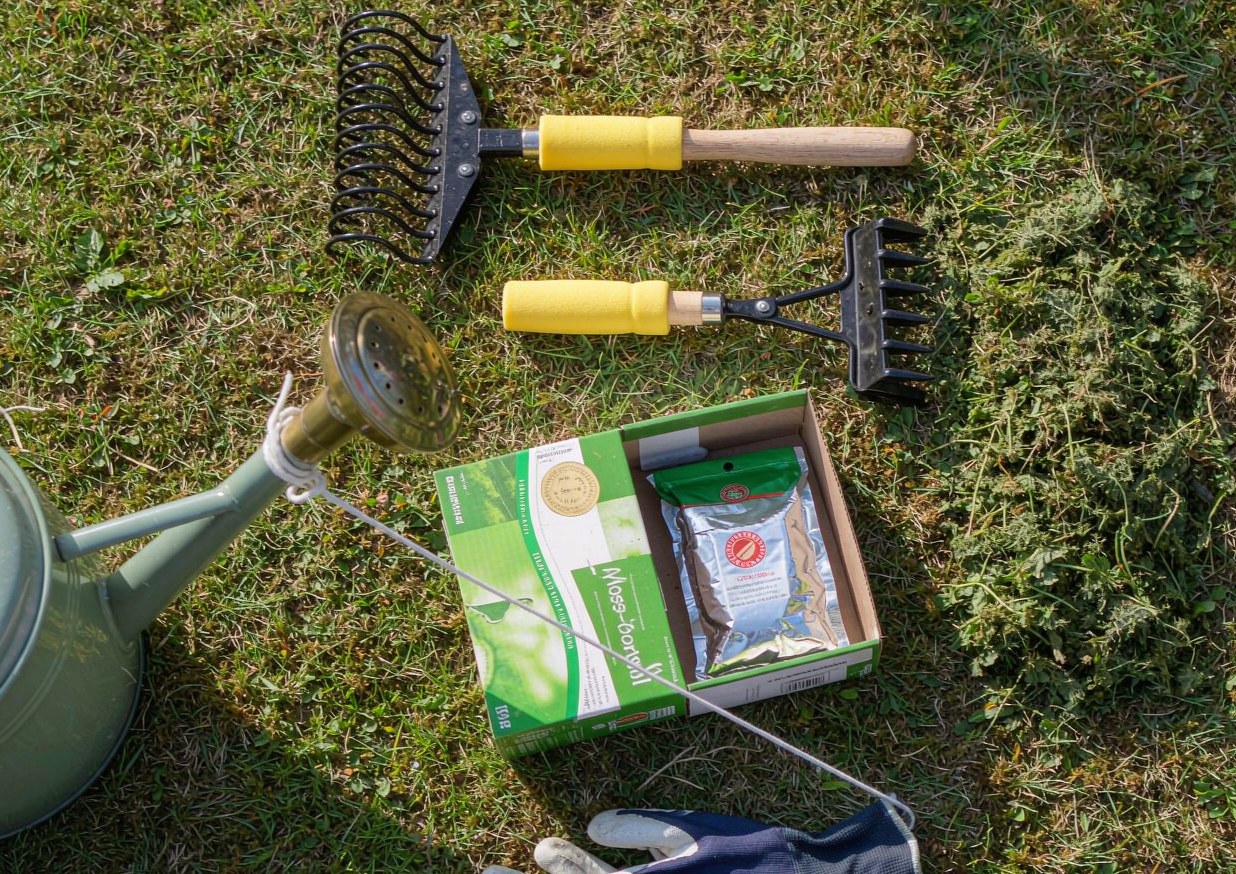
With the conditions improving, it’s time to physically remove the moss you already have. For a small patch, a stiff garden rake or a dedicated moss rake with springy tines does the job: drag it across the area and the spongy moss lifts right off, leaving bare soil behind. For a larger lawn, a scarifier (either a hand tool or a machine you can rent) chews through the thatch and moss layer in one pass. I did my first patch by hand with a rake on a Saturday morning, and it was oddly satisfying to see the green carpet peel up to reveal the dirt underneath. The bare soil is exactly what you want — it’s room for new grass.
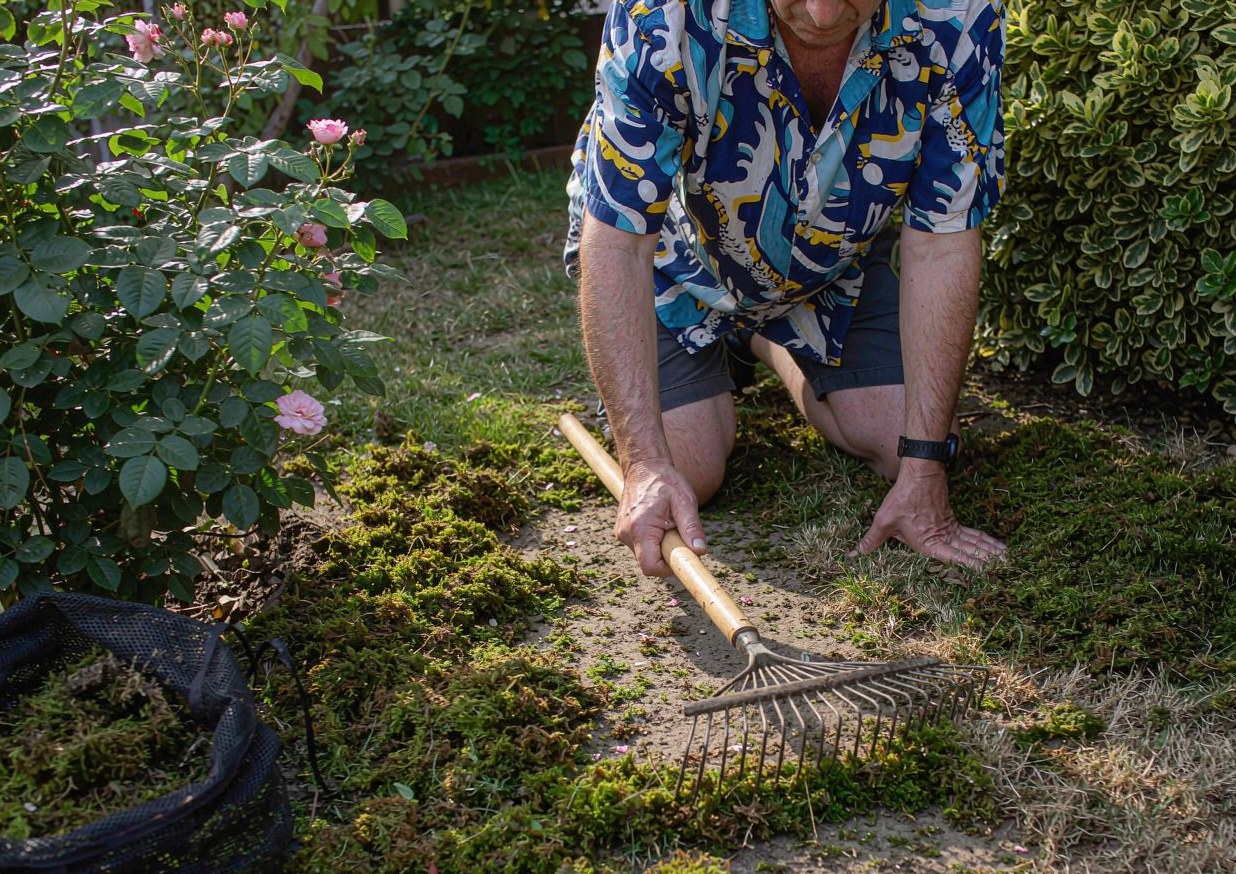
The mistake here is going too deep or too aggressively and gouging the lawn. Light, even pressure lifts moss without destroying the grass you’re keeping. Rake when the soil is slightly damp, not bone dry and not muddy, so the tines glide instead of tearing. Collect the moss debris in a tarp and compost it or bin it — don’t just leave it, or it’ll re-root in the wet. Physical removal is the safest step in the whole process, and it’s the one I trust most because it can’t scorch anything.
When (and how) to use iron-based moss control
Sometimes raking alone isn’t enough, especially in deep moss that’s matted down. That’s where an iron-based moss control (usually ferrous sulfate, often sold as “lawn sand” or a liquid moss killer) earns its place. Used correctly, iron blackens the moss so it dies and can be raked out a week or two later, and it gives the grass a gentle, safe dose of iron that deepens its green. The key words are used correctly — always follow the label rate exactly, apply to a dry lawn, and water it in only as the product directs.
I learned the hard way that “more” is not “better” with this stuff. My first disaster was a double dose that blackened everything, grass included. Now I measure carefully and never blanket-spray; I spot-treat the mossy patches and leave the healthy turf alone. The MSU moss guide is clear that iron products are a tool, not a cure, and that they work best after you’ve opened up light and air. Treat them as the finishing touch on conditions you’ve already fixed, not the first move.
Bring the Grass Back Without Starting Over
Overseeding the bare patches
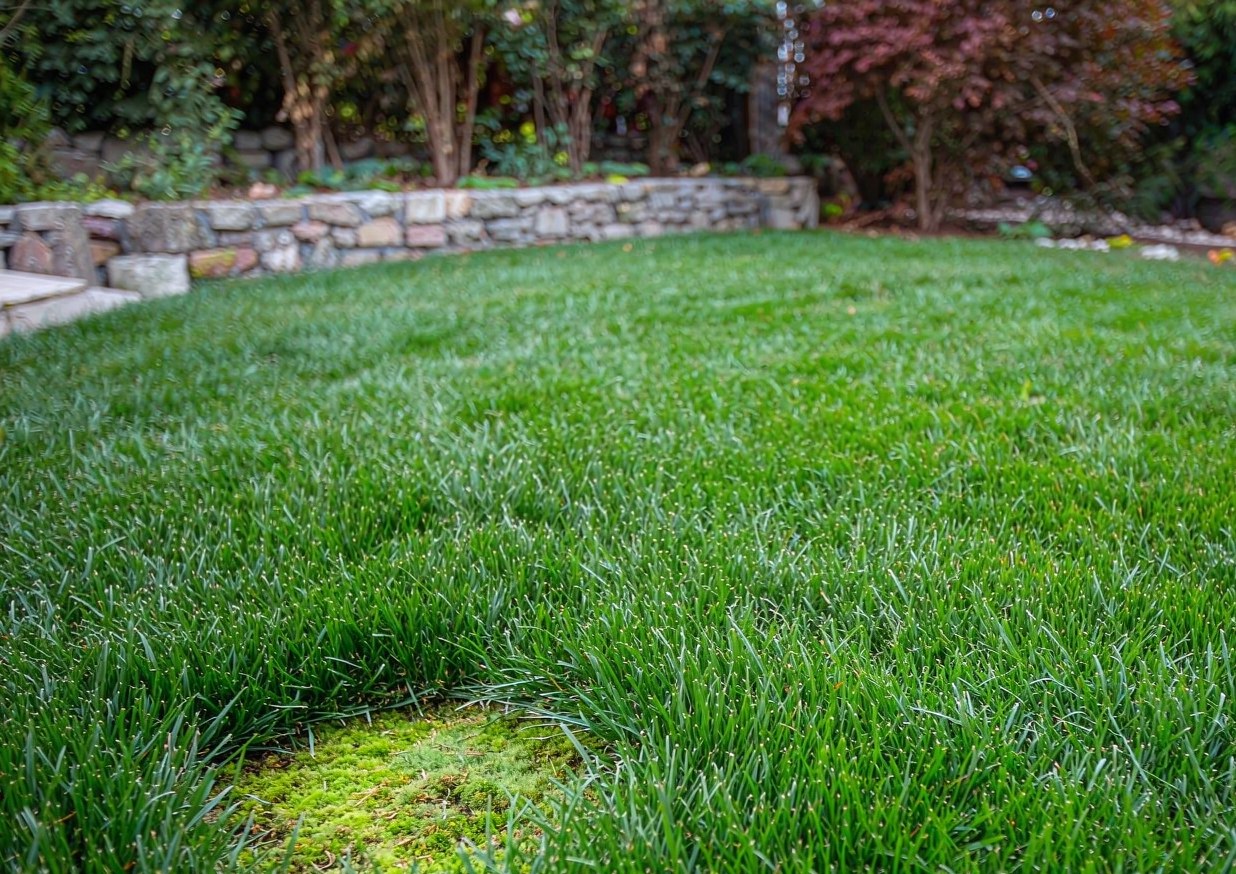
Removing moss leaves bare soil, and bare soil is an open invitation for the next round of spores. The fix is overseeding: spread grass seed over the cleared area so new turf fills in fast and shades out any moss trying to return. I use a shade-tolerant seed mix in my problem spots, because the whole point is to match the grass to the conditions rather than fight them. Rake the seed in lightly, keep the top quarter-inch of soil consistently moist, and you’ll see germination within a week or two.
Don’t skip this step and assume the old grass will spread to cover the gaps — it won’t, not quickly enough to beat the moss. Overseeding is cheap (a small bag of seed covers a surprising area) and it’s the single most reliable way to make a moss patch permanent history. I overseed in early fall, when soil is still warm and weeds are fading, which the cool-season grasses I grow love. If you only remember one thing from this section, make it this: seed the bare soil the same week you clear the moss.
Feeding and mowing for recovery
New seedlings need a little help to establish. A light application of a balanced lawn fertilizer (not a weed-and-feed, which can stress young grass) gives the recovering turf the nutrients to thicken. And mow at the right height — most lawns do better a touch taller, around 2.5 to 3 inches, because taller grass shades the soil and crowds out moss. I bumped my mower up a notch after the moss fiasco and the lawn has been denser ever since. Bagging clippings from the affected area for a mow or two also helps the seed reach soil and light.
One more recovery habit worth building: mow with a sharp blade. A ragged cut stresses grass and opens the door to disease, which thins the lawn and — you guessed it — invites moss. The Cornell gardening program and other university extensions repeat the same advice I’ve learned by trial: a healthy, well-fed, properly mown lawn is its own best moss prevention. Recovery isn’t a single product; it’s a few steady habits.
Mistakes That Kill the Grass Instead
Scorching the lawn with too much product
The number-one way people “kill moss but also kill grass” is over-application. Iron products are safe at label rates and brutal above them; the grass literally burns black just like the moss. I’ve done it, a neighbor has done it, and it’s the most common photo I see in gardening groups with the caption “help, I ruined my lawn.” The rule is simple: measure the area, dilute or spread exactly as directed, and never assume a heavier dose works faster. If anything, err on the lighter side and repeat in a few weeks if needed.
The other product trap is using a non-selective herbicide thinking it’s a moss treatment. Some “total weed killers” will take out your grass along with everything else, which defeats the purpose entirely. Read the label for the words “selective” and “lawn” and avoid anything that says it kills all vegetation in the area you want to keep green. When in doubt, rake first and reach for product only on what raking can’t clear.
Fighting moss in deep shade forever
The second mistake is refusing to accept reality. If a spot gets three hours of sun a day under a dense hedge, no amount of moss treatment will make a lush lawn live there — you’ll be fighting a losing battle every single year. I finally conceded the deepest, darkest corner of my yard and stopped poisoning it. Either open up the light (prune hard), or stop trying to grow grass there and let something else do the job. Pushing against deep shade is how people burn through money and still end up mossy. Know when to change the goal.
This isn’t defeat — it’s working with the site instead of against it. A shaded, mossy nook can become a beautiful planted area or a practical path; it just shouldn’t be a lawn you’re forever rescuing. The moment I stopped forcing grass into my worst corner, my moss maintenance dropped to almost nothing because I stopped creating the conditions for failure.
Keeping Moss From Coming Back
A simple seasonal routine
Prevention is far easier than repeat battles, and it doesn’t take much. My routine is light: in spring I rake out any winter moss that crept in and overseed thin spots; in early fall I aerate, topdress and overseed the trouble zones; through summer I mow tall and water deeply but infrequently so the soil isn’t constantly wet. That’s it. The Oregon State and Iowa State guidance both land on the same rhythm, and it’s kept my once-mossy lawn mostly moss-free for three years running.
The habit that pays off most is the spring rake. Moss spores are always in the air; the goal isn’t to eliminate them but to deny them bare, damp, shady soil to land on. A quick rake and a handful of seed in the spots that thin over winter closes the door before moss gets comfortable. I treat it like brushing my teeth — boring, fast, and enormously effective at avoiding the bigger problem later.
Ground covers and alternatives where grass won’t grow
For the genuinely shady, moss-prone corners where grass simply won’t thrive, the smart move is to plant something that likes those conditions instead of fighting them. Shade-tolerant ground covers — think moss phlox, ajuga, vinca minor, or even a deliberate moss garden — turn the problem area into a feature. I converted my worst corner into a small shade bed with hostas and a path, and it’s now the part of the garden people compliment. You stop losing the war by choosing a different battlefield.
If you go the moss-garden route on purpose, lean into it: moss makes a gorgeous, low-maintenance green carpet in deep shade where nothing else grows, and it needs no mowing. Just be clear it’s a deliberate choice, not a lawn you gave up on. Either way, the win is the same — you remove the conditions that made moss an unwanted intruder and instead make peace with the site.
A Reality Check on “Moss Killers”
What iron sulfate does (and doesn’t do)
Let’s be honest about the products on the shelf. Iron sulfate (ferrous sulfate) blackens moss by disrupting it, after which it dries and can be raked away; it also greens the grass with a safe iron boost. What it does not do is change the underlying conditions, kill moss spores permanently, or replace the need to overseed. Any product promising a one-spray permanent fix is overselling. I keep iron in my toolkit, but I think of it as a rake-assistant, not a cure.
There are also lime-based “moss killer” claims floating around; the logic is that moss prefers acidic soil, so raising pH helps grass. In practice, your soil may not even be acidic, and lime without a test can do more harm than good. Always test first before adding lime, and remember that pH is usually a minor player compared with light and drainage. The NC State Extension and others are clear that soil testing should drive any lime decision, not a guess.
Pet, child and water-safety notes
If you share your yard with kids or pets, a few plain precautions keep this safe. Iron-based products are not meant to be ingested, so keep people and animals off a treated area until it’s dry and any granules are watered in or brushed off — I wait a full day out of caution. Don’t apply before a heavy rain that would wash product into storm drains or ponds, and store the bag where a curious pet or child can’t get to it. None of this is complicated; it’s just label discipline.
One boundary worth stating plainly: this article is general lawn-care information, not veterinary advice. I’m not a vet, and no product label is a substitute for one. If a child or pet actually eats moss-control product or treated grass, call your veterinarian or the ASPCA Animal Poison Control Center at (888) 426-4435 rather than waiting to see what happens. Following the label and keeping the area clear until dry handles almost every realistic risk.
Troubleshooting: Symptoms, Causes and Fixes
Most moss comebacks trace back to one of six causes. This is the table I wish someone had handed me before my first scorched patch.
| Symptom | Likely cause | Fix |
|---|---|---|
| Moss returns every spring | Shade and compaction left untreated | Prune to add light; aerate and overseed each fall |
| Grass won’t fill the bare spots | Soil too poor or wrong seed for the light | Topdress with compost; use a shade-tolerant mix and keep seed moist |
| Treated area turned black, grass included | Over-application of iron product | Water the area heavily; reseed; follow label rate next time |
| Lawn squishy and mossy after rain | Poor drainage, low spot | Regrade the dip; add compost; improve runoff |
| Moss only on the north or fence side | Deepest, most consistent shade | Thin the canopy or switch that strip to shade ground cover |
| Patchy, weak regrowth after clearing | Shock from aggressive scarifying | Water and feed; give 2–3 weeks; overseed thin gaps |
FAQs
Is moss actually bad for my lawn?
Moss isn’t a parasite and it doesn’t “infect” grass — it simply occupies space where grass is already thin and weak. In that sense it’s a symptom of underlying problems like shade, compaction or poor drainage rather than a disease in itself. The reason it bothers people is that it crowds out the turf you want and signals that the lawn isn’t as healthy as it could be. My view is to treat moss as a helpful warning light: it’s telling you the grass needs better conditions, not that you have a pest to exterminate. Fix the conditions and the moss stops being a problem, with or without removing it.
Will moss kill my grass?
On its own, no — moss doesn’t attack or kill grass. What it does is take advantage of bare, weak, shaded soil and gradually spread into spaces the grass has already abandoned. Over time a heavy moss mat can smother small patches of turf by blocking light and air, but that’s a slow, secondary effect of the grass being unhealthy in the first place. The grass “death” people blame on moss is almost always really death by shade, compaction or poor drainage that moss simply moved into. Remove the moss and fix those causes, and the grass comes back.
What’s the fastest way to get rid of moss?
For speed and safety, rake or scarify the moss out physically first — that alone clears most of it in an afternoon and can’t scorch anything. For stubborn, matted patches, follow with an iron-based moss control applied exactly at label rate, then wait one to two weeks and rake out the dead moss. The part that’s often skipped but matters most is overseeding the bare soil immediately, because that’s what stops it returning. A “fast” job that skips overseeding just sets you up for a quicker comeback. My reliable order is: open light, rake, spot-treat, seed.
Can I just leave the moss and not grow grass there?
Yes, and in deep shade it’s often the smarter choice. A deliberate moss area or a shade ground cover (like ajuga, vinca minor or moss phlox) can look intentional and needs far less work than forcing grass into a spot it hates. I converted my darkest corner into a shade bed and it became a feature instead of a frustration. The only thing to avoid is letting moss creep from that area into the lawn you do want — a simple edge or path between the two keeps them separate. So leaving moss is fine; just make it a choice rather than a surrender.
Is iron sulfate safe around pets and kids?
Iron-based moss control is safe when used as directed, but the product itself isn’t meant to be eaten, so keep children and pets off the treated area until it’s fully dry and any granules are watered in or brushed into the soil. I wait a full day out of caution, and I never apply right before heavy rain that could wash it into drains or ponds. Store the bag out of reach. This is general information, not veterinary advice: if a pet or child actually ingests the product or treated grass, call your vet or the ASPCA Animal Poison Control hotline at (888) 426-4435.
Sources and Further Reading
- Michigan State University — How to Identify and Manage Lawn Moss (PDF)
- Oregon State University Extension — Gardening
- University of Illinois Extension — Lawn and Garden
- Iowa State University Horticulture — Lawn and Garden News
- NC State Extension — Gardener Resources
- ASPCA — Toxic and Non-Toxic Plants List (pet safety)
About the author
Samantha has been gardening and arranging her own cut flowers for more than ten years, and has built more than 30 centerpieces from grocery-store bunches, clippings off the cedars behind her house, and a handful of dollar-store experiments that didn’t work. She writes practical, low-cost guides for beginners, including the versions that failed. Prices quoted in her articles are what she actually paid at US grocery and craft stores; nothing is sponsored and no brand pays for a mention. She is not a certified florist, a veterinarian or a horticulturist, and says so wherever a topic touches on plant safety or pet health.
Published: Oct 26, 2026 · Last updated: Oct 26, 2026.
{
“@context”: “https://schema.org”,
“@graph”: [
{
“@type”: “Article”,
“headline”: “How to Deal With Moss in a Lawn Without Killing the Grass”,
“description”: “Moss in a lawn is a symptom, not the enemy. Fix shade, compaction and drainage, remove the moss gently by raking, spot-treat with iron-based control, and overseed so grass fills back in without scorching the turf.”,
“image”: [
“images/mossy-lawn-hero-clean.jpg”,
“images/moss-tools-materials-clean.jpg”,
“images/moss-removal-process-clean.jpg”
],
“author”: { “@type”: “Person”, “name”: “Samantha” },
“publisher”: { “@type”: “Organization”, “name”: “gmmur” },
“datePublished”: “2026-10-26”,
“dateModified”: “2026-10-26”,
“mainEntityOfPage”: {
“@type”: “WebPage”,
“@id”: “https://gmmur.com/how-to-deal-with-moss-in-a-lawn-without-killing-the-grass”
}
},
{
“@type”: “FAQPage”,
“mainEntity”: [
{
“@type”: “Question”,
“name”: “Is moss actually bad for my lawn?”,
“acceptedAnswer”: {
“@type”: “Answer”,
“text”: “Moss is not a parasite and does not infect grass; it occupies space where grass is already thin and weak due to shade, compaction or poor drainage. Treat it as a symptom and a warning light: fix the underlying conditions and the moss stops being a problem.”
}
},
{
“@type”: “Question”,
“name”: “Will moss kill my grass?”,
“acceptedAnswer”: {
“@type”: “Answer”,
“text”: “On its own, moss does not attack or kill grass. It spreads into bare, weak, shaded soil that the grass has already abandoned. Heavy moss can slowly smother small turf patches by blocking light and air, but that is a secondary effect of unhealthy grass. Remove the moss and fix the causes, and the grass returns.”
}
},
{
“@type”: “Question”,
“name”: “What’s the fastest way to get rid of moss?”,
“acceptedAnswer”: {
“@type”: “Answer”,
“text”: “Rake or scarify the moss out physically first, since that clears most of it in an afternoon and cannot scorch the lawn. For stubborn patches, follow with an iron-based moss control at label rate, wait one to two weeks, then rake out the dead moss. Overseed the bare soil immediately to stop it returning.”
}
},
{
“@type”: “Question”,
“name”: “Can I just leave the moss and not grow grass there?”,
“acceptedAnswer”: {
“@type”: “Answer”,
“text”: “Yes, and in deep shade it is often the smarter choice. A deliberate moss area or a shade ground cover such as ajuga, vinca minor or moss phlox can look intentional and needs less work than forcing grass into a spot it hates. Keep a simple edge between it and the lawn you want to protect.”
}
},
{
“@type”: “Question”,
“name”: “Is iron sulfate safe around pets and kids?”,
“acceptedAnswer”: {
“@type”: “Answer”,
“text”: “Iron-based moss control is safe when used as directed, but it is not meant to be eaten. Keep children and pets off the treated area until it is fully dry and any granules are watered in or brushed into the soil, and never apply before heavy rain. This is general information, not veterinary advice: if a pet or child ingests the product or treated grass, call your vet or the ASPCA Animal Poison Control hotline at (888) 426-4435.”
}
}
]
}
]
}