
If your lawn looks like a patchy lawn with bare dirt showing through by mid-October, you are not alone, and you are not stuck with it. The single best fix I have found for a thin, uneven turf is to overseed in the fall. Two years ago my front yard was roughly half bare soil after a brutal summer, and I threw down seed in a panic during a hot August weekend because that is what a neighbor said to do. Nothing came up. The seed baked on the surface, the weeds took the open ground, and I spent the next spring pulling crabgrass out by hand. Once I actually learned the timing and the prep, the difference was night and day: the following fall I overseeded the same lawn and had a thick, green carpet by Thanksgiving. In this article I walk you through the exact fall overseeding method I use now, including the mistakes that wasted my first attempt, so you can skip the wasted season.
Quick answer: to fix a patchy lawn, overseed in early fall (late August through mid-October in most cool-season zones) when soil is still warm but air is cooling. Mow the existing grass short, rake the bare spots to expose soil, spread quality seed with a calibrated spreader, press it into contact with the ground, and keep the top quarter-inch damp until it germinates (usually 7 to 21 days). The three things people get wrong are seeding in the wrong season, leaving seed sitting on top of thatch instead of on soil, and letting the surface dry out for even one hot afternoon. Do those three things right and a thin lawn fills in within a month. Everything below explains the why and the how.
- 1. Why Fall Is the Best Time to Overseed a Patchy Lawn
- 2. Read Your Lawn Before You Buy a Thing
- 3. Gather Your Supplies (and What Each One Does)
- 4. Prep the Lawn So Seed Can Reach Soil
- 5. Spread the Seed the Right Way
- 6. Watering Schedule That Actually Grows Grass
- 7. Common Overseeding Mistakes That Waste a Whole Season
- 8. What to Expect Week by Week (and When to Relax)
- 9. Troubleshooting: Symptoms, Causes and Fixes
- 10. FAQs
- 11. Sources and Further Reading
Why Fall Is the Best Time to Overseed a Patchy Lawn
What “overseeding” actually means
Before we get into timing, let me clear up the word, because it trips up a lot of beginners. Overseeding simply means spreading new grass seed over an existing lawn without tearing the whole thing up or laying new sod. You are adding seedlings to the turf you already have, filling the gaps so the lawn gets denser. It is the cheapest, least disruptive way to repair a patchy lawn, and you can do it with a $20 bag of seed and a rake rather than a $2,000 sod job. The reason it works is that grass is a clumping, spreading plant: give a bare spot a little seed and some soil contact, and those new plants knit into the surrounding turf within a few weeks.
I think of overseeding like topping up a thinning rug rather than replacing the floor. My first lawn was Kentucky bluegrass that had died back in wide patches after a drought, and I assumed I needed to rip it out and start over. A county extension agent told me to just overseed, and she was right — the existing grass was still alive at the crowns, and new seedlings filled the dead lanes. You do not need to kill what is there. You just give the open ground competition in the form of fresh, vigorous seedlings before weeds claim it.
Why autumn beats spring for cool-season grass
If you grow cool-season grass (Kentucky bluegrass, tall fescue, perennial ryegrass, fine fescue — the kinds most of the northern and transition-zone US grows), fall is decisively the best window to overseed. The soil is still warm from summer, which speeds germination, but the air has cooled, which means fewer weeds germinating to compete and far less heat stress on tender new blades. Spring works in a pinch, but spring soil is cold and spring is weed season — crabgrass and friends sprout the same week your grass does, and they usually win. The university extension guides I rely on consistently point homeowners to late summer and early fall for seeding cool-season lawns for exactly this reason.
The practical window for me, in a zone with cold winters, runs from about late August to mid-October. You want the seed to establish for at least four to six weeks before the first hard freeze. My failed August attempt failed not because August is wrong but because I picked the hottest, driest week and then ignored the watering; a cooler, steadier September would have been forgiving. If you are in the deep South with warm-season grass (Bermuda, zoysia, St. Augustine), the calendar flips — you overseed those in early fall too, but with a cool-season “winter rye” only if you want green through winter, which is a different project. For a permanent patchy lawn repair in cool-season country, early fall is the call.
Read Your Lawn Before You Buy a Thing
Figure out your grass type
The most expensive mistake you can make is buying the wrong seed, and you cannot pick the right seed until you know what is already growing. Walk your yard and look at the living grass. Tall fescue grows in thick, wide, bunching blades and tolerates shade and drought better than most. Kentucky bluegrass has narrower, boat-tipped blades and spreads by runners, so it self-repairs. Perennial ryegrass is shiny, fine, and germinates fast. If you are unsure, dig up a small plug and compare it to the photos on any university extension site, or take a sample to your local extension office — most will ID it for free. Matching your overseed mix to the existing grass is what makes the repair invisible instead of a patchwork of different greens.
I learned this the hard way: my first bag was a “universal shade mix” that was mostly fine fescue, while my lawn was bluegrass. The fescue came up, looked lighter and finer, and created a two-tone lawn that bugged me for two seasons. Now I buy a mix dominated by whatever is already there, usually with a little perennial ryegrass added because it germinates in about a week and holds the ground while the slower bluegrass or fescue fills in. Match the grass and the patch disappears; mismatch it and you can see the seam from the street.
Map the bare patches vs. the thin areas
Not every problem spot needs the same treatment, so before you spend a dollar, walk the lawn with a notepad and sort what you see into two piles. Bare patches are dirt with no grass at all — these need the most prep, because seed sitting on hard, bare soil without contact will not take. Thin areas still have grass but you can see through to soil between plants — these just need seed and light raking. Splitting your effort this way saves seed and time, and it keeps you from over-seeding thick areas that do not need it (which just invites disease in damp weather).
When I redid my lawn the right way, I paced off the bare patches and realized they were all on the south side where the sprinkler never reached and the sun beat down. That told me the real problem was watering, not the grass, and overseeding alone would not hold unless I fixed the coverage too. Reading the lawn first turned a “buy more seed” problem into a “fix the sprinkler” problem, and the overseeding then actually stuck. So before you buy, ask why the patch is there: shade, compaction, poor watering, pet spots, or just old age? The answer changes how you prep.
Gather Your Supplies (and What Each One Does)
Everything you need for a proper overseed fits in a wheelbarrow and costs well under $100 if you already own a mower. Here is the short kit I keep on hand, and why each piece earns its place:
- Quality grass seed matched to your existing lawn and climate — this is not the place to cheap out
- A spreader (handheld for small yards, broadcast or drop for larger ones) — sprinkling by hand wastes half the seed
- A leaf rake or stiff broom — to scratch the surface and work seed into contact
- Topsoil or compost — a thin topdressing over the bare spots
- A hose-end sprinkler or irrigation — germination lives or dies on consistent moisture
- Garden gloves and a knee pad — you will be on the ground more than you expect
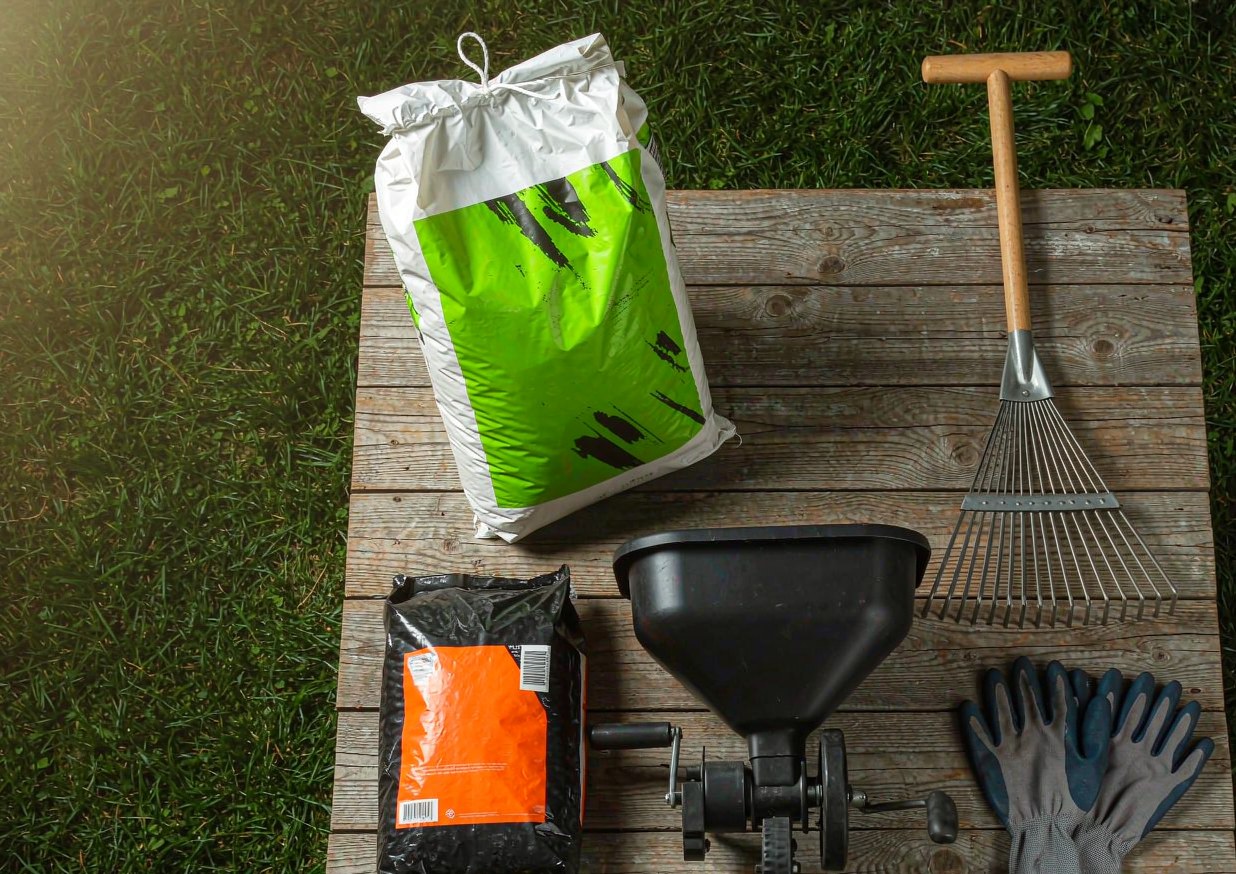
The short kit: seed, spreader, rake, topsoil
Let me be specific about the four things that do the actual work. Seed is your largest variable; buy a named, weed-free cultivar from a garden center or co-op rather than the cheapest big-box bargain blend, which often carries annual ryegrass that dies in winter and leaves you patchy again. A spreader matters more than people think — I hand-cast my first lawn and ended up with stripes of dense grass and stripes of bare dirt because my “even” toss was anything but. A $25 broadcast spreader turns a 2,000-square-foot lawn into a 20-minute job with even coverage.
The rake is what creates seed-to-soil contact, and topsoil or compost is what holds moisture around the seed on bare patches. On my second attempt I topdressed the worst bare spots with about a half-inch of compost, raked it level, and then seeded — those spots filled in first and stayed green longest, because the compost held water like a sponge during the warm September days. You do not need much: a single 40-pound bag covers a surprising amount of patch when you are only filling lanes, not the whole yard. Spend the money on seed and a spreader; borrow the rake.
Do you need a starter fertilizer?
This is where I have to be careful, because the temptation is to reach for a “weed and feed” or some chemical mix. For a basic overseed, you do not need a separate fertilizer at all — fresh seed has enough energy in the kernel to germinate, and a light topdressing of compost feeds the seedlings naturally. If your soil test (more on that below) shows it is hungry, a starter fertilizer with a low, balanced analysis is fine, but you must follow the label exactly and keep pets and kids off the area until it is watered in. I am not a chemist and this is not a prescription; the extension services below publish region-specific feeding guidance if your lawn genuinely needs it.
The one boundary I will state plainly: I never guess at chemical rates, and neither should you. Applying more than the label says does not help the grass and can burn new seedlings or run off into storm drains. If you want to feed, buy a product labeled for new seed, set your spreader per its directions, and water it in. That is the whole rule. Keep the focus on seed, soil contact, and water — those three repair a patchy lawn without any chemistry wizardry.
Prep the Lawn So Seed Can Reach Soil
Mow low and dethatch
Seed cannot germinate on a thatch mattress, so the first prep step is to cut the existing grass shorter than usual — about half your normal mowing height — and bag or rake up the clippings. Lowering the canopy lets more light and water reach the soil surface where the new seed sits, and it reduces competition from the old grass. If your lawn has a thick, spongy layer of dead matter (thatch) more than about half an inch deep, drag a dethatching rake or rent a dethatcher so the seed can actually touch dirt. I skipped this on my first try and the seed just nestled into the thatch and dried out; the second time I mowed to about 1.5 inches and the germination nearly doubled.
A note on safety and timing: mow a day or two before you seed, not the same hour, so the clippings clear and the soil surface is calm. If the ground is wet, wait — working wet soil smears it into a crust that seedlings cannot push through. The goal of this whole step is boring but decisive: expose bare soil. Every minute you spend here is paid back in germination rate, and it is the difference between a lawn that fills in and one that stays patchy.
Rake, aerate, and topdress
Once the grass is short, take the leaf rake to the bare and thin areas and scratch the surface lightly — you are not tilling, just breaking the crust so seed can fall into the soil rather than sitting on top. On compacted lawns (the kind where rain beads up instead of soaking in), punch a few holes with a manual core aerator or at least stab a garden fork in every foot or so; air and water need a path down. Then lay a thin skim of compost or topsoil over the bare patches and rake it level. This is the step my August disaster missed entirely, and it is the step that makes or breaks the whole job.
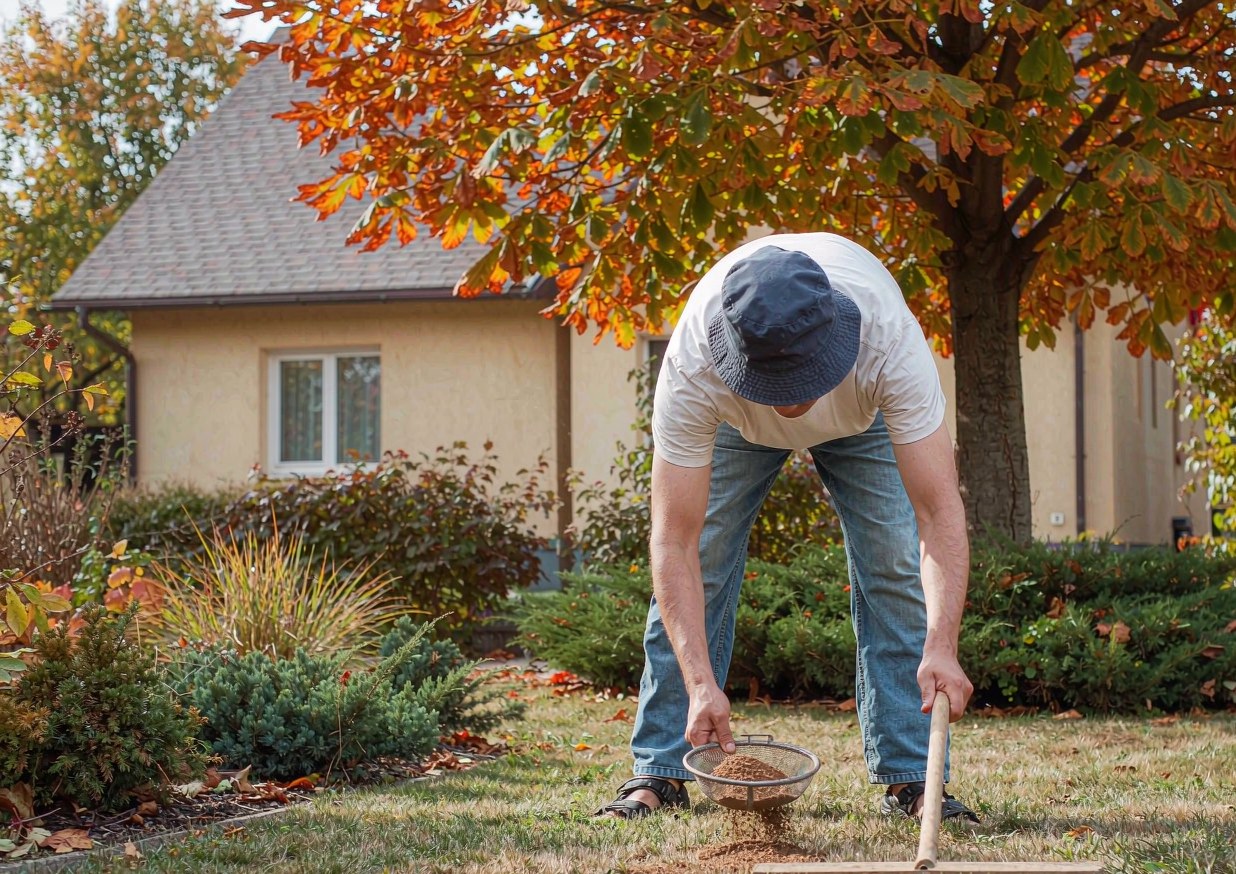
On my successful fall, I spent a Saturday morning just raking and topdressing the south-side patches, maybe two hours for a quarter acre, and it was the most valuable two hours of the whole project. The compost held moisture through a warm spell that would have baked unprotected seed, and the seedlings that came up there were noticeably stronger. Do not rush this part. A patchy lawn is patchy because the ground is not ready for new life, and five minutes of raking per patch is what changes that.
Spread the Seed the Right Way
Calibrate your spreader and split the bag
Read the seed bag for the overseeding rate (it is lower than a full renovation rate) and set your spreader to match. Then do the thing that saves you from stripes: split the seed in half and go over the lawn in two directions, half north-south and half east-west. This cross-hatch pattern is how pros get even coverage, and it hides the inevitable wobble in your walking speed. I free-handed my first bag in one pass and got the classic “zebra” lawn — solid green bands separated by bare ones — because I drifted faster on the turns. Two passes at half rate fixed that habit for good.
If you do not have a spreader, you can still overseed by hand, but portion the seed into a bucket and broadcast in a gentle arc, then go back over with the rake to work it in. Whatever method, the rule is even and light, not heavy and lumpy. Piling seed in one spot wastes it and the overcrowded seedlings there thin themselves out while the bare spots stay bare. A patchy lawn stays patchy when coverage is uneven, so slow down and overlap your passes by about a third.
Water-in and press seed into contact
After spreading, the seed needs to be pressed into the soil, not left floating on top. A light raking in the direction opposite your last pass does most of it, and on tiny bare spots I sometimes use the flat back of the rake or even my foot to firm the seedbed. Then water gently with a sprinkler on a mist setting — a hard blast washes seed into piles. The point of all this is seed-to-soil contact: a seed hanging in air or thatch has no moisture bridge to the ground and simply dries. This is the single most common reason overseeding fails, and it is the one my first lawn died on.
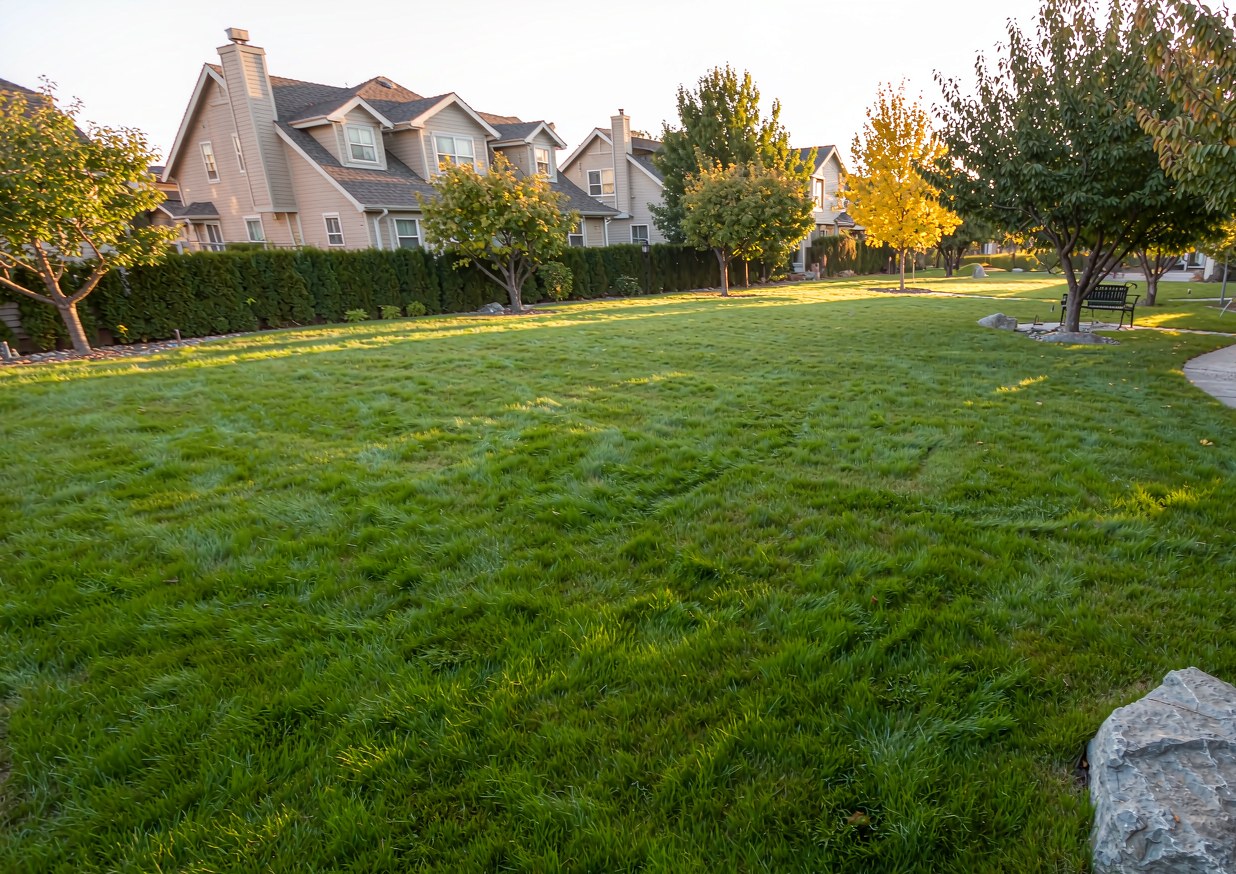
Once the seed is down and pressed, your job shifts from builder to babysitter. Mark the calendar: from here until germination, the surface must never fully dry. I set a phone reminder for mornings and evenings for the first two weeks, because the warm September sun in my yard could dry the top quarter-inch in a single afternoon and that is all it takes to kill a just-sprouted seedling. If you only remember one thing from this whole article, remember that contact plus consistent surface moisture is what turns a patchy lawn into a solid one.
Watering Schedule That Actually Grows Grass
The first 14 days: keep it damp, not soaked
For the first two weeks, think “damp sponge,” not “wet puddle.” New grass seed and the tiny sprouts it becomes have no roots to speak of, so they drink only what is in the top sliver of soil. That means short, frequent watering — often two or three times a day for five to ten minutes each in warm weather — just enough to keep the surface from drying. Overwatering is its own problem: soggy soil suffocates seed and breeds fungus, especially in cool, damp fall nights. The signal you want is soil that darkens when watered and never cracks or turns powdery between sessions.
I keep a simple rhythm: a light watering at sunrise, a second around midday if it is hot, and a third in early evening if the surface feels dry. My failed attempt died specifically because I watered once a day, deeply, which soaked the lower soil but let the top crust bake by afternoon — the seed on top never saw moisture. Frequency at the surface beats volume down deep for the first two weeks. After that, you can back off and the seedlings will tell you when by their color.
After germination: shift to deep and infrequent
Once you see a haze of green and the seedlings are about an inch tall (usually days 10 to 21), it is time to change the watering personality. Switch from several short sprinkles to one longer soak every two or three days, enough to wet the top few inches and encourage roots to grow downward instead of staying shallow. Deep roots are what make the new grass survive its first summer, so this transition matters as much as the germination phase. A lawn watered shallowly all its life is a patchy lawn waiting to happen the moment heat arrives.
Practically, I move to a single 20- to 30-minute sprinkler session every other day once most of the lawn has sprouted, then taper to twice a week by late fall as temperatures drop and evaporation slows. If the new grass looks bluish-gray or footprints stay flattened, it is thirsty and I add a session. Let the grass tell you; do not irrigate on a rigid clock once it is established. The whole arc — frequent and shallow, then deep and rare — is the watering story of every thick lawn I have grown.
Common Overseeding Mistakes That Waste a Whole Season
Skipping soil contact (the #1 failure)
If you take nothing else, take this: seed sitting on thatch or loose clippings will not establish, and it is the reason most first-time overseeding looks like nothing happened. I have already told you my August story, but it bears repeating because the fix is so cheap. Rake the bare spots, topdress lightly, press the seed in, and you remove the single biggest cause of a still-patchy lawn after seeding. People imagine grass is fragile; mostly it is just needs its seed touching dirt and a damp surface, and that is on you to provide.
A close cousin of this mistake is seeding right before a heat wave or a dry spell. Grass seed germinates best when nights are cool and the soil stays moist, which is exactly why fall wins. If you must overseed in a warm dry period, you are signing up for three waterings a day and constant worry; in fall, the weather does half the work. Plan the job for a stretch of mild, partly cloudy days if you can, and you will spend a fraction of the effort for the same result.
Mowing too soon or too short
The new grass needs a grace period before its first haircut. Wait until the seedlings are at least 3 inches tall and then take only the top third — mowing too early yanks seedlings out by the crowns, and mowing too short shocks them right as they are trying to establish. The first mow after overseeding is the second-most-common way people undo their own work; I have done it, scalping a section I was proud of because I treated the new grass like the old, tough turf. Be patient, raise the deck, and let it get established.
The other mowing trap is forgetting that the old grass also needs its height respected while the new stuff comes up. Keep the established lawn at a normal, healthy height (we cover exact numbers in the mowing article) so it shades the soil and shelters seedlings rather than shading them to death or competing them into starvation. A patchy lawn repair is a balancing act between the grass you have and the grass you are growing, and the mower is the tool that tips it.
What to Expect Week by Week (and When to Relax)
Days 0-21 timeline
Here is the honest week-by-week, because expectations are where people talk themselves into “it failed” too early. Days 0-3: nothing visible; the seed is swelling and rooting underground — resist the urge to reseed. Days 4-10: perennial ryegrass may show a faint green fuzz; bluegrass and fescue lag. Days 10-21: a real haze of green appears across the thin areas, and bare patches start to close. If by day 21 you see almost nothing, the usual culprits are no soil contact, dried-out surface, or wrong seed for the season — not bad luck. I tracked this on a notepad my second fall and it kept me from panicking on day 5 when the lawn still looked bare.
One thing that surprised me: the bare south patches came in last, not first, because they got the most sun and dried fastest despite my best watering. Knowing that, I gave them an extra midday sprinkle and they caught up by week three. The timeline is a guide, not a contract; your microclimate will shift it. The takeaway is that three weeks is the real test, and most “failures” are just impatience plus a dry afternoon.
First mow and first winter
Your first mow of the new grass happens around week four to five, once it is 3 inches and you can tug a blade without it pulling free (that tug test confirms roots have set). Cut at the top-third rule and let the clippings lie — they mulch the seedlings. From there, keep mowing on a normal schedule through fall, because the new grass keeps growing until the ground freezes. Going into winter with a dense, tall-ish lawn (around 2.5 to 3 inches for cool-season grass) is exactly what protects the crowns from freeze-thaw heaving and sets you up for a thick spring.
That first winter, relax. The lawn will look dormant and brown, and that is correct — you are not supposed to see green until spring. What you have done is build root mass and tiller count underground that pays off in April. My second-fall lawn looked unremarkable by December, but by May it was the thickest turf on the street, and neighbors asked if I’d resodded. A patchy lawn fixed in fall is a spring miracle you earned six months earlier.
Troubleshooting: Symptoms, Causes and Fixes
Most overseeding problems show up in the first three weeks, and nearly all trace back to one of six causes. This is the table I wish someone had handed me before my first, failed attempt.
| Symptom | Likely cause | Fix |
|---|---|---|
| No germination after 3 weeks | Seed on thatch, no soil contact, or surface dried out | Rake bare spots, re-seed with contact, water 2-3x daily at surface |
| Green stripes alternating with bare | Uneven hand- or single-pass spreading | Split bag, cross-hatch in two directions next time; spot-seed gaps now |
| Seedlings appear then collapse | Damping-off fungus from overwatering or cool wet nights | Water less often, deeper; improve drainage; avoid evening soaks |
| Patchy comeback only on shady side | Wrong seed for light; shade mix needed | Use fine fescue / shade-tolerant mix in those areas next fall |
| Weeds filling the open ground | Seeded in spring or skipped prep; weeds out-competed | Hand-pull now; plan a fall overseed with proper prep next season |
| New grass pulls up when mowed | Mowed too early or too short | Wait until 3 in tall, cut only top third, sharpen blade |
FAQs
When exactly in fall should I overseed a patchy lawn?
For cool-season grass, the sweet spot is late August through mid-October in most US climates, as long as you have at least four to six weeks of growing weather before the first hard freeze. Soil temperatures in the 60s to low 70s Fahrenheit are ideal for germination, and those line up with early-to-mid fall in most northern and transition zones. I aim for September in my area because the worst heat is gone but the soil is still warm, which gave me the best fill-in of any attempt. If you are farther south with warm-season grass, ask your local extension for the right window, because the calendar is different there.
Can I just throw seed on the lawn without prep?
You can, but you will mostly waste the seed, and that is the mistake that leaves a lawn still patchy after seeding. Without mowing short, raking the surface, and pressing seed into soil contact, most of the seed sits on thatch and dries out or gets eaten by birds. A light prep — short mow, rake the bare spots, topdress, press in — takes a couple of hours and is the difference between a lawn that fills in and one that does not. The extension guides are unanimous that seed-to-soil contact is the single biggest factor in overseeding success, so do the prep.
How often should I water after overseeding?
For the first two weeks, water often and lightly — typically two or three short sessions a day (five to ten minutes each) just to keep the top quarter-inch damp, because new seed has no roots to reach deeper moisture. After the grass sprouts and reaches about an inch, transition to one deeper soak every two or three days to push roots down. The trap is watering once daily and deeply, which wets the bottom while the surface bakes; frequency at the surface matters most early on. If a warm afternoon dries the top, add a session rather than waiting for your regular time.
Is fall overseeding safe around pets and kids?
Plain grass seed and a compost topdressing are about as safe as a yard gets, but if you use any starter fertilizer or soil product, keep pets and children off the area until it has been thoroughly watered in and the surface is dry, and follow the product label exactly — I never guess at rates. This is general lawn-care information and not veterinary advice; if you suspect a pet has eaten a large amount of any lawn product or is acting oddly, call your veterinarian or the ASPCA Animal Poison Control Center at (888) 426-4435 rather than waiting to see. I keep my dog inside during seeding and the first watering just to be safe.
Will one fall overseed fix a badly patchy lawn for good?
It will fix the vast majority of thin and bare lawns, but “for good” depends on why the lawn was patchy in the first place. If the cause was age, heat, or light traffic, one well-done fall overseed usually holds for years. If the cause was poor watering, compaction, heavy shade, or pet damage, you need to fix that underlying issue or the patches will return. My south-side patches came back thinner the next year until I fixed the sprinkler coverage, which taught me that overseeding is the repair, not the diagnosis. Treat the cause, overseed the symptom, and you get a lawn that stays.
Sources and Further Reading
- University of Illinois Extension — Lawn Seeding (LawnTalk)
- Oregon State University Extension — Gardening
- North Carolina State University Cooperative Extension
- Michigan State University Extension — Lawn & Garden News
- ASPCA — Toxic and Non-Toxic Plants List
About the author
Samantha has been gardening and arranging her own cut flowers for more than ten years, and has built more than 30 centerpieces from grocery-store bunches, clippings off the cedars behind her house, and a handful of dollar-store experiments that didn’t work. She writes practical, low-cost guides for beginners, including the versions that failed. Prices quoted in her articles are what she actually paid at US grocery and craft stores; nothing is sponsored and no brand pays for a mention. She is not a certified florist, a veterinarian or a horticulturist, and says so wherever a topic touches on plant safety or pet health.
Published: Oct 20, 2026 · Last updated: Oct 20, 2026.
{
“@context”: “https://schema.org”,
“@graph”: [
{
“@type”: “Article”,
“headline”: “How to Overseed a Patchy Lawn in Fall”,
“description”: “Fix a patchy lawn by overseeding in early fall: mow short, rake bare spots for seed-to-soil contact, spread matched seed with a calibrated spreader, and keep the surface damp until germination in 7 to 21 days.”,
“image”: [
“images/overseed-hero-clean.jpg”,
“images/overseed-materials-clean.jpg”,
“images/overseed-process-clean.jpg”
],
“author”: { “@type”: “Person”, “name”: “Samantha” },
“publisher”: { “@type”: “Organization”, “name”: “gmmur.com” },
“datePublished”: “2026-10-20”,
“dateModified”: “2026-10-20”,
“mainEntityOfPage”: {
“@type”: “WebPage”,
“@id”: “https://gmmur.com/how-to-overseed-a-patchy-lawn-in-fall”
}
},
{
“@type”: “FAQPage”,
“mainEntity”: [
{
“@type”: “Question”,
“name”: “When exactly in fall should I overseed a patchy lawn?”,
“acceptedAnswer”: {
“@type”: “Answer”,
“text”: “For cool-season grass, the sweet spot is late August through mid-October in most US climates, with at least four to six weeks of growing weather before the first hard freeze. Soil temperatures in the 60s to low 70s Fahrenheit are ideal. Aim for early-to-mid fall once the worst heat is gone but the soil is still warm.”
}
},
{
“@type”: “Question”,
“name”: “Can I just throw seed on the lawn without prep?”,
“acceptedAnswer”: {
“@type”: “Answer”,
“text”: “You can, but you will mostly waste the seed. Without mowing short, raking the surface, and pressing seed into soil contact, most of it sits on thatch and dries out. A light prep of short mow, rake, topdress and press takes a couple of hours and is the difference between a lawn that fills in and one that stays patchy. Seed-to-soil contact is the single biggest factor in overseeding success.”
}
},
{
“@type”: “Question”,
“name”: “How often should I water after overseeding?”,
“acceptedAnswer”: {
“@type”: “Answer”,
“text”: “For the first two weeks, water often and lightly, two or three short sessions a day to keep the top quarter-inch damp, because new seed has no roots to reach deeper moisture. After it sprouts and reaches about an inch, transition to one deeper soak every two or three days to push roots down. Frequency at the surface matters most early on.”
}
},
{
“@type”: “Question”,
“name”: “Is fall overseeding safe around pets and kids?”,
“acceptedAnswer”: {
“@type”: “Answer”,
“text”: “Plain grass seed and compost are very safe, but if you use any starter fertilizer or soil product, keep pets and children off the area until it is watered in and dry, and follow the label exactly. This is general lawn-care information and not veterinary advice; if a pet eats a large amount of any lawn product or acts oddly, call your veterinarian or the ASPCA Animal Poison Control Center at (888) 426-4435.”
}
},
{
“@type”: “Question”,
“name”: “Will one fall overseed fix a badly patchy lawn for good?”,
“acceptedAnswer”: {
“@type”: “Answer”,
“text”: “It fixes most thin and bare lawns, but ‘for good’ depends on the underlying cause. If the cause was age, heat or light traffic, one well-done fall overseed usually holds for years. If it was poor watering, compaction, heavy shade or pet damage, fix that issue or the patches return. Overseeding repairs the symptom; treat the cause for a lawn that stays thick.”
}
}
]
}
]
}