
The snake plant is sold as the houseplant you cannot kill, and I managed to kill two of them in eighteen months. Neither died from neglect. Both died from kindness — from me watering them on a schedule, being loyal to a dark corner that looked nice, and buying a pretty ceramic pot with no drainage hole in it. The first one went soft at the base and folded over like a wet newspaper; by the time I noticed, the rhizome underneath was already mush. The second one sat in a hallway with one small window for a whole winter and simply stopped, then rotted the moment I “caught up” on watering. What finally fixed it wasn’t a product. It was learning to read three signals — how much light the spot actually gets, whether the mix is dry two inches down, and whether the pot can get rid of water at all. In this article I’ll go through the exact routine I’ve used since, including the mistakes that cost me those two plants. Ready? Let’s get yours through its first decade.
Quick answer: a snake plant wants bright indirect light but tolerates low light, and it wants to dry out completely between waterings — roughly every 2–4 weeks in summer and every 6–8 weeks in winter for a typical 8-inch pot. Water deeply until it runs out of the drainage hole, then do not water again until a finger pressed two inches into the mix comes out bone dry. Plant it in a fast-draining cactus or succulent mix cut with perlite, in a pot with a real drainage hole — terracotta is the safest choice you can make. Almost every dead snake plant was overwatered, not under-watered. Everything below explains why, and how to tell the difference.
- 1. Getting Light Right for a Snake Plant
- 2. Watering Without Rotting It
- 3. Choosing the Right Pot and Soil Mix
- 4. Temperature, Humidity and Where Not to Put It
- 5. Feeding, and Why Most People Overdo It
- 6. The Mistakes That Actually Kill Snake Plants
- 7. Propagating and Dividing a Snake Plant
- 8. A Year-Round Care Calendar
- 9. Troubleshooting: Symptoms, Causes and Fixes
- 10. FAQs
- 11. Sources and Further Reading
Getting Light Right for a Snake Plant
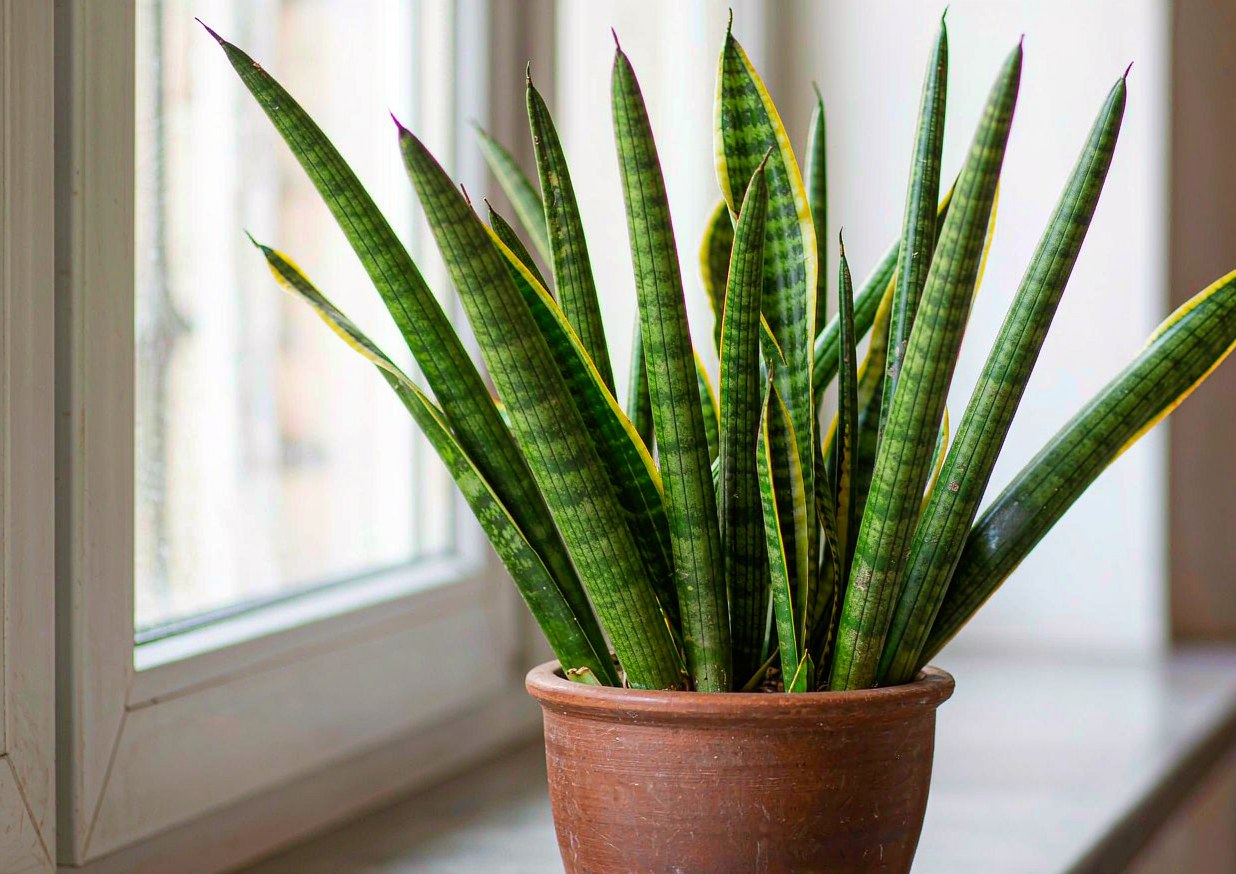
How much light does a snake plant actually need?
The single most useful thing to understand about snake plant light is that there’s a wide gap between surviving and growing. This plant will sit in a dim corner for a year without dying, which is exactly why so many people conclude it’s thriving when it has quietly stopped doing anything at all.
Botanically it’s Dracaena trifasciata — you’ll still see it sold as Sansevieria trifasciata, and the Missouri Botanical Garden’s Plant Finder lists it under that older name, which is worth knowing when you’re looking things up. It’s a tough, drought-adapted species from dry regions of West Africa, and in the wild it grows in dappled light at the edge of scrub rather than in deep shade. That’s the clue. Bright indirect light — a few feet back from an east or west window, or right in a north window — is where it actually puts on growth. Mine sits about four feet from a west-facing window and adds two or three new leaves a year. The same plant spent a year in a hallway and added precisely zero. The difference wasn’t water or food. It was photons.
Can a snake plant survive in a dark corner?
Yes — and this is where I need to be careful, because “it survives in low light” is the most misused sentence in houseplant advice. What it really means is that the plant will hold its existing leaves in low light for a long time. It does not mean it will grow, and it definitely does not mean it needs the same amount of water there.
Here’s the trap I fell into with plant number two. Low light means low photosynthesis, which means water is drawn out of the mix very slowly. I kept watering on the same fortnightly rhythm I’d used when it lived near a window, and the mix never dried. Roots sitting in wet, cool, low-oxygen soil rot — and rot is what kills snake plants, not thirst. So the rule I use now is that light level sets the watering interval, not the calendar. In a genuinely dim spot, expect to water every six to eight weeks even in summer, and less than that in winter. If you want the plant to actually do something, move it somewhere brighter for the summer months and treat the dark corner as a place it can holiday, not live. One thing worth trying: rotate the pot a quarter turn every time you water, so the side facing the room doesn’t end up leaning three inches toward the window.
Watering Without Rotting It
How often should you water a snake plant?
There is no honest number I can give you that will be right for your house, and any source that promises one is guessing. What I can give you is the interval that works for mine and the reasoning that lets you adjust it. In an 8-inch terracotta pot with a gritty mix, sitting in bright indirect light, that’s every 2–4 weeks in summer and every 6–8 weeks in winter.
When you do water, water properly. Take the pot to the sink, pour slowly and evenly over the surface until water runs freely out of the drainage hole, let it drain for ten minutes, then put it back. Never leave it sitting in the saucer — that single habit is responsible for more dead snake plants than anything else on this page. The mistake people make isn’t the volume, it’s the frequency: a small splash every few days keeps the top inch damp while the roots below alternate between soggy and bone dry, which is the worst of both. Deep and infrequent beats little and often every single time. I killed my first plant doing exactly the wrong version of this, giving it a “kindness splash” whenever I walked past, and the base of the leaves went translucent and soft before I worked out what was happening.
The finger test, and what “dry” really means
The most reliable tool for snake plant watering costs nothing and is attached to your hand. Push your index finger two inches down into the mix, near the edge of the pot rather than right against the stem. If you feel any dampness or any coolness, wait. If it comes out dry and dusty with no soil sticking to it, water.
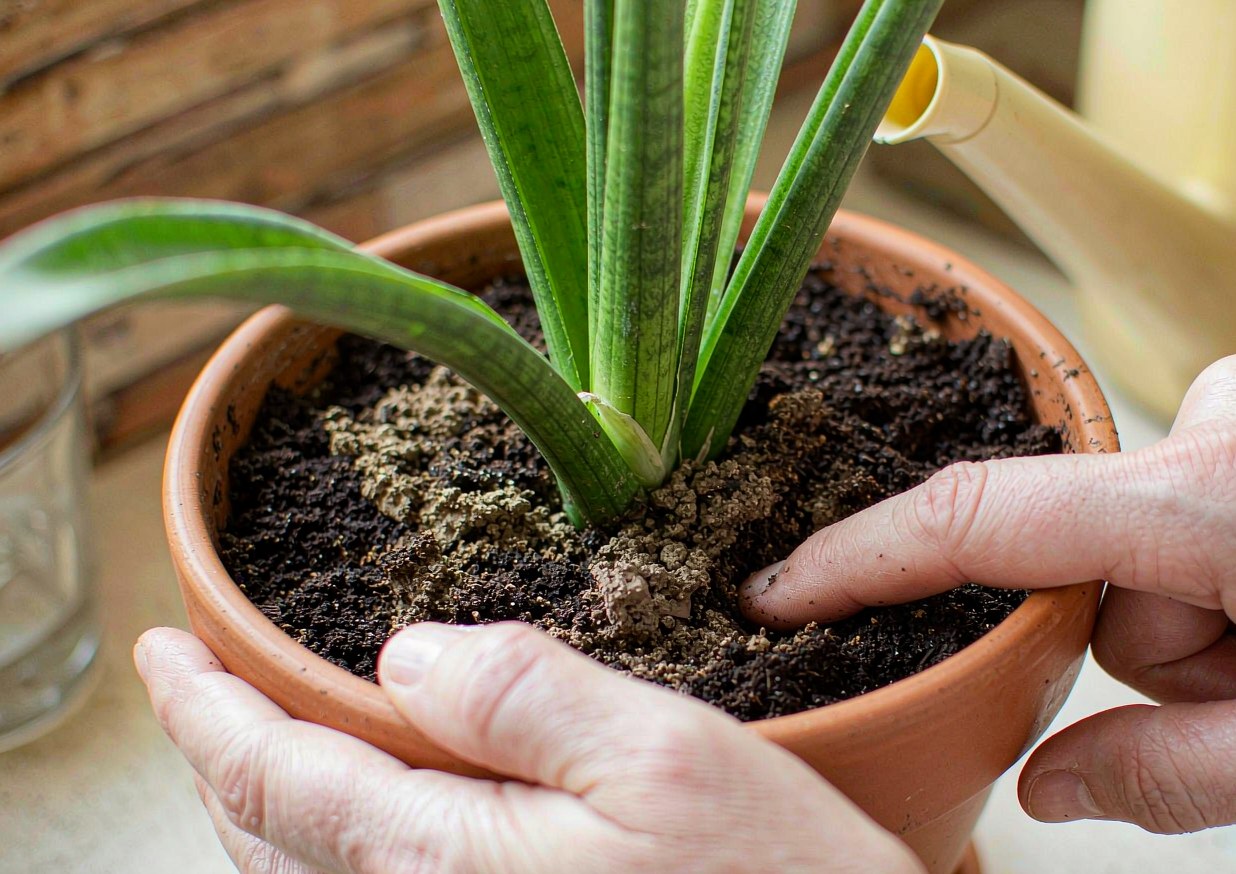
A few notes that make this more accurate. On a big plant in a large pot, two inches isn’t far enough — the roots that rot are at the bottom, so for anything over 10 inches across I use a wooden skewer or a chopstick instead: push it all the way to the base, leave it a minute, pull it out and feel it. Dark and cool means wet; pale and clean means dry. A cheap soil moisture meter works too, though the bargain ones drift out of calibration and I’ve learned to trust the skewer more. The other thing to watch is the weight of the pot: lift it when it’s freshly watered and again when it’s dry, and after a couple of cycles your hands will tell you before your finger does. I’d also add that the surface can look bone dry while the bottom of the pot is still wet, which is why the top-down eyeball test alone isn’t enough. Check down, not across.
Choosing the Right Pot and Soil Mix
Why terracotta beats plastic for this plant
If you take one practical decision away from this article, make it this one: put your snake plant in an unglazed terracotta pot with a drainage hole. Terracotta is porous, so moisture evaporates through the walls as well as the surface, which pulls the whole root ball dry noticeably faster than plastic does.
The table below is how I think about the choice now. It’s not lab data — it’s what I’ve observed across six or seven pots in the same room.
| Pot type | Dries in | Pros | Cons |
|---|---|---|---|
| Unglazed terracotta | 2–3 weeks | Breathable, forgiving, heavy base | Needs more frequent watering, can crack in frost |
| Glazed ceramic | 4–6 weeks | Looks good, wide colour range | Glaze seals the wall; behaves like plastic |
| Plastic nursery pot | 5–7 weeks | Cheap, light, easy to lift | Holds water longest; easiest to overwater in |
| No drainage hole | never | None | Standing water at the base — this is what rots roots |
A note on the last row, because it’s the one that gets people. A pot with no drainage hole isn’t automatically a death sentence if you’re disciplined, but it removes your margin for error entirely. If you love a decorative cachepot, use it as a sleeve: keep the plant in its plastic nursery pot, lift it out to water in the sink, let it drain fully, then slide it back in. That’s the single best compromise between a nice-looking room and a live plant. Size matters too — go no more than 1–2 inches wider than the root ball, since extra wet mix is where rot starts.
Building a mix that drains fast
Whatever bag you buy, the mix that goes into a snake plant pot should be coarse, gritty and fast. Standard all-purpose potting mix holds too much water for this species straight out of the bag.
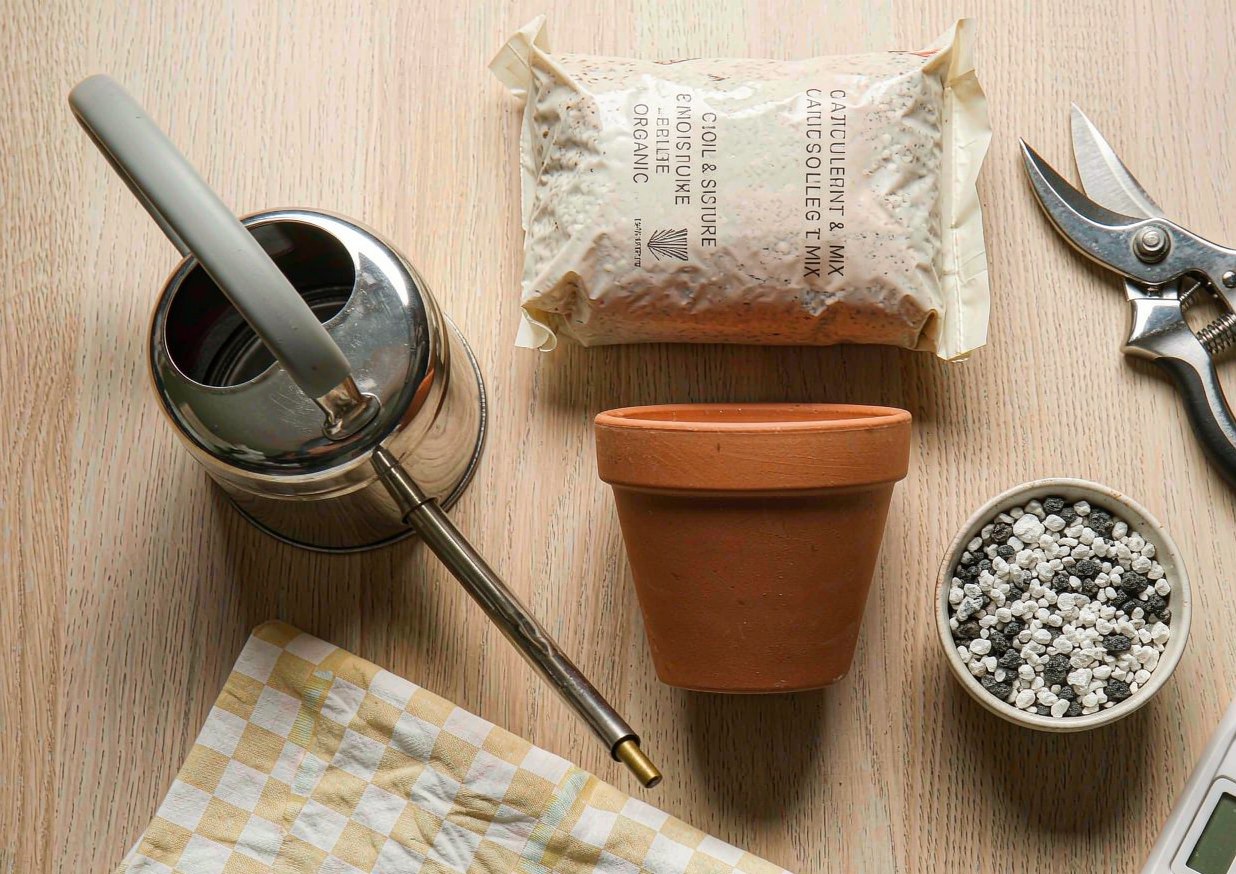
The blend I use is roughly two parts cactus and succulent mix to one part perlite or coarse pumice, mixed in a bucket before it goes anywhere near the pot. Some people add a handful of orchid bark for chunk, which works well and is cheap at any garden centre. What I avoid is anything described as “moisture-retaining” or “water-saving” — those mixes contain water-absorbing crystals, and they’re engineered to do exactly the thing that will kill this plant. One caution about perlite: wet it down before tipping it in, or you’ll breathe the dust. On the subject of grit at the bottom of the pot, which everyone was told to do — skip it. A layer of gravel under the mix raises the perched water table rather than lowering it, so the wet zone just moves up into the roots. Better drainage comes from the texture of the mix itself, not from what you put underneath it.
Temperature, Humidity and Where Not to Put It
The temperature range snake plants tolerate
Snake plants are comfortable in the same range people are, roughly 60–85°F (15–29°C). They’re not fussy about humidity either — average household humidity is fine, and unlike a fern or a calathea this is not a plant that needs misting, a pebble tray or a humidifier.
The hard lower limit is the one that matters. Below about 50°F (10°C) the plant starts taking real damage, and the damage is ugly and irreversible: leaves go soft, water-soaked and translucent, then collapse. That’s cold injury, and it looks confusingly like overwatering, which is why people respond by watering less and miss the actual cause. Mine sat against a window in a poorly heated back room through one December and lost four leaves to exactly this — they went limp and yellowed from the base up over about ten days. Keep them away from single-glazed windows in winter, and never put one outside on a cool night to “give it a drink of rain”. On the upside, the low humidity tolerance means you can ignore it in a heated room all winter, which is a genuine relief if you’ve ever tried to keep a maidenhair fern alive in February.
Drafts, vents and the spots that quietly kill them
Most of the bad locations in a house aren’t cold — they’re variable. A snake plant sitting directly above a heating vent, or right in the path of a door that opens onto a freezing hallway, gets a cycle of hot-dry and cold-blast that it handles badly.
The spots I now avoid, having learned the hard way: directly over or beside a heating or air-conditioning vent; pressed flat against a single-pane window in either season; on top of a radiator or a heat pump unit; and in the direct line of an external door. Also worth thinking about is the top of a fridge or a tall cabinet near the ceiling, which is often five to ten degrees warmer than the room and dries out faster than you’d predict. What I look for instead is boring and stable: a few feet back from a window, away from vents, somewhere the temperature doesn’t swing much across a day. One small extra — this plant is mildly toxic to cats and dogs if chewed, so a low shelf in a house with a curious kitten isn’t the ideal home either. Check any new plant against the ASPCA toxic and non-toxic plant list before you decide where it goes.
Feeding, and Why Most People Overdo It
How much fertilizer does a snake plant need?
Very little. This is a slow-growing plant adapted to poor soil, and the feeding schedule that suits a tomato is far too much for it. My routine is a half-strength balanced liquid feed, once a month, in spring and summer only — roughly April through September.
Concretely, that’s a general houseplant fertilizer diluted to half of whatever the bottle says, applied to already-moist soil right after a watering, never to a dry root ball. Six feeds a year, then nothing at all through autumn and winter. Two reasons for the winter gap: the plant isn’t really growing in low winter light, so it can’t use the nitrogen, and unused fertilizer salts accumulate in the mix and burn the roots. If you’re repotting every second spring into fresh mix, you could honestly skip feeding entirely and the plant wouldn’t complain. I’ve gone a full year without feeding mine and seen no difference I could measure against the one I did feed, which tells you how low the real requirement is.
Reading the signs of over-fertilizing
Too much fertilizer doesn’t usually kill a snake plant outright. It burns the root tips, which reduces the plant’s ability to take up water, which produces symptoms that look exactly like thirst — so people feed it again.
The signs I watch for: a white crusty film on the surface of the mix or around the rim of a terracotta pot; brown, dry tips on otherwise healthy leaves; and new growth coming in smaller and paler than the leaves below it. If you see two of those three, the fix is simple — flush the pot by running a generous amount of water through it in the sink for a minute or two, let it drain completely, and then skip the next three or four feeds. In a bad case, repot into fresh mix and wash the root ball gently under a tap first. I made this mistake in my second year, feeding weekly through a summer because I’d read it was a “heavy feeder” somewhere, and the leaf tips went brown and crisp on maybe eight leaves before I connected the two things. Those tips never recover, incidentally — you can trim the brown off with clean scissors, leaving a thin brown edge rather than cutting into green tissue, but the leaf won’t regrow the lost part.
The Mistakes That Actually Kill Snake Plants
Overwatering and root rot
If a snake plant dies in someone’s care, root rot from overwatering is the cause maybe nine times out of ten. Everything else on this page is a detail next to this one.
Here’s how it presents, in the order I’ve seen it. The lower leaves go soft and slightly translucent, then yellow at the base. The plant starts to lean, because the rotted roots can no longer hold it upright. The base of the leaves feels cool and damp rather than firm, and if you slide the plant out of its pot there’s a sour smell and the roots are brown and slippery instead of firm and orange-yellow. By that point the rot has usually travelled into the rhizome, the thick horizontal stem underground that everything grows from, and once the rhizome is mush the plant is gone. Caught early, though, it’s survivable: take it out of the pot, cut away every soft brown root and any affected leaf with a clean, sharp knife, let the whole thing dry on newspaper for a day or two so the cut surfaces callus over, then repot into fresh dry gritty mix and do not water for a week. I saved one plant out of three this way. The other two I caught too late, which is the real lesson: check the base of the leaves every time you water, not once a season.
Cold damage and the mushy-leaf collapse
Cold injury looks so much like overwatering that it’s worth its own section. Water-soaked, soft, translucent patches on the leaves that appear within a day or two of a cold night — that’s chilling injury, not rot.
The mechanism is that ice crystals or just sustained cold rupture the cell walls, and the tissue collapses once it warms up again. No amount of drying out will fix damaged cells, so unlike rot there’s no rescuing the affected leaf — you cut it off at the base with clean pruners and let the rest of the plant carry on, keeping it somewhere warmer. What I’d flag is the diagnostic trap: if the mix is bone dry and the leaves are still going soft and watery, stop looking for a watering problem and look at the temperature instead. Mine was on a windowsill in a room where the heating was off at night; moving it three feet into the room solved it completely. One more cold-adjacent caution — never move a snake plant directly from a warm indoor spot to outdoors in spring without a week of hardening off in shade, or you’ll get sunburn and cold shock at the same time.
Propagating and Dividing a Snake Plant
Dividing pups at the rhizome
The most reliable way to get more snake plants is division, not cuttings. A healthy plant sends up offsets — small “pups” — from the rhizome, and once a pup is six inches tall or so you can separate it with its own roots attached.
The way I do it: water the plant a day ahead so the mix is pliable, tip the whole thing out of the pot, and wash or brush the mix off the root ball so you can actually see what’s happening. Follow the pup’s leaves down to where it joins the parent rhizome, and cut through the connecting rhizome with a clean, sharp knife, making sure the pup comes away with roots of its own. Pot it in fresh gritty mix in a small pot — a pup in an oversized pot is the same wet-mix problem as before — water lightly once, then leave it alone for a week before its first proper drink. Treat it as a slightly more fragile adult from then on. A gentle warning about timing: I once divided a plant in late October, and the pups sat dormant and sulky for three months because there wasn’t enough winter light to push new roots. Spring or early summer is the window, when the plant has the energy to heal.
Leaf cuttings, and why variegation disappears
Leaf cuttings do work, and they’re the method everyone tries first because it looks easy. Cut a healthy leaf into horizontal sections three or four inches long, let the cut ends dry and callus for two or three days, then stand them cut-end down in a light mix or in water.
Two honest caveats. First, it’s slow — expect six to ten weeks before you see roots, and several months before there’s a plant worth looking at. Second, and this is the one nobody warns you about: a cutting from a variegated snake plant will very often come back plain green. The yellow-edged form is a chimera, meaning the variegation is held in a specific layer of tissue that doesn’t reliably carry through a leaf cutting, so the pup emerges solid green. If preserving that gold edge matters to you, divide the rhizome instead. If you use water, change it weekly and move the cutting to mix once the roots are an inch long, since water roots and soil roots aren’t the same thing and the transition is the risky part.
A Year-Round Care Calendar
Spring and summer: the growing months
From roughly April to September the plant is actually doing something, and this is when all the real work happens. Light is stronger, days are longer, and the mix dries faster, so everything shifts up a gear.
My summer routine, in one place: water when the mix is dry two inches down, which in my house is every 2–4 weeks; feed with half-strength liquid fertilizer once a month; rotate the pot a quarter turn at each watering; and check the base of the leaves and the drainage hole every time. This is also the only sensible window for repotting or dividing, because new roots establish quickly in warm bright conditions. If you have a shaded balcony or a sheltered patio, a snake plant does genuinely enjoy a summer outside — but move it out gradually over a week so it doesn’t scorch, bring it in before night temperatures drop toward 55°F, and keep it out of direct midday sun, which will bleach the leaves pale and scorched. Mine spent one July under a covered porch and put out four new leaves, which was double what it managed indoors the year before.
Fall and winter: the do-almost-nothing months
From October onward, the job changes from “care” to “restraint”. Growth slows to a stop, the mix stays damp for weeks, and every instinct you have to be helpful is the wrong one.
What I do through winter: water only when the skewer test says completely dry, which in my house is every 6–8 weeks — and I’ve gone ten. Stop feeding entirely after September. Move the plant away from cold window glass and away from heating vents, which are running by then. Don’t repot, don’t divide, don’t fertilize, and don’t mist. The thing I’d emphasize is that the plant looking unchanged for three months is not a problem to be solved. It’s what winter is. The failure mode of the season is a well-meaning person in January deciding the plant looks thirsty because nothing has happened since Halloween. Resist that. Come March the days lengthen, the mix starts drying faster again, and the plant picks up on its own. Six years in, the pattern has been completely consistent.
Troubleshooting: Symptoms, Causes and Fixes
Nearly every snake plant problem traces back to water, light temperature or pot choice. This is the table I wish I’d had when I killed the first two.
| Symptom | Likely cause | Fix |
|---|---|---|
| Leaves soft and translucent at the base | Root rot from overwatering | Unpot, cut away brown soft roots, dry 1–2 days, repot in dry gritty mix, wait a week to water |
| Wrinkled, puckered leaves that feel limp | Under-watered, or roots rotted so they can’t drink | Check roots: if firm, water deeply; if brown and soft, treat as rot |
| Brown crispy leaf tips | Fertilizer salt build-up, or very dry air over a vent | Flush the pot thoroughly, skip 3–4 feeds, move off the vent |
| Leaves yellowing from the base up | Chronically wet mix, or a pot with no drainage | Repot into terracotta with a hole; cut watering frequency in half |
| No new growth for a year or more | Too little light for the plant to do anything | Move to bright indirect light; water less often in the new spot at first |
| Soft watery patches after a cold night | Chilling injury below 50°F | Cut off affected leaves, move away from cold glass, don’t dry-treat as rot |
| Leaves bleached pale or scorched | Sudden direct sun | Move back a few feet; acclimatize over a week next time |
| Plant leaning hard toward one side | Uneven light, or roots rotted on one side | Rotate a quarter turn per watering; inspect the root ball if severe |
FAQs
How often should I water a snake plant?
Often enough that it never sits wet, which in practice means roughly every 2–4 weeks in summer and every 6–8 weeks in winter for an 8-inch terracotta pot in bright indirect light — but use the test, not the number. Push a finger, or better a wooden skewer, down to the bottom of the pot; if it comes out with any dampness or dark staining, wait. When you do water, take the pot to the sink, soak it until water runs freely from the drainage hole, let it drain ten minutes, and never let it sit in a saucer of water. The frequency that kills is small, frequent sips, because the top inch stays damp while the lower roots suffocate. One more variable worth knowing: the same plant in a plastic pot needs watering roughly half as often as in terracotta, since plastic doesn’t breathe.
Can a snake plant really live in a low-light room?
It can survive there for a long time, but “survive” and “thrive” are being confused in most of the advice online. In low light the plant holds its existing leaves and basically stops — it won’t put out new growth, and critically, it uses water far more slowly, so your watering interval has to stretch to match. The killer combination is a dark corner plus a normal watering schedule; that’s exactly how I lost my second plant. If a dim room is your only option, drop to watering every six to eight weeks year-round, use terracotta and a very gritty mix, and consider giving the plant a brighter holiday near a window for the summer. If you want it to actually grow, bright indirect light a few feet from an east or west window is the target.
Why are the tips of my snake plant leaves turning brown?
In my experience it’s usually one of three things, and fertilizer is the most common. Dissolved salts from repeated feeding build up in the mix and burn the root tips, which shows as dry brown tips and sometimes a white crust on the soil surface or around the rim of a terracotta pot — flush the pot with water for a minute or two and skip the next few feeds. The second cause is physical: very dry air, especially directly above a heating vent, desiccates the tips. Third is simply underwatering over a long stretch, which tends to show as wrinkling along the whole leaf rather than just the tip. Damaged tips don’t recover, so once you’ve fixed the cause, trim the brown off with clean scissors, leaving a thin brown margin rather than cutting into green tissue.
What kind of pot and soil is best?
An unglazed terracotta pot with a real drainage hole, sized no more than 1–2 inches wider than the root ball, filled with a cactus or succulent mix cut with perlite or pumice at roughly two parts mix to one part grit. Terracotta breathes through its walls, so the root ball dries faster and forgives the occasional over-generous watering in a way plastic and glazed ceramic don’t. Avoid anything labelled moisture-retaining or water-saving, since those mixes hold exactly the water this plant doesn’t want. Skip the gravel layer at the bottom of the pot — it raises the wet zone into the roots rather than improving drainage. And if you love a decorative pot with no hole, use it as a sleeve: keep the plant in its nursery pot, lift it out to water in the sink, drain it fully, then slide it back.
Is a snake plant toxic to cats and dogs?
Yes, mildly to moderately, and it’s worth planning around before you bring one home. Chewing the leaves can cause nausea, vomiting and irritation of the mouth in cats and dogs, because the plant contains saponins. Mine lives on a shelf the cat can’t reach, which is easier than training the cat. I check every new plant against the ASPCA toxic and non-toxic plant list before it comes into the house. To be completely clear about the boundary here: this is general plant information, not veterinary advice. I’m not a vet, and no plant list is exhaustive. If you think a pet or a child has actually eaten part of a snake plant, call your vet or the ASPCA Animal Poison Control Center at (888) 426-4435 rather than waiting to see what happens.
Sources and Further Reading
- Missouri Botanical Garden — Plant Finder (search Sansevieria / Dracaena trifasciata)
- ASPCA — Toxic and Non-Toxic Plants: Sansevieria trifasciata
- ASPCA — Toxic and Non-Toxic Plants List
- ASPCA — Animal Poison Control
- UF/IFAS Gardening Solutions — Houseplants
- RHS — Houseplants
About the author
Samantha has been gardening and arranging her own cut flowers for more than ten years, and has built more than 30 centerpieces from grocery-store bunches, clippings off the cedars behind her house, and a handful of dollar-store experiments that didn’t work. She writes practical, low-cost guides for beginners, including the versions that failed. Prices quoted in her articles are what she actually paid at US grocery and craft stores; nothing is sponsored and no brand pays for a mention. She is not a certified florist, a veterinarian or a horticulturist, and says so wherever a topic touches on plant safety or pet health.
Published: Oct 18, 2026 · Last updated: Oct 18, 2026.
{
“@context”: “https://schema.org”,
“@graph”: [
{
“@type”: “Article”,
“headline”: “Snake Plant Care: Light, Water and the Mistakes That Kill It”,
“description”: “A snake plant wants bright indirect light and to dry out completely between waterings: every 2-4 weeks in summer, 6-8 weeks in winter. Overwatering is what kills them.”,
“image”: [
“https://gmmur.com/wp-content/uploads/sites/5/2026/10/snake-plant-hero-clean.jpg”,
“https://gmmur.com/wp-content/uploads/sites/5/2026/10/snake-plant-materials-clean.jpg”,
“https://gmmur.com/wp-content/uploads/sites/5/2026/10/snake-plant-process-clean.jpg”
],
“author”: { “@type”: “Person”, “name”: “Samantha” },
“publisher”: { “@type”: “Organization”, “name”: “gmmur.com” },
“datePublished”: “2026-10-18”,
“dateModified”: “2026-10-18”,
“mainEntityOfPage”: {
“@type”: “WebPage”,
“@id”: “https://gmmur.com/snake-plant-care-light-water-mistakes”
}
},
{
“@type”: “FAQPage”,
“mainEntity”: [
{
“@type”: “Question”,
“name”: “How often should I water a snake plant?”,
“acceptedAnswer”: {
“@type”: “Answer”,
“text”: “Roughly every 2 to 4 weeks in summer and every 6 to 8 weeks in winter for an 8-inch terracotta pot in bright indirect light, but use the test rather than the number. Push a skewer to the bottom of the pot; if it comes out damp, wait. Water deeply until it runs from the drainage hole, let it drain, and never leave it in a saucer of water.”
}
},
{
“@type”: “Question”,
“name”: “Can a snake plant really live in a low-light room?”,
“acceptedAnswer”: {
“@type”: “Answer”,
“text”: “It can survive there for a long time, but it will stop putting out new growth and it uses water far more slowly, so the watering interval must stretch to match. A dark corner plus a normal watering schedule is what kills most of them. For actual growth, bright indirect light a few feet from an east or west window is the target.”
}
},
{
“@type”: “Question”,
“name”: “Why are the tips of my snake plant leaves turning brown?”,
“acceptedAnswer”: {
“@type”: “Answer”,
“text”: “Usually fertilizer salt build-up, which burns the root tips and can leave a white crust on the soil or pot rim; flush the pot and skip several feeds. Dry air above a heating vent is the second cause, and long-term underwatering the third, which shows as wrinkling along the whole leaf. Damaged tips do not recover, so trim the brown off with clean scissors.”
}
},
{
“@type”: “Question”,
“name”: “What kind of pot and soil is best for a snake plant?”,
“acceptedAnswer”: {
“@type”: “Answer”,
“text”: “An unglazed terracotta pot with a real drainage hole, no more than 1 to 2 inches wider than the root ball, filled with cactus or succulent mix cut with perlite or pumice at about two parts mix to one part grit. Avoid moisture-retaining mixes and skip the gravel layer at the bottom. If you love a pot with no hole, use it as a sleeve and lift the plant out to water.”
}
},
{
“@type”: “Question”,
“name”: “Is a snake plant toxic to cats and dogs?”,
“acceptedAnswer”: {
“@type”: “Answer”,
“text”: “Yes, mildly to moderately. Chewing the leaves can cause nausea, vomiting and mouth irritation in cats and dogs because the plant contains saponins, so keep it out of reach. This is general plant information and not veterinary advice: if a pet or child has actually eaten part of a snake plant, call your vet or the ASPCA Animal Poison Control Center at (888) 426-4435.”
}
}
]
}
]
}