
If you’ve ever grown basil, you already know the heartbreaker: one week it’s a lush green bush, the next it’s tall, woody and flowering, and suddenly the leaves taste like soap. The first summer I grew basil I made exactly that mistake. I planted a pretty Genovese seedling in a patio pot, watered it faithfully, and then — because I was nervous about “hurting” the plant — I barely touched it. By August it had shot up a flower stalk, the lower leaves yellowed, and every leaf I finally picked was bitter and tough. I almost gave up on basil entirely. What I didn’t know then is that harvesting basil is what makes it produce more, not less. The cut is the cue. In this article I’ll walk you through exactly when to harvest, how to cut so the plant branches instead of bolting, what to do once it flowers, and how to keep a steady supply from one pot all the way to frost — including the mistakes I made so you don’t have to.
Quick answer: start harvesting basil when the plant is 6 to 8 inches tall and has at least 3 to 4 leaf sets, and from then on pinch or cut the top growing tip just above a pair of leaves every 7 to 10 days. That single habit — cutting the tip instead of stripping random leaves — forces the plant to branch into two stems and doubles your harvest each time. Stop the plant from flowering by removing any bud the moment you see it; once basil blooms, leaf flavor turns bitter and the plant stops making new leaves. Harvest in the morning after the dew dries, take no more than about a third of the plant at once, and always leave a few leaf pairs so it can keep photosynthesizing. Do that and a single plant will give you handfuls of leaves weekly from late spring until the first hard frost. Everything below explains the why and the how.
Why Timing Matters More Than You Think
What happens if you wait too long
The biggest basil mistake isn’t picking too much — it’s waiting too long. Basil is what gardeners call a determinate-leaning annual that wants to flower, and once it commits to flowering, its whole biology shifts away from leaf production. I learned this the hard way the summer I left my first plant alone: by the time I noticed the white flower buds, the lower leaves had already gone yellow and the top leaves had toughened. The plant had decided its job was making seeds, not leaves. When you wait, two things happen at once — the stems stretch and turn woody, and the essential oils that give basil its sweet, peppery flavor get replaced by compounds that taste harsh and bitter. A plant that bolts in July is essentially finished for the season unless you act fast. So the rule I now live by is simple: harvest early and harvest often, long before you think the plant is “big enough.” The plant doesn’t need to be huge to start giving; it needs to be prompted to branch.
What happens if you pick too early or too little
On the other end, the failure I see beginners make is the opposite of mine — they snip a single leaf here and there for a sandwich and call it harvesting. That doesn’t trigger branching, because the plant’s growing tip is still intact telling it to grow taller, not wider. A basil plant needs the top tip removed to redirect energy into the side shoots. Picking one random leaf also means the plant never gets the signal that it should bush out, so you end up with a tall, leggy, sparse plant that produces far less than it should. The sweet spot is to wait until the plant has at least three or four leaf pairs — roughly 6 to 8 inches tall — and then take the top above a leaf node. That tiny bit of patience up front pays off for months. When I finally understood this, my single patio basil went from “a few leaves for one pizza” to “a full pesto batch every two weeks.” Small change, completely different plant.
The Pinch Rule: How to Cut for More Growth
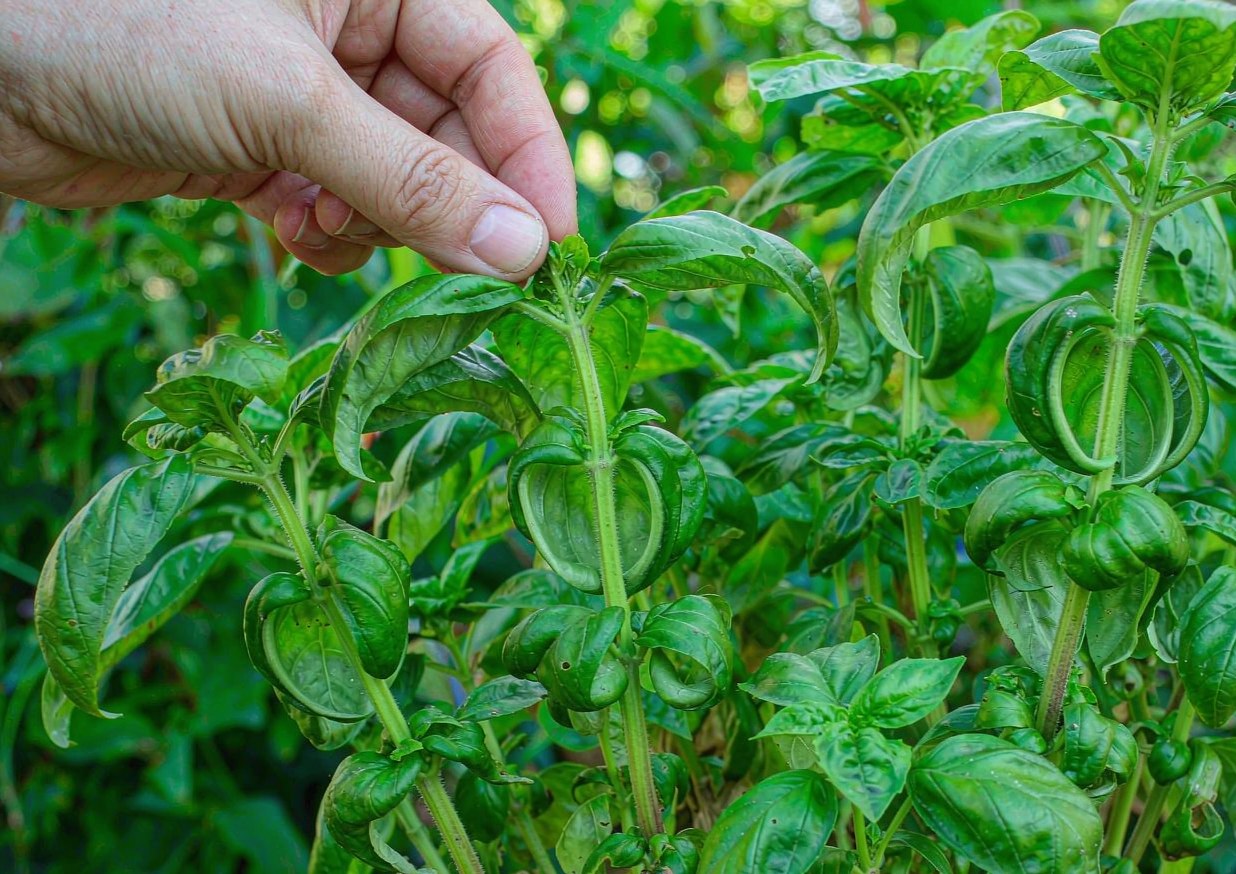 Photo provided by the author’s garden
Where exactly to make the cut
Here is the one technique that changed everything for me: always cut or pinch just above a pair of leaves, never below them and never in the middle of a bare stem. Look at a basil stem and you’ll see leaves growing in opposite pairs, with a tiny new bud tucked in the “V” where each pair meets the stem. When you remove the tip above that pair, both of those hidden buds wake up and grow into two new stems. That’s how one stem becomes two, two become four, and four become eight — all from a single pinch. I use my thumb and forefinger for young, tender tips, and a clean pair of snips for anything woody. The cut should be about a quarter inch above the leaf pair, angled slightly so water runs off. What you must avoid is yanking a leaf off the middle of a stem and leaving a bare stub — that stub dies back and the plant wastes energy sealing it off instead of branching. Pinch at the node, every time.
Why leaving two leaf sets above the cut matters
You’ll sometimes read “just take the top” without any detail, and that vagueness is why people fail. The detail that matters is how much you leave behind. After you pinch the tip, the plant should still have at least two healthy leaf pairs lower down to keep feeding itself through photosynthesis. If you scalp the plant down to a single tiny pair, it stalls — there isn’t enough leaf surface left to power regrowth, and you’ll wait weeks instead of days for the next harvest. I keep a mental rule of “never take more than the top third,” and I always make sure two or three leaf pairs remain below my cut. This is also why harvesting little and often beats one big chop: frequent light pinching keeps the plant in a constant state of branching, whereas a harsh haircut shocks it. Within about a week of a proper pinch, those two side buds are already a few inches long and ready to be pinched again. That seven-to-ten-day rhythm is the heartbeat of a productive basil plant.
Reading the Plant: Signs It’s Ready
The size and leaf test
You don’t need a ruler, but you do need a couple of reliable signals. The first is size: a plant that is 6 to 8 inches tall with at least three or four leaf sets is ready for its first real harvest. The second is leaf maturity: you want to pick leaves that are fully grown and a deep, even green, not the small pale new leaves at the very top. Those tiny top leaves are the plant’s engine — leave them. Think of the plant like a bank: the big lower and middle leaves are the “interest” you can spend, while the tender top growth is the “principal” you must leave invested so it keeps earning. When I train new gardeners, I tell them to harvest the outer and lower leaves first and always protect the central growing point until the plant is established. Once it’s bushy, you can be more generous. A plant that passes the size-and-leaf test is ready; one that doesn’t should be left another week while you keep pinching only the very tip to encourage branching.
The flower-bud warning
The single most important signal to watch for is the flower bud, and it shows up faster than you’d expect in hot weather. Basil sends up a central stalk topped with a small cluster of tiny buds — sometimes white, sometimes pale purple depending on the variety. The moment you see even one bud, pinch it off immediately, down to the first pair of leaves below it. I check my plants every couple of days in July and August precisely because a bud can open into a flower in under a week once the heat hits. Removing the bud forces the plant back into leaf mode. If you miss one and it opens, don’t panic — just cut the entire flowering stalk back hard to a leaf node and the plant will usually recover and push new leafy growth. The reason this matters for flavor is that flowering triggers the bitter, harsh-tasting compounds I mentioned earlier; a plant that never flowers stays sweet all season. This is the habit that separates a “basil that tasted great in June” from “basil I ate until November.”
How Often You Can Harvest
A weekly rhythm that works
Once a plant is established, I treat basil like a weekly appointment. Every 7 to 10 days I walk past my pots, pinch any tips that have grown a few inches, and grab a handful of leaves for whatever I’m cooking. That rhythm keeps every plant in a permanent state of branching and prevents any single one from racing ahead into flower. The plants seem to expect it — skip two weeks in hot weather and you’ll often come back to buds. If you’d rather batch your effort, harvesting every 10 days is fine for most climates; every 7 days is better in peak summer when growth is explosive. I’ve found that a single healthy Genovese plant in a 12-inch pot reliably yields a loose cup or two of leaves per week through the middle of the season. Two or three plants in a bed will keep a pesto-loving household supplied all summer. The key is consistency: the plant responds to the cut by growing, so the more regularly you cut, the more it produces. Let it sit and it quietly shuts down.
How much you can take at once
The safe upper limit I stick to is about a third of the plant at any one time. Take more than that and you remove too much leaf surface, the plant can’t photosynthesize enough to regrow quickly, and you’ll wait far longer for the next harvest. I learned the “third rule” after one overzealous evening when I stripped a plant for a big batch of pesto and then watched it sit stunted for almost three weeks. A third is plenty for most kitchen needs and the plant bounces back in days. For a bigger one-time harvest — say you’re making freezer pesto for winter — it’s better to harvest from several plants lightly than to scalp one. And always leave the youngest top leaves and at least a couple of lower leaf pairs intact. If you’re unsure, err toward taking less; basil recovers from a light pinch in a week and from an over-harvest in three. The third rule keeps you in the fast lane.
What to Do When It Bolts
Why basil bolts in heat
Even careful gardeners lose the battle sometimes, especially during a mid-summer heat wave. Basil bolts — sends up flower stalks — as a survival response to heat, long days, and stress. When daytime temperatures sit consistently in the high 80s and 90s (around 30 to 35°C), the plant reads the conditions as “time to make seed before I die,” and it redirects everything into flowering. I’ve had plants bolt in late July even though I was pinching diligently, simply because a stretch of 95°F days overwhelmed the plant’s natural cycle. Once a plant bolts, the leaves quickly become bitter and the tender texture disappears. The prevention is the weekly pinch plus a little afternoon shade during heat waves — a shade cloth or simply moving potted basil out of the hottest western sun for a few hours makes a real difference. Understanding that bolting is environmental, not a sign you killed the plant, takes the panic out of it. It’s the plant doing what it’s wired to do, and you can push it back.
Saving the harvest after flowering
If your basil does flower, don’t compost it in defeat — there’s still plenty to save. First, cut the flowering stalks back hard, all the way to a leaf node a few inches down, and the plant will usually push a fresh flush of leafy growth within a week or two, especially if you also give it a little water and perhaps a light feed. Second, the leaves that are already on the plant are still usable even if slightly bitter: I use bolting-basil leaves for cooking where heat and garlic mask the bitterness — think tomato sauce, soups, and infused oils — rather than fresh salads. Third, the flowers themselves are edible and pretty; I toss them into salads or use them as a garnish, which at least gets some value from the plant’s pivot. And finally, if the plant is truly spent, that’s the moment to start a succession planting (more on that below) so you’re never without. My worst bolting year still produced decent cooked-basil all summer because I refused to waste the leaves and kept cutting. Bolting is a setback, not a death sentence.
Harvesting for Different Uses
Leaves for fresh eating
For fresh use — caprese, salads, finishing a pizza — you want the youngest large leaves, the ones just below the top growth that are full-size but still tender. I pick these in the morning after the dew dries, because that’s when the leaves hold the most moisture and the essential oils are at their peak, so the flavor is brightest. Avoid picking in the heat of the afternoon when the plant is slightly wilted; the leaves you take then are more likely to droop before you use them. For fresh eating I harvest by the leaf or by snipping a short sprig with two or three leaves, which also happens to be a perfect light pinch that encourages branching. I keep a small bowl of water on the counter and drop cuttings in it if I’m not using them immediately — they’ll stay crisp for a day or two. The goal with fresh-use harvesting is to take little and often so the plant never notices a big deficit. A few leaves here, a sprig there, and you’ve both fed yourself and pruned the plant in the same motion.
Stems for pesto and preserving
When you want to preserve basil — pesto, freezing, drying, or oil — you harvest differently: you take longer stems with several leaf pairs and you can be a bit more aggressive, since this is often a planned, larger cut. For a pesto batch I’ll take several upper stems, cutting each just above a leaf node so the plant still recovers. The classic move is to make pesto and freeze it in ice-cube trays; the color and flavor hold far better frozen in oil than they do dried, because dried basil loses most of its signature perfume. If you’re freezing whole leaves, blanch them for two seconds and plunge into ice water to lock in green, then freeze flat. I also chop and freeze basil with a little olive oil in cubes for winter soups. The key insight is that preserving harvests let you take more at once without hurting the plant, as long as you still respect the “leave two leaf pairs” rule on each stem you cut. My freezer has a stash of green basil cubes by November every year, all from plants I kept pinching through September.
Tools and Handling So Leaves Stay Fresh
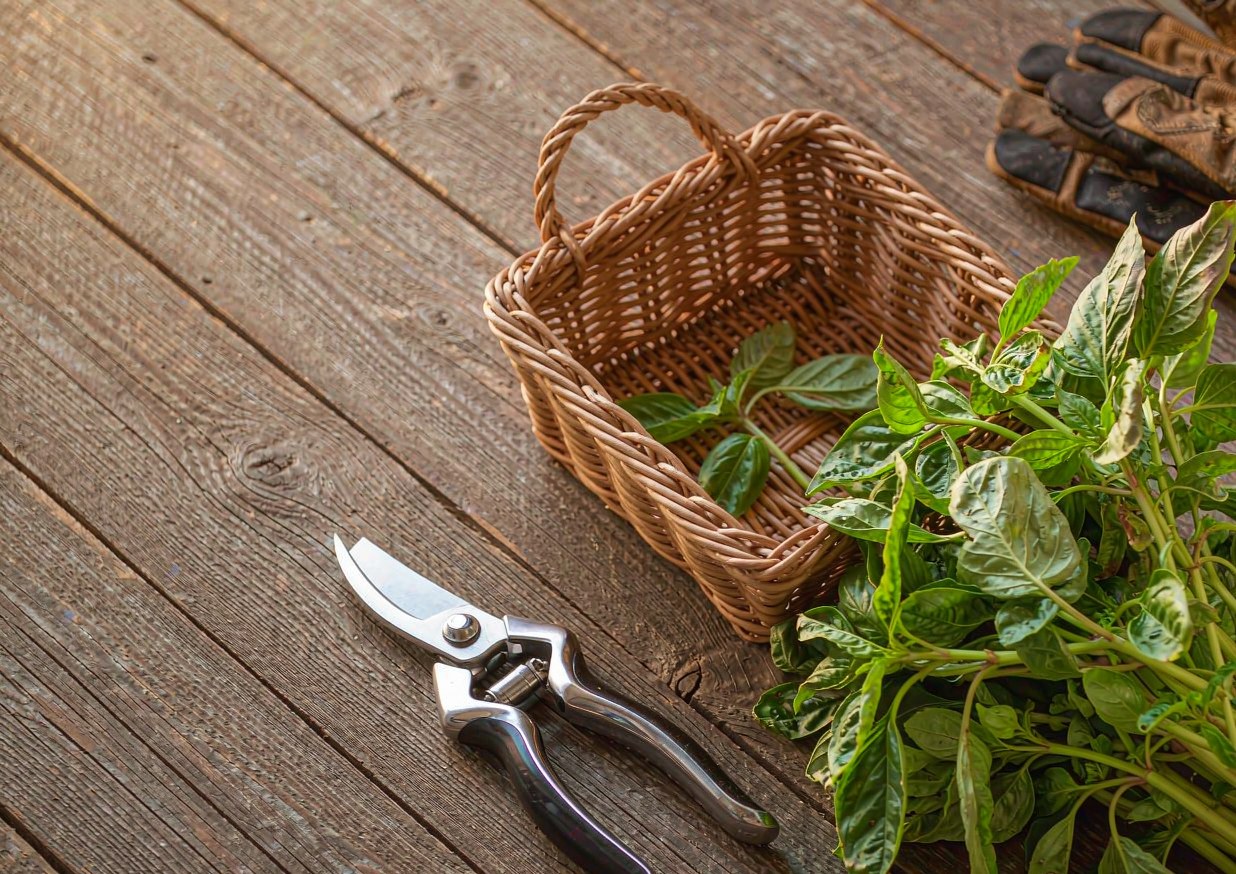 Photo provided by the author’s garden
Snips versus fingers
For harvesting, the tool question is simpler than people think. On young, tender growth, your fingers are the best tool — a clean thumbnail pinch severs the stem without crushing and leaves no ragged wound. On woody or thicker stems, though, fingers bruise the tissue, which invites rot and slows healing, so I switch to a small pair of clean garden snips or sharp scissors. The one non-negotiable is cleanliness: I wipe my snips with a diluted alcohol wipe between plants, because transferring sap and any leaf-spotted residue from one plant to another is how diseases spread. A dedicated little snip that lives by the back door gets used far more than my big pruners ever do. I keep a shallow harvest basket or bowl handy so cut sprigs aren’t crushed underfoot or left wilting in the sun while I work. The whole kit fits in one hand and turns a five-minute harvest into something I actually look forward to. Good tools don’t make the plant grow, but they keep your cuts clean so it recovers fast.
Rinse, dry, and store
What you do in the ten minutes after harvesting matters as much as the cut itself. I rinse leaves in cool water to remove dust and any hitchhiking aphids, then dry them thoroughly — wet leaves packed together rot within a day. A salad spinner is the fastest route; a clean towel works too. For short-term storage I treat basil differently from most herbs: instead of the fridge-crisper method that ruins it, I either stand the stems in a glass of water on the counter like a bouquet (covering loosely with a bag slows wilting) or wrap dry leaves in a just-damp paper towel inside a loosely closed bag. Basil hates cold, so the fridge’s cold spot can blacken the leaves; the counter-in-water method keeps it perky for nearly a week. For longer storage, freezing beats drying every time for flavor. I learned the hard way that a “fresh” bag of basil left in the vegetable drawer is a brown slimy disappointment by day three — now it’s either eaten, frozen, or sitting in a glass on the counter where I can see it.
Keeping a Continuous Supply All Season
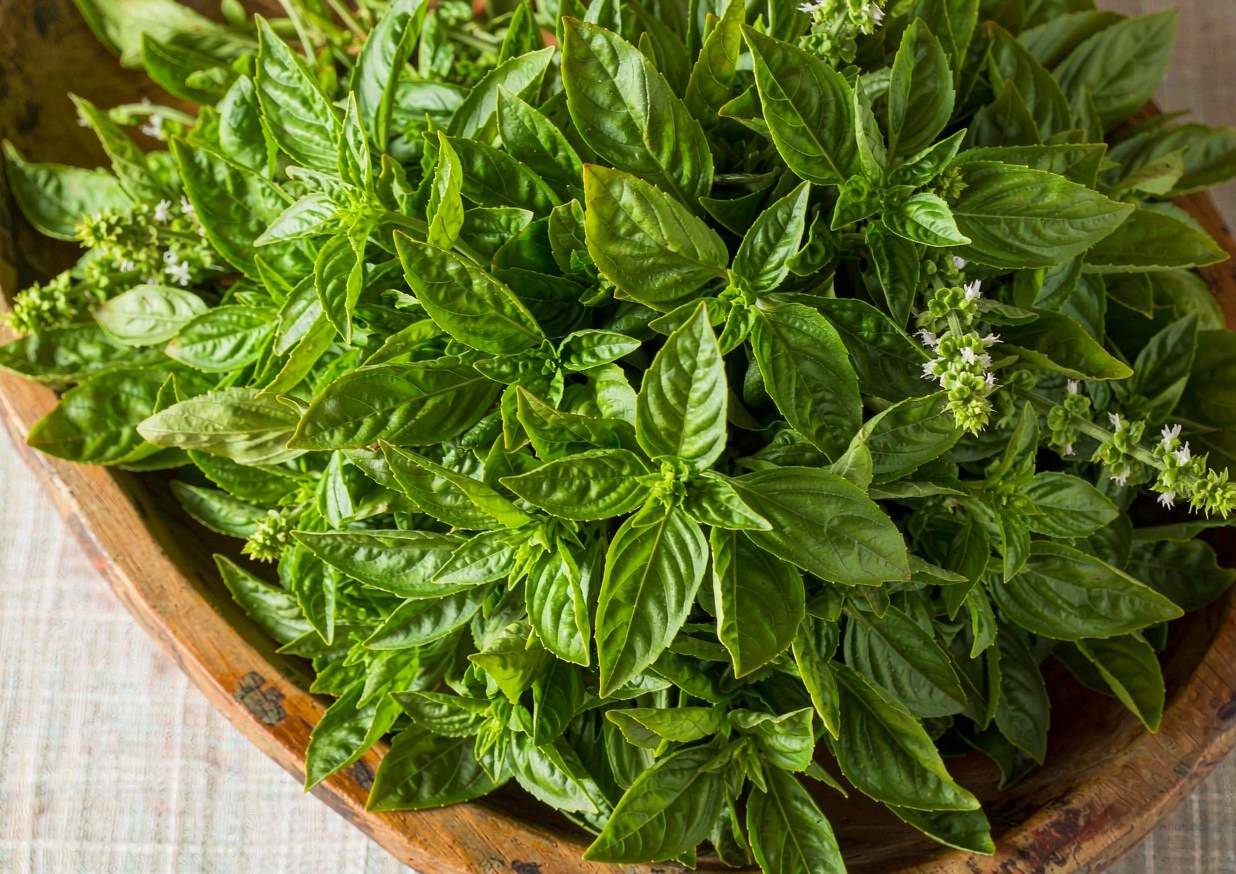 Photo provided by the author’s garden
Succession planting and smart siting
The secret to never running out of basil is succession planting: instead of one plant that ages and bolts, start a new seedling every three to four weeks through spring and early summer so you always have a young, productive plant coming up behind an older one. I sow a fresh pot indoors or in a protected spot in early spring, again in late spring, and once more in early summer; by midsummer I have three age cohorts, and as the oldest bolts I lean on the youngest. Siting helps too: basil wants 6 to 8 hours of sun but appreciates a little afternoon shade in brutal heat, and it hates wet feet, so a pot with good drainage or a raised bed with loose soil keeps it happy. I tuck basil near tomatoes and peppers — they share similar needs and the classic companion pairing is more than folklore. Rotating a few pots around the patio also lets me move a plant out of a heat wave’s worst sun. Succession plus siting is how I went from “one bitter plant in August” to “fresh basil from June to the first frost.”
Overwintering and indoor pots
If you want basil past the first frost, you have two routes, and I’ve tried both. The first is to bring a plant indoors before nights dip into the 40s°F (about 5°C). A basil plant moved inside to a very bright windowsill or, better, under a grow light, will keep producing through winter, though more slowly. The catch is indoor light is weak compared to summer sun, so the plant gets leggy unless you supplement — I run a simple LED grow bulb for about 12 hours a day and it makes the difference between a thriving plant and a sad one. The second route is to root cuttings: in early fall I take 4-inch non-flowering tip cuttings, strip the lower leaves, and stand them in water until roots form, then pot them up. Those rooted cuttings become my indoor winter plants and my head start for next spring. Either way, the harvesting rules don’t change — keep pinching the tips, keep taking only a third, and you’ll have fresh basil on the windowsill in January. It’s the same plant logic, just moved inside.
One reassuring note for households with pets: basil is not toxic to dogs or cats. I keep the ASPCA’s plant database bookmarked and check every plant I grow around my animals, and basil is listed among the non-toxic ones — so a curious nibble from a dog or cat is not an emergency. That said, this is general information and not veterinary advice; if you ever suspect a pet has eaten a plant and you’re unsure what it was, call your veterinarian or the ASPCA Animal Poison Control Center at (888) 426-4435 rather than waiting to see what happens. Knowing your herbs are pet-safe makes it much easier to let basil sprawl on a low windowsill indoors all winter.
Troubleshooting: Symptoms, Causes and Fixes
Most basil problems show up within a week or two of a harvest mistake or a weather swing. This is the table I keep by the door.
| Symptom | Likely cause | Fix |
|---|---|---|
| Leaves taste bitter and harsh | Plant has started to flower (bolting) | Cut flower stalks back to a leaf node; use leaves for cooking, not fresh eating |
| Plant is tall, sparse, and leggy | Only random leaves picked; growing tip never removed | Pinch the top tip above a leaf pair to force branching |
| Lower leaves yellow and drop | Overripe plant, heat stress, or overwatering | Pinch back, check drainage, water only when top inch is dry |
| New growth is stunted for weeks | More than a third harvested at once | Leave it alone; wait, then resume light weekly pinching |
| Leaves blacken in storage | Stored cold and wet in the fridge | Keep dry; store stems in water on the counter, or freeze |
| Flower buds appear fast in summer | Heat wave triggering bolting | Pinch buds every few days; give afternoon shade |
FAQs
When should I start harvesting my basil plant?
Start when the plant is about 6 to 8 inches tall and has at least three or four leaf sets — usually a few weeks after planting. You don’t need to wait for it to look “full”; in fact, the earlier you begin pinching the top tip, the bushier it becomes. Just make sure you always leave a couple of healthy leaf pairs below your cut so the plant can keep growing. From that first pinch onward, a light harvest every 7 to 10 days keeps it productive. The common error is waiting until the plant is large and then taking one big cut, which shocks it; small and frequent is the better rhythm from day one.
How do I cut basil so it keeps growing instead of dying?
Always cut or pinch just above a pair of leaves, never in the middle of a bare stem and never by yanking a single leaf off the side. Removing the top tip above a leaf pair wakes up the two buds in the “V” of that pair, and each becomes a new stem — so one stem becomes two, and the plant doubles its output. Use your fingers for tender tips and clean snips for woody stems. Leave at least two leaf pairs below the cut and never take more than about a third of the plant at once. That technique, repeated weekly, is the entire secret to a plant that produces for months instead of weeks.
My basil is flowering — is it ruined?
Not ruined, just changing. Once basil flowers, the leaves turn bitter and the plant slows leaf production, but you can still save it. Cut the flowering stalks back hard to a leaf node and the plant usually pushes a fresh flush of leafy growth, especially if you give it water and a little shade from peak heat. The already-grown leaves are still fine for cooked dishes where garlic and heat mask bitterness, and the flowers themselves are edible. To prevent bolting in the first place, pinch every bud the moment you see it and consider a little afternoon shade during heat waves. Think of flowering as a setback you can push back, not a death sentence.
Can I harvest basil and store it for winter?
Yes, and freezing is far better than drying for keeping the flavor. For pesto, blend and freeze in ice-cube trays; for whole leaves, blanch for two seconds, chill in ice water, dry completely, and freeze flat. You can also chop basil with a little olive oil and freeze in cubes for winter soups. Fresh leaves are best used within a week — kept on the counter in a glass of water rather than in the cold fridge, which blackens them. If you want live plants in winter, root 4-inch tip cuttings in water in early fall and grow them indoors under a bright window or a grow light. Either way, keep pinching the tips so the plants stay bushy.
Is basil safe to grow around pets?
Basil is considered non-toxic to dogs and cats, so it’s a safe herb to grow in a home with animals, including on a low windowsill where a cat might nibble it. I still check every plant I grow against the ASPCA toxic and non-toxic plant list before bringing it indoors. This is general information, not veterinary advice — if a pet ever eats a plant and you aren’t certain what it was, contact your veterinarian or the ASPCA Animal Poison Control Center at (888) 426-4435 rather than waiting to see what happens. Knowing your herbs are pet-safe makes indoor winter basil much less worrying.
Sources and Further Reading
- Michigan State University Extension — Harvesting and Preserving Fresh Basil
- ASPCA — Toxic and Non-Toxic Plants List
- NC State Extension — Extension Gardener Handbook
- University of Illinois Extension — Home Gardening
- Royal Horticultural Society — Gardening Advice
About the author
Samantha has been gardening and arranging her own cut flowers for more than ten years, and has built more than 30 centerpieces from grocery-store bunches, clippings off the cedars behind her house, and a handful of dollar-store experiments that didn’t work. She writes practical, low-cost guides for beginners, including the versions that failed. Prices quoted in her articles are what she actually paid at US grocery and craft stores; nothing is sponsored and no brand pays for a mention. She is not a certified florist, a veterinarian or a horticulturist, and says so wherever a topic touches on plant safety or pet health.
Published: Oct 30, 2026 · Last updated: Oct 30, 2026.
{
“@context”: “https://schema.org”,
“@graph”: [
{
“@type”: “Article”,
“headline”: “When to Harvest Basil So the Plant Keeps Producing”,
“description”: “Start harvesting basil at 6 to 8 inches tall and pinch the top tip above a leaf pair every 7 to 10 days; removing flower buds keeps leaves sweet and the plant branching for months.”,
“image”: [
“images/basil-hero-clean.jpg”,
“images/basil-materials-clean.jpg”,
“images/basil-process-clean.jpg”
],
“author”: { “@type”: “Person”, “name”: “Samantha” },
“publisher”: { “@type”: “Organization”, “name”: “gmmur.com” },
“datePublished”: “2026-10-30”,
“dateModified”: “2026-10-30”,
“mainEntityOfPage”: {
“@type”: “WebPage”,
“@id”: “https://gmmur.com/2026/10/30/when-to-harvest-basil-keeps-producing”
}
},
{
“@type”: “FAQPage”,
“mainEntity”: [
{
“@type”: “Question”,
“name”: “When should I start harvesting my basil plant?”,
“acceptedAnswer”: {
“@type”: “Answer”,
“text”: “Start when the plant is about 6 to 8 inches tall and has at least three or four leaf sets. Pinch the top tip early and often so the plant branches, and always leave a couple of healthy leaf pairs below the cut. From that first pinch, harvest lightly every 7 to 10 days.”
}
},
{
“@type”: “Question”,
“name”: “How do I cut basil so it keeps growing instead of dying?”,
“acceptedAnswer”: {
“@type”: “Answer”,
“text”: “Cut or pinch just above a pair of leaves, never in the middle of a bare stem. Removing the top tip above a leaf pair wakes the two buds in that pair’s V, each becoming a new stem, so the plant doubles its output. Leave at least two leaf pairs below the cut and never take more than about a third at once.”
}
},
{
“@type”: “Question”,
“name”: “My basil is flowering — is it ruined?”,
“acceptedAnswer”: {
“@type”: “Answer”,
“text”: “Not ruined. Once basil flowers the leaves turn bitter and leaf production slows, but cut the flowering stalks back hard to a leaf node and the plant usually pushes fresh leafy growth. Existing leaves are fine for cooked dishes, and the flowers are edible. Pinch buds early to prevent bolting, and give afternoon shade in heat waves.”
}
},
{
“@type”: “Question”,
“name”: “Can I harvest basil and store it for winter?”,
“acceptedAnswer”: {
“@type”: “Answer”,
“text”: “Yes. Freezing beats drying for flavor: freeze pesto in ice-cube trays, or blanch whole leaves briefly, dry them, and freeze flat. Fresh leaves keep about a week on the counter in a glass of water. For live winter plants, root 4-inch tip cuttings in water in early fall and grow them indoors under bright light, still pinching the tips.”
}
},
{
“@type”: “Question”,
“name”: “Is basil safe to grow around pets?”,
“acceptedAnswer”: {
“@type”: “Answer”,
“text”: “Basil is considered non-toxic to dogs and cats, so it is safe to grow where pets might nibble it. This is general information, not veterinary advice; if a pet eats a plant and you are unsure what it was, contact your veterinarian or the ASPCA Animal Poison Control Center at (888) 426-4435.”
}
}
]
}
]
}