
If you have ever gone to bed with a row of pristine lettuce seedlings and woken to a plate of lace, you already know the rage of slugs and snails. I lost an entire spring crop of bush beans to them one year and, in frustration, bought the first blue pellet bait I saw at the garden center. It did nothing for the slugs and, worse, I later learned that old-style bait is dangerously toxic to dogs. Since then I’ve tested the methods that actually work, and the good news is you don’t need poison to stay ahead of them. In this guide I’ll walk you through the seven controls I rely on, including the beer trap I set wrong the first time and the pet-safe bait I use now. Ready? Let’s go through it together.
Quick answer: the seven slug and snail controls that actually work are (1) hand-picking at night, (2) beer traps sunk to soil level, (3) copper tape or mesh barriers, (4) diatomaceous earth in dry weather, (5) iron phosphate bait (pet-safe, unlike old metaldehyde), (6) beneficial nematodes and encouraging predators, and (7) habitat cleanup plus smart planting timing. No single method wins alone; the gardeners who stay slug-free combine two or three. Everything below explains how and when to use each one.
- 1. Why Slugs and Snails Are Such a Problem
- 2. Control 1: Hand-Picking (the Unglamorous Winner)
- 3. Control 2: Beer Traps, Done Right
- 4. Control 3: Copper Barriers
- 5. Control 4: Diatomaceous Earth and Desiccants
- 6. Control 5: Iron Phosphate Bait (the Pet-Safe Option)
- 7. Control 6: Nematodes and Other Biologicals
- 8. Control 7: Habitat and Prevention
- 9. Troubleshooting: Symptoms, Causes and Fixes
- 10. FAQs
- 11. Sources and Further Reading
Why Slugs and Snails Are Such a Problem
 Photos provided by Pixabay
What they actually eat and when
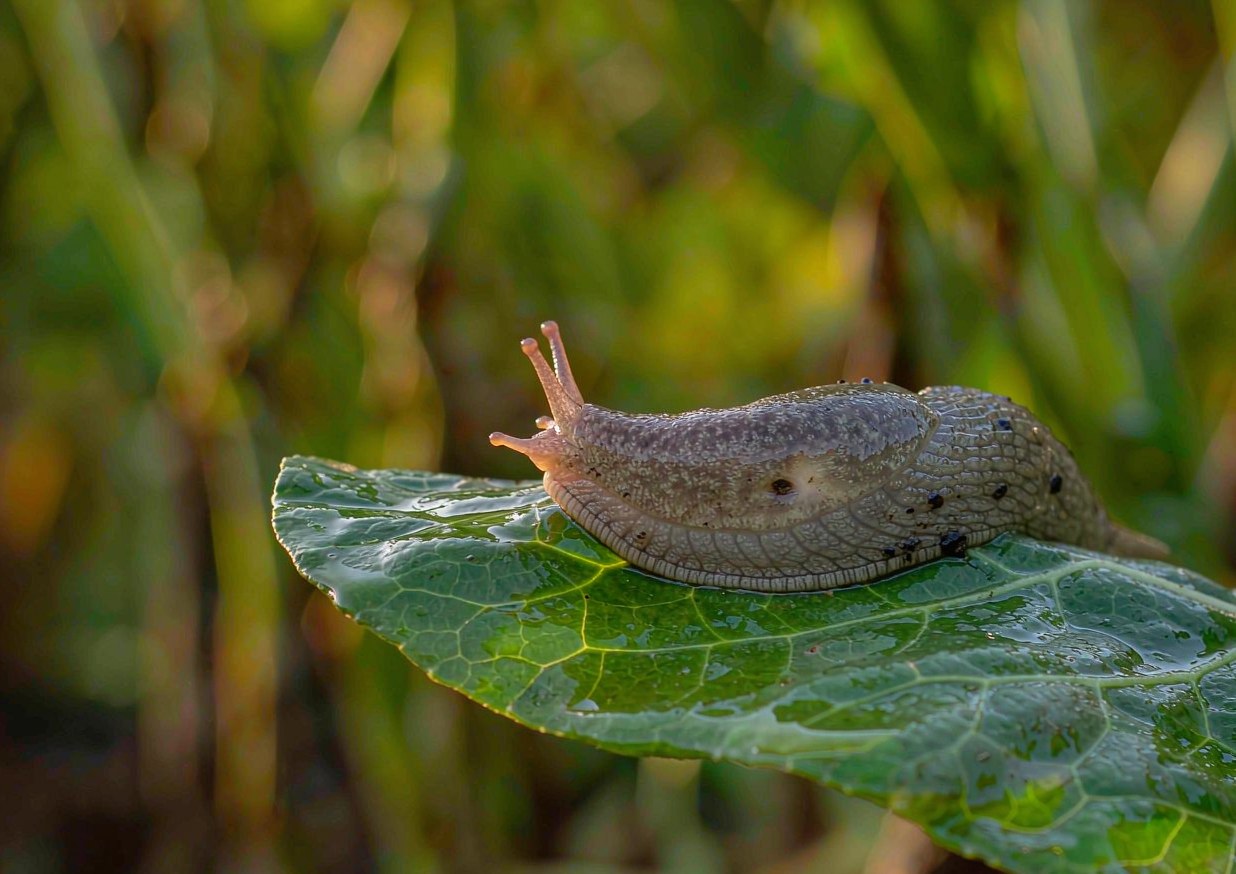
Slugs and snails are mollusks, not insects, and most of the common garden species are generalist eaters that chew holes in leaves, flowers, fruit and especially tender seedlings. They prefer young, soft tissue, which is why a brand-new row of lettuce or bean sprouts disappears overnight while the mature plants beside them are merely nibbled. They also eat decaying matter, so they’re not purely destructive, but in a vegetable bed the damage to seedlings is what matters.
They feed mostly at night and on damp, overcast days, and they can consume several times their body weight in a single night when conditions are right. The University of California IPM slug and snail note describes them as most active when temperatures are mild and the air is humid — exactly the cool, wet springs and fall mornings that also favor our crops. Knowing they’re nocturnal tells you when to scout: the damage shows by day, but the culprits are only caught after dark with a flashlight.
The damage itself is a useful clue once you know the signature. Slugs and snails leave irregular, ragged holes with smooth edges (not the neat semicircles of caterpillars), often with a silver slime trail glistening nearby in the morning. The crops they hit hardest are exactly the tender ones we baby: lettuce, basil, bean and cucumber seedlings, strawberries and hostas top the list, while thick or hairy leaves like lavender and most mature shrubs are usually left alone. Learning to read that hole-and-trail pattern lets you confirm slugs are the cause before you spend a cent on control — which matters, because a chewed leaf from a daytime beetle looks different and calls for a different response.
Why they vanish by day (and strike at night)
During daylight slugs retreat to cool, moist hiding spots — under pots, mulch, boards, low foliage and debris — to avoid drying out. That daytime disappearance is why a bed can look fine at noon and be shredded by morning. Snails retreat into their shells; slugs just tuck into a crevice and secrete a protective slime coat.
I learned to scout with a flashlight after 10 p.m., and that single habit revealed a slug population I’d never have guessed was there. The Michigan State University slug-management article similarly recommends evening inspection because it’s the only time you see them in the open. If you only look during the day you’ll underestimate the problem and under-apply every control below — so flip your schedule to match theirs.
Control 1: Hand-Picking (the Unglamorous Winner)
The best time and tool
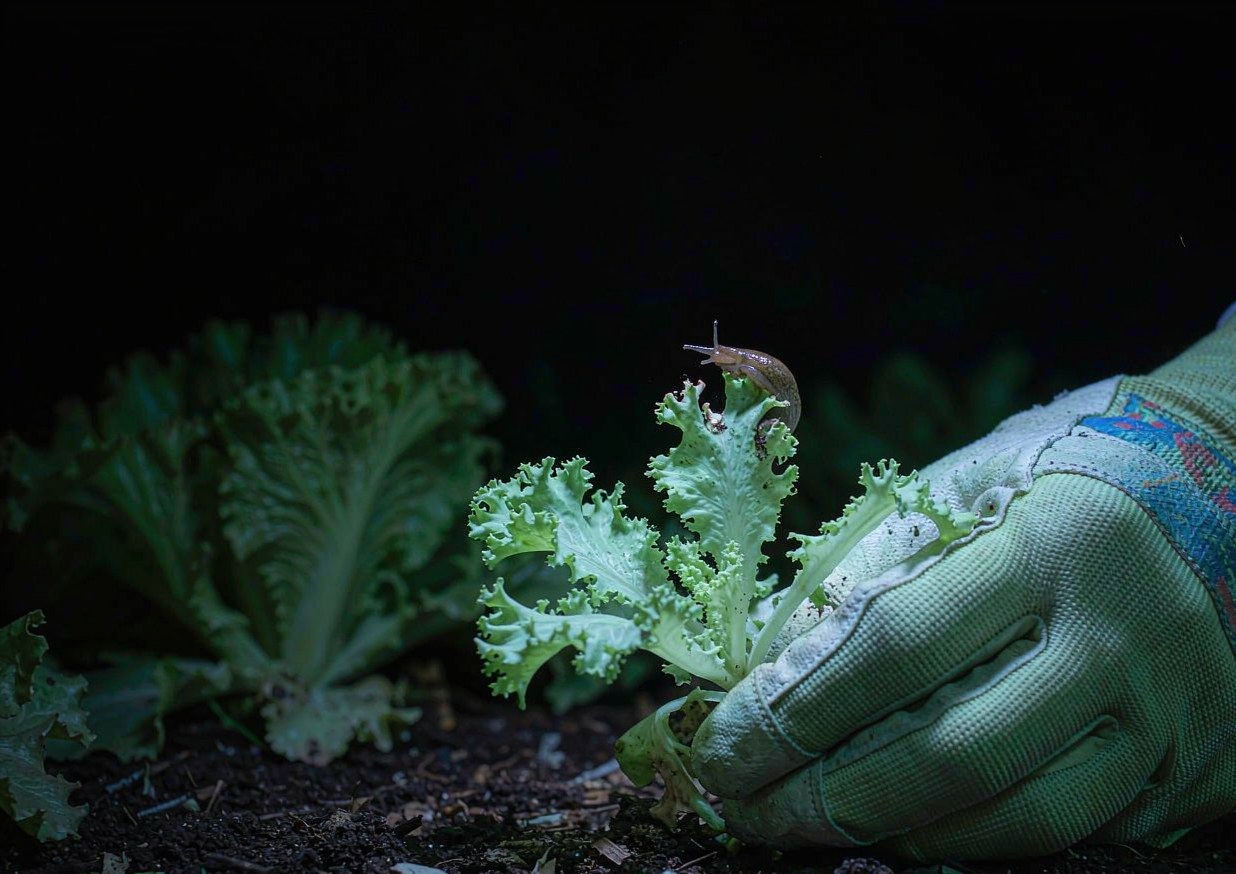
It sounds too simple to count, but hand-picking is the most reliable control I use, especially in a small bed. Go out after dark with a flashlight and a container of soapy water, and drop every slug and snail you find into it. Ten minutes a night for a week knocks the population down hard, and it costs nothing.
The trick is consistency: a single sweep misses the ones that haven’t emerged yet, so I make it a few-nights-in-a-row habit right at the start of slug season. A pair of tongs or gloves keeps the slime off your hands, and a headlamp frees both hands for the container. In my own raised beds this method alone prevents most of the seedling loss, and it scales surprisingly well — a 4×8 bed takes maybe fifteen minutes total across three nights.
 Photos provided by Pixabay
What to do with them after
What you do with the catch matters. Dropping them over the fence just moves the problem to a neighbor, and they travel. The common humane-ish options are the soapy-water drowning jar or, if you’d rather not, relocating them well away from any garden. I keep a dedicated “slug bucket” of salty or soapy water by the door so the routine is frictionless.
One note on snails specifically: they’re less mobile than slugs but can still crawl back over several nights, so true removal (not just relocation next door) is what works. The Oregon State Extension gardening pages and similar guides list hand-picking as a core, low-impact tactic precisely because it’s direct and leaves no residue in the food you’re growing. It won’t win a popularity contest, but it’s the control I trust most.
Control 2: Beer Traps, Done Right
 Photos provided by Pixabay
Why my first trap failed
The classic beer trap is a shallow container sunk into the soil and filled with beer; slugs are attracted to the yeast, crawl in, and drown. My first one failed completely — I set a tall yogurt cup with the rim an inch above the soil, and the slugs just climbed over the lip without falling in. I also used a “light” beer and a half-filled cup, and on a warm night it dried out.
The lesson, confirmed by the Wisconsin Horticulture articles and every experienced gardener I’ve asked, is that the rim must sit at or just below soil level so slugs enter on a level path, and the liquid must be deep enough not to evaporate in a night. A trap that’s too shallow or too high simply doesn’t catch. Once I fixed those two things, the same trap filled with slugs by the next morning.
On container choice, a wide, shallow vessel beats a tall narrow one: slugs approach from the side and need to fall in over the rim, so a broad mouth at ground level catches far more than a necked bottle. I also now sink the trap so the top quarter-inch of the cup is buried, which removes the lip they used to climb over. Some gardeners drill holes near the rim of a taller container so slugs enter through the side rather than over the top — a neat trick if you only have yogurt cups handy. The beer itself doesn’t need to be fancy; the yeast and fermentation byproducts do the attracting, so the cheapest plain beer in the store works as well as anything I’ve tried.
Setting one that works
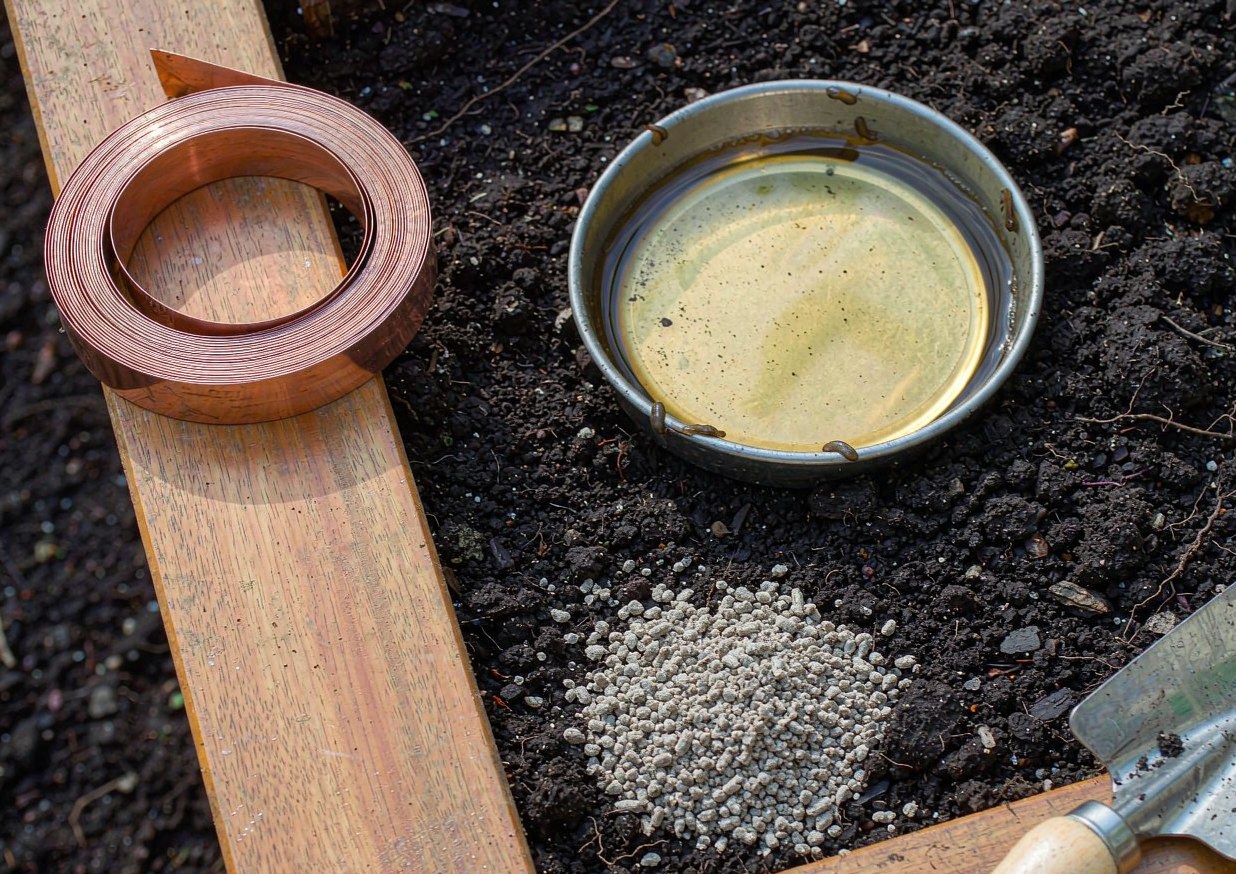
Use a wide, shallow vessel — a tuna can, a cat-food tin, or a purpose-made trap — and sink it so the rim is flush with the soil. Fill it about two-thirds with cheap beer (the yeast, not the brand, does the work) and check it every morning, emptying and refilling as needed. Place traps at the bed’s edge and among the plants taking the worst hit.
Two cautions keep beer traps useful rather than counterproductive. First, they attract slugs from beyond your bed, so set them at the perimeter to draw invaders away from seedlings, not in the middle where you’re pulling in more than you catch. Second, they’re indiscriminate — they’ll also drown beneficial ground beetles if those fall in, so I keep traps few and checked. Used this way, a half-dozen traps cover a typical home vegetable garden through peak season.
Control 3: Copper Barriers
How copper stops them
Copper tape, mesh or flashing creates a barrier slugs and snails won’t cross. The mechanism is a mild electric-like reaction between their slime and the copper, which they apparently find unpleasant enough to turn back. It’s a physical block, not a poison, so it’s safe around food, pets and wildlife.
I line the top rim of my wooden raised beds with self-adhesive copper tape, and it noticeably cuts incursion from the surrounding lawn. The effect isn’t perfect — a determined slug can sometimes bridge a gap or use a leaf as a ramp — but as part of a combined approach it’s one of the cleaner tools. The NC State Extension Gardener Handbook discusses barriers among integrated pest-management tactics, and copper is the one I reach for when I want a set-and-forget line of defense on a container or bed edge.
One maintenance note: copper tarnishes over time, and a heavily oxidized or algae-covered strip loses some of its repelling effect, so I wipe the tape with a damp cloth once a month during the season and replace any section that has peeled or gone dull green. Cheap tape also sheds its adhesive after a winter, so I buy the thicker garden-grade roll rather than the craft version. Done right, a single application lasts a full growing season, which makes copper one of the better low-effort, chemical-free controls for a bed you plan to keep slug-light year after year.
Where to install it
Copper works only if it forms a continuous, unbroken ring with no easy bridge. Apply it to the outside top edge of pots, the rim of raised beds, or around the trunk of a prized plant. Overlap the ends and press firmly so there are no gaps, and keep it clean — dirt and algae can short-circuit the effect.
The failure mode I see most is a leaf or board touching the copper from outside, giving slugs a ramp over the top. I trim nearby foliage back from the barrier and re-stick any lifted edge after winter. For tree seedlings or individual pots, a copper collar around the stem base is the elegant version of the same idea. It’s more upfront work than a beer trap, but it keeps working through rain while desiccants wash away — which brings us to those.
Control 4: Diatomaceous Earth and Desiccants
How it works and its weakness (rain)
Diatomaceous earth (DE) is a powder made of fossilized algae; at the microscopic level it’s sharp enough to abrade the waxy coat on a slug’s skin, causing it to dry out. Sprinkled as a dry ring around plants, it’s a genuinely useful barrier — but only while it stays dry. The moment it rains or you water, it clumps and stops working.
This is the mistake that burned me: I dusted a bed before a forecasted storm, and the next morning the powder was a damp paste doing nothing while the slugs feasted. The UC IPM note is explicit that DE must be reapplied after rain to remain effective. So I now treat DE as a dry-weather tool — useful during a dry spell or under cover, useless in a wet week. Used in its window, a thin band around seedlings buys real protection.
Application tips
Apply a thin, even band around the plants or bed you’re protecting — a thick mound is wasteful and blows around. Use food-grade DE (not the pool-filter kind, which isn’t for garden use), and wear a dust mask so you don’t inhale the fine particles. Reapply after every rain or heavy watering.
I keep a small shaker of DE by the door for dry spells, and I combine it with copper on the bed edges so I have a barrier that works wet or dry. The MSU slug article lists desiccants among the physical controls worth knowing, with the same rain caveat. Think of DE as a temporary dry-season shield, not a season-long solution, and it earns its place in the seven.
Control 5: Iron Phosphate Bait (the Pet-Safe Option)
Why iron phosphate beats metaldehyde
If you use a bait, the choice of active ingredient is the most important safety decision you make. Old-style baits use metaldehyde, which is highly toxic to dogs and cats and has caused pet poisonings and even human incidents. Newer baits use iron phosphate, which is far less hazardous to mammals and still kills slugs and snails after they eat it.
I switched to iron phosphate the moment I read the label on that first blue pellet, and I’ve never looked back. The ASPCA Animal Poison Control guidance on metaldehyde exposure is a useful reminder of why the old product is worth avoiding in any home with animals. Iron-phosphate baits are labeled for use around edibles and, in my beds, they visibly reduce slug activity within days. This is general information, not veterinary advice — if you suspect a pet has eaten any slug bait, call your veterinarian or the ASPCA Animal Poison Control Center at (888) 426-4435 rather than waiting to see what happens.
How to apply safely around pets
Scatter iron-phosphate bait thinly around the base of affected plants and along slug trails, following the label rate exactly — more is not better. Because it’s still a bait, I keep it out of reach of pets where I can, tucking it under foliage or into bait stations, even though it’s the safer chemistry. Water lightly after application if the label allows, and reapply per the schedule on the package.
The honest limitation is that iron phosphate is slower than the old poison and works best as part of the组合 with hand-picking and barriers — it’s not a silver bullet. But “slower and safe” beats “fast and a trip to the emergency vet” in my book, especially with cats in the house. Among the seven controls, this is the one I recommend when a gardener tells me they want the least hands-on option that won’t put their dog at risk.
Control 6: Nematodes and Other Biologicals
Beneficial nematodes
Certain beneficial nematodes (tiny soil-dwelling worms, a completely different thing from the plant-parasitic ones) seek out and kill slug eggs and young slugs in the soil. You buy them as a refrigerated powder, mix with water, and drench the soil where slugs breed. They’re harmless to people, pets, earthworms and plants.
I apply nematodes in early spring and again in late summer, when soil is moist and warm enough for them to establish. The MSU guidance notes that biological controls target the next generation rather than tonight’s adults, so they’re a population-suppression tool, not a rescue for an active outbreak. Used yearly they quietly lower the baseline, which makes every other method easier. Keep the soil damp for a couple of weeks after application so the nematodes can move and feed. I buy a brand labeled specifically for slugs rather than a generic grub nematode, because the species determines what they actually attack, and the slug-specific one is the version that earns its place in this list.
Encouraging natural predators
Beyond nematodes, you can tip the balance by welcoming slug predators: ground beetles, frogs, toads, birds, ducks and even some snakes all eat slugs. A small pond or damp corner, a brush pile left undisturbed, and avoiding broad-spectrum insecticides that kill the good bugs all help.
I leave a shallow dish of water and a couple of flat stones in a back corner, and toads moved in within a season. The Oregon State Extension gardening pages emphasize that a healthy, diverse garden suppresses pests naturally, and slugs are a perfect example: the more predators you support, the fewer nights you spend with a flashlight and a bucket. This is the slow, satisfying end of slug control — building a garden that fights back on its own.
A few specifics make the predator approach pay off faster. Ground beetles are slug-eating machines and shelter under logs, stones and low ground cover, so I keep a small undisturbed “beetle bank” of leaves at the edge of the plot. Birds take slugs, especially in the morning, if you leave an open, low-water area they can forage; a single nesting pair of thrushes can clear a surprising number. If you have the space and local rules allow, a few ducks are legendary slug vacuums — though they’ll also eat your lettuce, so they’re a perimeter patrol, not a free-range solution. The thread connecting all of these is restraint: avoid broad-spectrum insecticides, which kill the beetles and predatory insects that would otherwise do this job for you, and let the food web do what it evolved to do.
Control 7: Habitat and Prevention
Removing slug real estate
Most slug control is easier if you first remove their daytime hiding spots. Clear boards, fallen leaves, dense low weeds, unused pots and thick mulch from right next to the plants you’re protecting. Slugs need damp cover to survive the day, so denying it forces them into the open — where your traps, copper and flashlight patrols catch them.
After a season of losses I pulled the mulch back a few inches from my lettuce rows and the damage dropped noticeably without any other change. The Wisconsin Horticulture resources list sanitation among the first-line defenses for exactly this reason. You don’t have to strip the whole garden — just create a drier, cleaner margin around the crops that matter most, and the slugs have fewer places to wait out the day.
Concretely, the hiding spots worth removing are the obvious ones you’d walk past without thinking: flat boards laid on soil, stacked empty pots, dense low groundcover like ivy, and fallen fruit left under trees all function as slug hotels. I do a ten-minute “board patrol” once a week during wet months, flipping and relocating anything flat that’s been sitting damp, and I collect dropped apples and tomatoes the same day they fall. None of this makes the garden sterile — I keep plenty of habitat for bees and birds elsewhere — it just denies slugs the humid daytime refuge right next to the food. That single habit probably does more long-term than any product I’ve bought.
Timing plantings to dodge damage
The final control is timing. Slug pressure peaks in cool, wet spring and fall, so the most vulnerable stage — tiny seedlings — suffers most then. Starting tender crops indoors or under row cover until they’re larger and tougher lets them outgrow the worst risk window.
I now start lettuce and beans in trays and only set them out once they have three or four true leaves, by which point a slug bite is a setback rather than a kill. Combined with a copper rim on the bed, that single scheduling change probably saved me more plants than any bait. Prevention won’t eliminate slugs, but it shrinks the population and the damage to a level the other six controls handle easily — which is the whole point of using seven instead of one.
Troubleshooting: Symptoms, Causes and Fixes
Most slug problems trace back to a handful of causes. This is the table I keep by the door.
| Symptom | Likely cause | Fix |
|---|---|---|
| Seedlings gone overnight, slime trails present | Active slug population, unseen by day | Night flashlight patrol; hand-pick for 3 nights |
| Beer trap empty while damage continues | Rim above soil, or liquid evaporated | Sink rim flush with soil; refill deeper; check AM |
| DE applied but slugs cross it | It got wet and clumped | Reapply after rain; use only in dry weather |
| Slugs bridging a copper edge | Leaf or board touching from outside | Trim foliage back; re-stick lifted edges |
| Bait used but no improvement | Old metaldehyde or wrong active, under-applied | Switch to iron phosphate; follow label rate |
| Damage returns every spring | No population suppression between seasons | Apply nematodes; clean habitat; invite predators |
FAQs
What is the single most effective slug control?
For a home garden, hand-picking at night combined with iron phosphate bait is the pairing I trust most: one removes tonight’s adults, the other suppresses the population safely. No single method is a cure, which is why the gardeners who win combine two or three. Beer traps and copper help, but the nightly patrol is what produces the visible, immediate drop in damage. Used together, these cut losses to near zero in my own beds.
Are beer traps worth it, or do they just attract more slugs?
They’re worth it if set correctly — rim flush with soil, deep enough liquid, checked each morning. Set wrong (rim above soil, shallow, dry), they catch little. They do draw slugs from beyond your bed, so place them at the perimeter to pull invaders away from seedlings rather than concentrating them inside. Think of them as a supplement to hand-picking and barriers, not a standalone fix, and they earn their keep through peak season.
Is slug bait safe around my dog or cat?
It depends entirely on the active ingredient. Metaldehyde baits are highly toxic to pets and have caused poisonings; iron phosphate baits are much safer and are the ones I use and recommend. Even with the safer chemistry, I keep bait out of reach and tucked under foliage or in stations. This is general information, not veterinary advice — if a pet eats any slug bait, call your vet or the ASPCA Animal Poison Control Center at (888) 426-4435.
Does diatomaceous earth really work on slugs?
Yes, but only while dry. DE abrades a slug’s protective coat and dehydrates it, so a fresh, dry ring around seedlings works. The moment it rains or you water, it clumps and stops. Treat it as a dry-weather tool and reapply after every rain. In a wet week it’s useless, which is why I pair it with copper (which works wet) so I always have a working barrier regardless of weather.
How do I stop slugs from eating my seedlings every spring?
Start tender crops indoors or under row cover until they have a few true leaves and are tougher, then set them out into beds with a copper rim and a clean, drier margin around the rows. Combine that with a few nights of hand-picking and an iron-phosphate application, plus spring nematodes to suppress eggs. Timing and habitat cleanup do most of the long-term work; the traps and bait handle the rest. It’s a system, not a single product.
Sources and Further Reading
- University of California IPM — Snails and Slugs (Pest Note)
- Michigan State University — Managing Slugs in the Home Garden
- Oregon State University Extension — Gardening
- Wisconsin Horticulture — Extension Articles
- NC State Extension — Extension Gardener Handbook
- ASPCA — Animal Poison Control
About the author
Samantha has been gardening and arranging her own cut flowers for more than ten years, and has built more than 30 centerpieces from grocery-store bunches, clippings off the cedars behind her house, and a handful of dollar-store experiments that didn’t work. She writes practical, low-cost guides for beginners, including the versions that failed. Prices quoted in her articles are what she actually paid at US grocery and craft stores; nothing is sponsored and no brand pays for a mention. She is not a certified florist, a veterinarian or a horticulturist, and says so wherever a topic touches on plant safety or pet health.
Published: Oct 31, 2026 · Last updated: Oct 31, 2026.
{
“@context”: “https://schema.org”,
“@graph”: [
{
“@type”: “Article”,
“headline”: “Slugs and Snails: 7 Controls That Actually Work”,
“description”: “Seven slug and snail controls that actually work: hand-picking, beer traps, copper barriers, diatomaceous earth, iron phosphate bait, beneficial nematodes, and habitat cleanup plus smart planting timing.”,
“image”: [
“images/slug-hero-clean.jpg”,
“images/slug-materials-clean.jpg”,
“images/slug-process-clean.jpg”
],
“author”: { “@type”: “Person”, “name”: “Samantha” },
“publisher”: { “@type”: “Organization”, “name”: “gmmur.com” },
“datePublished”: “2026-10-31”,
“dateModified”: “2026-10-31”,
“mainEntityOfPage”: {
“@type”: “WebPage”,
“@id”: “https://gmmur.com/pests-diseases/slugs-snails-7-controls-that-work”
}
},
{
“@type”: “FAQPage”,
“mainEntity”: [
{
“@type”: “Question”,
“name”: “What is the single most effective slug control?”,
“acceptedAnswer”: {
“@type”: “Answer”,
“text”: “For a home garden, hand-picking at night combined with iron phosphate bait is the pairing I trust most: one removes tonight’s adults, the other suppresses the population safely. No single method is a cure, so combine two or three. Used together they cut losses to near zero.”
}
},
{
“@type”: “Question”,
“name”: “Are beer traps worth it, or do they just attract more slugs?”,
“acceptedAnswer”: {
“@type”: “Answer”,
“text”: “They are worth it if set correctly: rim flush with soil, deep enough liquid, checked each morning. Set wrong they catch little. Place them at the perimeter to pull invaders away from seedlings rather than concentrating them inside. Use them as a supplement to hand-picking and barriers.”
}
},
{
“@type”: “Question”,
“name”: “Is slug bait safe around my dog or cat?”,
“acceptedAnswer”: {
“@type”: “Answer”,
“text”: “It depends on the active ingredient. Metaldehyde baits are highly toxic to pets; iron phosphate baits are much safer and are the ones I use. Even with the safer chemistry, keep bait out of reach. This is general information, not veterinary advice; if a pet eats any slug bait, call your vet or the ASPCA Animal Poison Control Center at (888) 426-4435.”
}
},
{
“@type”: “Question”,
“name”: “Does diatomaceous earth really work on slugs?”,
“acceptedAnswer”: {
“@type”: “Answer”,
“text”: “Yes, but only while dry. DE abrades a slug’s protective coat and dehydrates it, so a fresh, dry ring works. Once it rains or you water it clumps and stops. Treat it as a dry-weather tool and reapply after every rain, and pair it with copper so a barrier works in any weather.”
}
},
{
“@type”: “Question”,
“name”: “How do I stop slugs from eating my seedlings every spring?”,
“acceptedAnswer”: {
“@type”: “Answer”,
“text”: “Start tender crops indoors or under row cover until they have a few true leaves, then set them out into beds with a copper rim and a clean, drier margin around the rows. Combine with a few nights of hand-picking, an iron-phosphate application, and spring nematodes to suppress eggs. It is a system, not a single product.”
}
}
]
}
]
}