
If you have a trailing pothos or philodendron and have ever wondered why people keep jars of green cuttings on their windowsills, the answer is simple: water propagation is the easiest, most satisfying way to make more plants from the ones you already own. I started doing it three winters ago with a single golden pothos that had outgrown its pot, and within a month I had six new plants to give away. But my very first attempt also taught me the mistake that ends most people’s cuttings: I left the cuttings in water far too long, the roots got mushy, and two of them rotted before I ever potted them. In this guide I’ll walk you through exactly how I do it now — including when to pull a cutting out of the jar and into soil, which is the step that actually trips people up. Ready? Let’s go through it together.
Quick answer: to propagate a houseplant in water, cut a 4- to 6-inch stem just below a node (the bump where a leaf meets the stem), strip the lower leaves, and stand it in room-temperature water with the node submerged. Change the water weekly, keep it in bright indirect light, and once the roots reach about one inch move it to soil within a week or two. The biggest failure is waiting too long — roots that grow several inches in water struggle to adapt to soil and rot. Everything below explains the why and the how.
- 1. Why Water Propagation Works So Well
- 2. What You Need to Start
- 3. The Best Houseplants for Water Propagation
- 4. Taking the Cutting: Step by Step
- 5. Caring for Cuttings in Water
- 6. When Roots Are Actually Ready
- 7. Moving to Soil: The Transition That Trips People Up
- 8. Common Mistakes (and the One That Killed Mine)
- 9. Troubleshooting: Symptoms, Causes and Fixes
- 10. FAQs
- 11. Sources and Further Reading
Why Water Propagation Works So Well
 Photos provided by Pixabay
What actually happens at the node
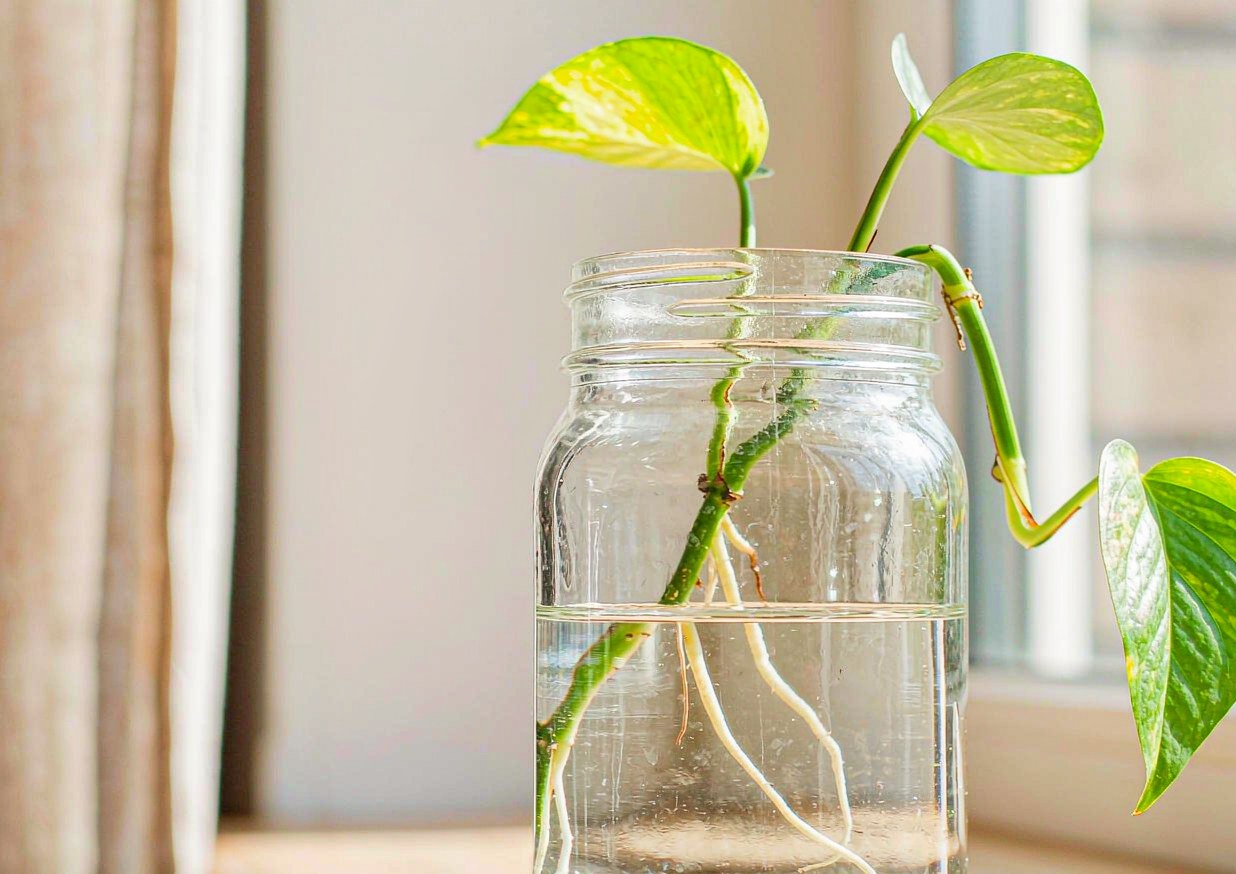
A node is the small swollen bump on a stem where a leaf and sometimes an aerial root already grow. It is the only part of a stem that can produce new roots, which is why every propagation guide tells you to cut below a node and keep that node underwater. In water, the plant doesn’t have to grow a protective root cap the way it would in soil, so roots often appear in as little as seven to fourteen days on fast species like pothos.
The reason this feels almost like magic to a beginner is that you can watch the roots form, which you never see in soil. I keep a clear glass so the whole process is visible, and that visibility is also practical: the moment the water clouds or smells, I know something is off. Most houseplants we keep as houseplants evolved as tropical understory plants, so they root happily in warm, still water without any hormone or special medium. Once you understand that the node is doing the work, the rest is just patience and clean water.
Why beginners see faster success in water
Soil propagation asks you to guess at moisture, temperature and drainage all at once, and a beginner can’t see what’s happening underground. Water propagation removes almost all of that uncertainty: the cutting either roots or it doesn’t, and you can see it happen. That feedback loop is why I recommend water as the first method for anyone who has killed a plant and assumes they have a “black thumb.”
I learned this the hard way with seed-starting, which I found fiddly and discouraging. Cuttings in water were different — my first pothos gave me visible white roots in under two weeks, and that small win is what got me hooked on houseplant propagation generally. The catch, and it’s an important one, is that water roots and soil roots are not identical: roots grown in water are softer and need a careful transition to soil, which is the whole point of the later sections here. Water gets you started; soil keeps the plant alive for the long term.
What You Need to Start
The cutting tools and vessels
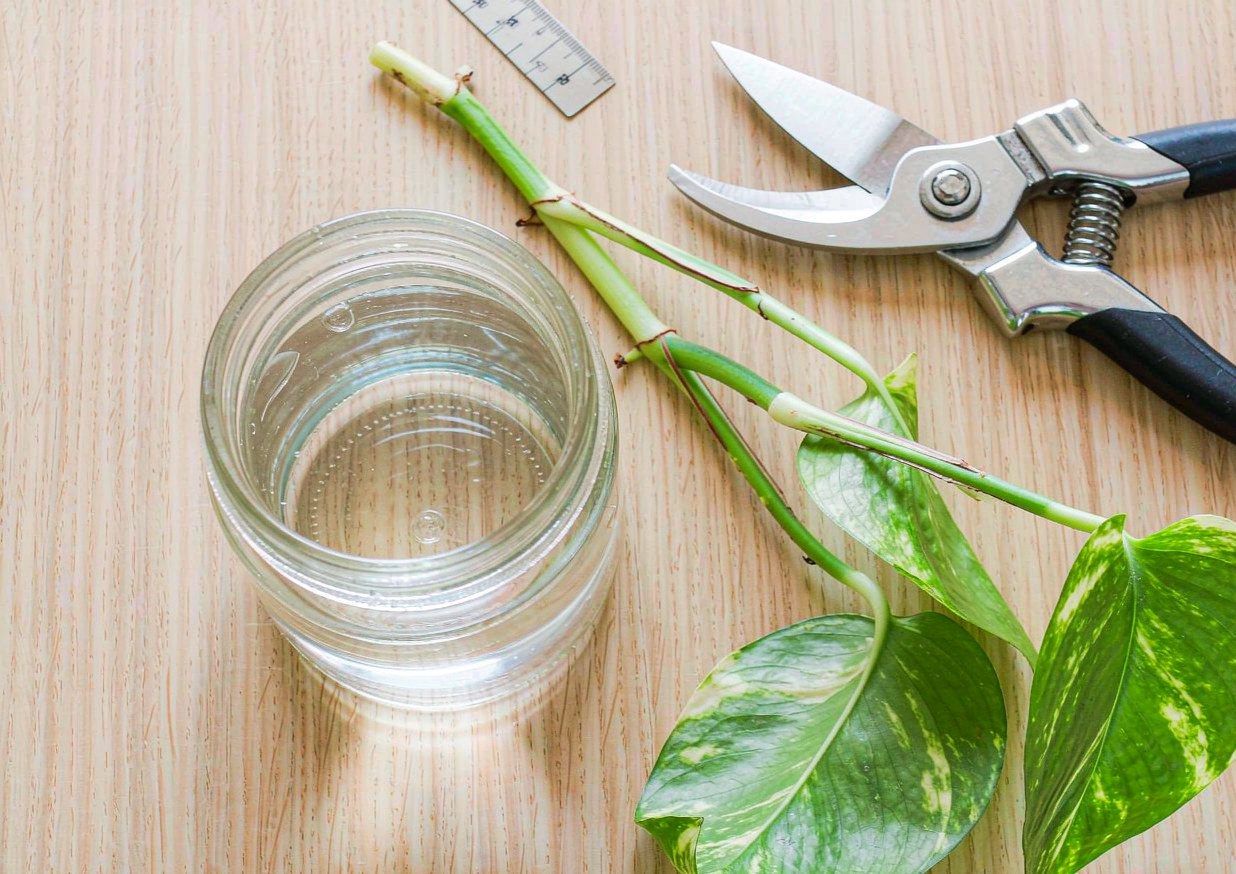
Everything for basic water propagation fits in a small box, and almost none of it is specialist. Here is the short kit I keep by the windowsill:
- Sharp scissors or pruners — clean cuts heal faster than crushed stems
- A clear glass jar or vase — so you can watch root growth and water clarity
- Room-temperature water — let tap water sit a few hours, or use filtered
- A bright windowsill — indirect light, not blasting afternoon sun
- Optional rooting hormone — rarely needed for pothos, handy for slow species
 Photos provided by Pixabay
Picking a healthy mother plant
The single biggest predictor of success is the health of the plant you cut from. Take cuttings from a vigorous, pest-free stem, not from a plant that is already yellowing or stressed. A cutting is a clone, so it inherits whatever the parent is dealing with.
I made the mistake once of propagating from a pothos that had been underwatered for a month, and the cuttings sat for weeks without rooting while healthy stems from the same plant would have taken off. Check the stem for firmness and a node that looks plump, and avoid any section with brown, mushy spots. If the mother plant is variegated, know that cuttings from all-white sections often fail because they lack chlorophyll — take a cutting that includes at least some green. Choose well and you’ve already done most of the work before the scissors touch the stem.
The Best Houseplants for Water Propagation
Pothos, philodendron and the easy wins
If you want a guaranteed first success, start with pothos (Epipremnum aureum) or a heartleaf philodendron. Both root so reliably in water that they’re the standard “starter” cuttings taught in every beginner group. Tradescantia (wandering dolly), spider plant babies, and most vining plants follow close behind.
I keep a running jar of golden pothos on my kitchen sill year-round, and it has never failed to root. The reason these are forgiving is that they already produce aerial roots in nature, so submerging a node just continues a process the plant understands. One caution that matters if you share a home with animals: pothos and philodendron are toxic to cats and dogs because they contain calcium oxalate crystals. They’re not deadly, but a chewed leaf can cause mouth pain, drooling and vomiting. I keep my propagation jars on a high shelf away from my cats, and I check any plant against the ASPCA pothos page before bringing a new species near pets. This is general information, not veterinary advice — if a pet actually eats part of a plant, call your vet or the ASPCA Animal Poison Control Center at (888) 426-4435.
Once you’ve nailed pothos, a whole roster of other houseplants roots just as cheerfully in water. Spider plant babies — the little plantlets that dangle on arching stems — root in a week if you float the base in water. Tradescantia (wandering dolly) is almost unkillable and will root from a single node. Coleus and polka-dot plant root fast and give you color while they do, which is a nice change from green-on-green. Peperomia species, with their fleshy leaves, root more slowly but reliably if you keep the node warm. I keep a second jar just for these “confidence-builders” so a beginner can see three different plants rooting at once — it makes the whole process feel less like luck and more like a method you actually understand.
Plants that fight you in water (and what to do)
Not every houseplant wants to root in a glass of water. Succulents and cacti tend to rot before they root because they’re built to dry out, and thick-stemmed plants like jade are far happier in soil or perlite. Snake plants and zz plants will eventually root in water but are slow and prone to collapse if the water sits stagnant.
When I want to multiply a succulent, I skip water entirely and lay the leaf on dry soil until a pup forms — that’s the method that works for them. For the in-between cases, a lean water prop with an air stone or frequent changes can help, but honestly it’s easier to reach for a pothos if you just want a win. The plant list at the Royal Horticultural Society plant pages is a handy place to confirm a species’ habits before you commit a cutting to a jar.
Taking the Cutting: Step by Step
Where to cut (nodes vs internodes)
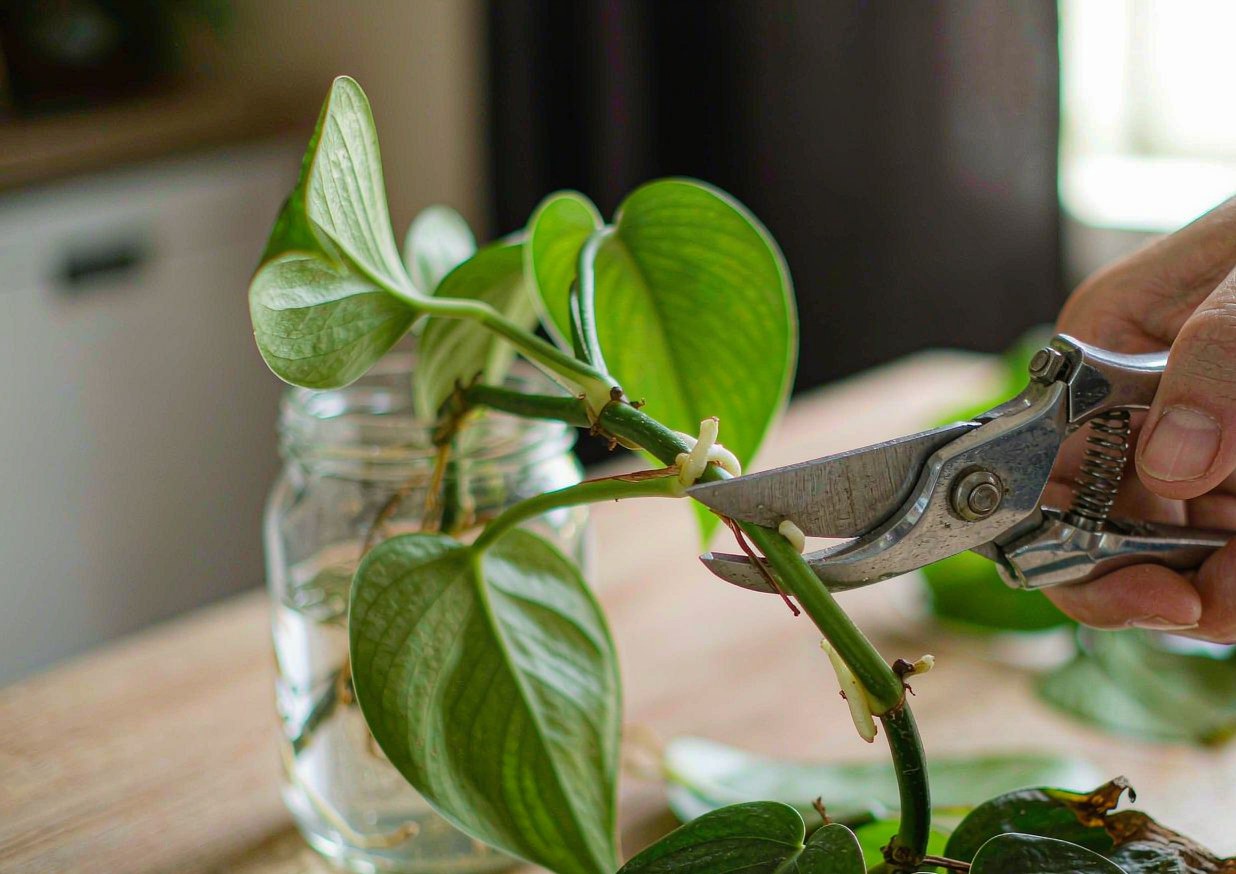
The most common beginner error is cutting through the smooth internode (the stretch of stem between two leaves) and leaving no node on the piece. A node-less cutting is decorative but rootless — it will sit in water, yellow, and die. Always cut about a quarter inch below a node, and make sure the node ends up submerged.
Here is the exact move I use: I find a stem with at least two leaves and one node below them, then snip just beneath that node at a slight angle to increase the surface area for water uptake. I leave the top one or two leaves above the waterline and remove any leaf that would be underwater, because submerged leaves rot and foul the water. For a trailing plant I often take several cuttings from one long vine, which fills a jar and gives me a fuller plant later. A good cutting is about four to six inches long with at least one node submerged and a leaf or two left to photosynthesize above the water — that balance of rooting site and energy source is what keeps it alive while it roots. The Wisconsin Horticulture houseplant care guide has clear diagrams of nodes if the bump-below-the-leaf concept is new to you.
Prepping the cutting for the jar
 Photos provided by Pixabay
Once the cutting is off the plant, a thirty-second prep step decides whether the water stays clean. Strip the lower leaves so nothing dips below the surface, and if the cut end looks crushed, trim it once more with clean blades. I wipe my pruner blades with rubbing alcohol between plants — it sounds fussy, but it stops me passing a fungus from one plant to the next.
Drop the cutting into the jar so the node sits fully underwater and the remaining leaves stay in the air. Fill the jar so the node is covered by an inch or two of water but the stem isn’t floating awkwardly. I learned to use just enough water to cover the node rather than filling the glass to the brim, because a shallow, stable setup tips less and the cutting stays put. From here the plant does the work; your only job is to keep that water fresh, which the next section covers.
Caring for Cuttings in Water
Light, temperature and water changes
Cuttings want bright indirect light — a north or east window is ideal, and a few feet back from a south window works too. Direct sun through glass cooks the stem and grows algae fast. Room temperature between about 65 and 75°F keeps root growth steady; a cold windowsill in winter slows everything to a crawl.
The one chore that matters most is the weekly water change. I dump the old water, rinse the jar, and refill with fresh room-temperature water every seven days, or sooner if it looks cloudy. Stagnant water is where rot and that sour smell come from. The Oregon State Extension gardening pages and similar university guides consistently recommend clean water over any additive, and in my experience plain water outperforms the “drop a aspirin or a coin in” folklore you’ll see online.
On water type specifically: I use tap water that has sat out overnight so the chlorine can off-gas, or filtered water when I have it, and I avoid icy-cold water straight from the fridge because a sudden chill shocks the cutting. If your tap water is heavily chlorinated or softened, distilled or rainwater is a safe fallback — the plant doesn’t care about minerals the way soil microbes do, it just wants clean, oxygen-rich water at a comfortable temperature. Warm (not hot) water also seems to encourage faster rooting in my winter jars, probably because it mimics the tropical conditions these plants prefer.
When algae and murk show up
If the water turns green or the glass gets slippery, you have algae, usually from too much sun or infrequent changes. It isn’t immediately fatal, but it competes with the cutting and smells unpleasant. Move the jar out of direct light and step up to twice-weekly rinses until it clears.
I once ignored a faint green tint for two weeks and came back to a jar that looked like a pond — the cutting survived, but it was a warning. Now I treat any cloudiness as a signal to act that day. If a cutting itself goes translucent or mushy at the base, that section has rotted; trim it back to firm tissue above the rot, change the water, and it often recovers. Catching murk early is the difference between a healthy jar and a compost-bin trip.
When Roots Are Actually Ready
Reading root length (and the 1-inch rule)
The question everyone asks is “how long is long enough?” My rule is to pot once the longest root reaches about one inch. At that point the cutting has committed to rooting but hasn’t yet become a water-dependent soft-root system that hates soil. You’ll see a nub first, then a white thread, then a small cluster.
Some people wait for a dense bird’s nest of roots three inches long because it “looks more established,” but that’s exactly the trap. Roots grown in water are structurally different and the longer they stay aquatic, the harder soil transition becomes. The NC State Extension Gardener Handbook notes that root function is tied to the medium, which is why timing the move matters more than root volume. One inch is my line; yours can be a touch more, but don’t let it become a habit to leave them swimming.
Signs you waited too long
If the roots are long, stringy, and the leaves start to yellow while still in water, the cutting has likely maxed out what water alone can give it and is now slowly declining. Another tell is roots that look brittle or brown at the tips — they’ve aged in the jar and will struggle to convert.
This is the failure mode from my first attempt: I treated the jar like a permanent display, not a nursery, and by the time I potted them the roots had gone soft and the cuttings collapsed within days of meeting soil. Now I set a phone reminder for two weeks out the moment a cutting goes in the water, so I’m deciding about soil before the plant decides for me. Catching it at the right moment is the single habit that turned my propagation from a coin-flip into a near-certainty.
Moving to Soil: The Transition That Trips People Up
Why cuttings rot or wilt at potting time
The move to soil is where confident water-propagators lose plants. The problem is that water roots are thin and delicate, built to pull oxygen from water, while soil roots need to be sturdier to pull moisture from air pockets. Shove a water-rooted cutting into dry potting mix and it can wilt or rot before it adapts.
The two killers are opposite: under-watering shock (the soft roots dry out instantly in fluffy soil) and over-watering rot (people keep the soil sopping to “help,” and the unadapted roots suffocate). I lost three good pothos cuttings to exactly this before I changed my method, and the fix turned out to be gentler than I expected — it’s in the next section.
The gradual-acclimation method I use
My current method removes the shock on both ends. I pot the rooted cutting into a light, moist mix (I use equal parts potting soil, perlite, and a little coco coir), water it just enough to feel like a wrung-out sponge, and then keep the new pot in a clear plastic bag or under a dome for the first week to hold humidity while the roots learn soil. After a week I open the bag for a few hours a day, then remove it.
I also keep the soil lightly moist for the first two weeks rather than my normal “let it dry between waterings” rule, because the converting roots need steady access to water they can no longer pull from a jar. Within about three weeks the plant shows new growth and I treat it like any established houseplant. The Michigan State University home gardening resources reinforce that consistent moisture during establishment beats a single drench, which matches what I’ve seen on my own sill. The result is a cutting that never visibly flags — no wilt, no drama, just growth.
Two small choices make the potting step smoother. First, I pot into a small container — a 4-inch pot, not a big one — because a tiny root system can’t drink from a large volume of soil, and the excess stays wet and rots. Second, I use an airy mix: bagged potting soil cut with perlite or pumice so water drains fast and roots can breathe while they adapt. If a cutting does wilt in the first day after potting, that’s usually transplant shock, not death — I leave it humid, keep the soil lightly moist, and it usually perks up within 48 hours. The few that don’t were simply left in water too long, and that’s a timing lesson for the next one, not a reflection on your skill.
Common Mistakes (and the One That Killed Mine)
My first pothos: left in water until it rotted
I’ll say it plainly: the worst thing I did was too much patience. I loved how the jar looked, kept adding water, and let the cuttings live there for two months. The roots got long and pale, and when I finally potted them the transition failed — two of three rotted at the base within days. The plant had effectively forgotten how to live in soil.
The lesson cost me those cuttings, but it made every propagation since a success. Now the jar is a nursery with an exit plan, not a permanent home. If you take one thing from this guide, let it be this: water propagation is a stage, not a lifestyle for the plant. Pot at one inch, acclimate gently, and you skip the heartbreak I went through.
Crowding, stale water and direct sun
Three smaller mistakes compound fast. Crowding — stuffing ten cuttings in one narrow jar — starves them of oxygen and light and invites rot. Stale water left for weeks is a bacteria party. And direct sun on a clear jar bakes the stem and grows algae in days.
I keep no more than three or four cuttings per jar, change water weekly without fail, and site jars where they get bright but filtered light. These are boring rules, but boring is what makes propagation reliable. The difference between a person who says “I can never grow plants” and one with a windowsill full of jars is almost always just this routine maintenance, done on schedule, not skipped when life gets busy.
Troubleshooting: Symptoms, Causes and Fixes
Most propagation problems surface in the first three weeks. This is the table I wish I’d had on day one.
| Symptom | Likely cause | Fix |
|---|---|---|
| Cutting sits for weeks, no roots | No node underwater, or parent plant unhealthy | Recut below a plump node; take from a vigorous stem |
| Base turns mushy and smells | Rot from stale water or submerged leaves | Trim to firm tissue, change water, keep leaves above the line |
| Water turns green and slippery | Algae from sun or infrequent changes | Move out of direct light; rinse jar twice weekly |
| Leaves yellow while still in water | Waited too long; roots aging in the jar | Pot now into moist mix; don’t delay further |
| Cutting wilts right after potting | Shock moving soft water-roots to dry soil | Pot into moist mix, humidity-dome for a week, keep lightly moist |
| Roots brown and brittle at tips | Old water roots; poor conversion to soil | Pot sooner next time; trim tips, pot into airy moist mix |
FAQs
How long does it take to root a houseplant in water?
For fast species like pothos and philodendron, expect visible white roots in about 7 to 14 days, with a potting-ready one-inch root by roughly three weeks. Slower plants such as snake plants or some succulents can take a month or more, and a few are happier in soil to begin with. Temperature matters: a cutting on a 65-75°F sill roots faster than one on a cold window. The timing above is what I see on my own shelves, not a guarantee for every species.
Can I leave the plant in water forever?
Technically some plants, especially pothos, survive long-term in water if you feed them, but it is not ideal. Water alone lacks the nutrients and structure a mature plant wants, so growth stalls and the roots stay fragile. I treat water as the nursery, not the home: root, then move to soil within a week or two of hitting that one-inch mark. If you truly want a permanent water plant, use a diluted liquid fertilizer and accept slower, weaker growth.
Do I need rooting hormone for water propagation?
Almost never for the easy vining plants. Pothos, philodendron, tradescantia and spider plants root fine in plain water with no additive. I keep rooting hormone on hand only for slower or woody cuttings where I want to nudge things along. Plain clean water, changed weekly, has outperformed every “trick” I’ve tried, including the aspirin-and-coin folklore. Save your money and your patience for the water changes instead.
Why are my pothos cuttings turning yellow in the jar?
Yellowing in water usually means one of three things: the cutting has been in too long and the roots have aged out (pot it now), the water has gone stale and started to rot the base (change it and trim any mush), or the light is wrong — too dark slows rooting, too much direct sun stresses the stem. Check the base first; if it’s firm and the water is fresh, give it more bright indirect light and a little more time. If the base is soft, trim above the rot and start the clock again.
Is it safe to propagate plants around pets?
Be careful: many popular propagation plants, including pothos and philodendron, are toxic to cats and dogs if chewed, causing mouth pain, drooling and vomiting from calcium oxalate crystals. I keep all my jars on high shelves my cats can’t reach, and I check any new species against the ASPCA toxic and non-toxic plant list before it comes indoors. This is general information, not veterinary advice — if a pet actually eats part of a plant, call your veterinarian or the ASPCA Animal Poison Control Center at (888) 426-4435 rather than waiting to see what happens.
Sources and Further Reading
- ASPCA — Pothos (Toxic to Pets)
- ASPCA — Toxic and Non-Toxic Plants List
- Wisconsin Horticulture — Houseplant Care
- Oregon State University Extension — Gardening
- NC State Extension — Extension Gardener Handbook
- Michigan State University — Home Gardening
- Royal Horticultural Society — Plants
About the author
Samantha has been gardening and arranging her own cut flowers for more than ten years, and has built more than 30 centerpieces from grocery-store bunches, clippings off the cedars behind her house, and a handful of dollar-store experiments that didn’t work. She writes practical, low-cost guides for beginners, including the versions that failed. Prices quoted in her articles are what she actually paid at US grocery and craft stores; nothing is sponsored and no brand pays for a mention. She is not a certified florist, a veterinarian or a horticulturist, and says so wherever a topic touches on plant safety or pet health.
Published: Oct 31, 2026 · Last updated: Oct 31, 2026.
{
“@context”: “https://schema.org”,
“@graph”: [
{
“@type”: “Article”,
“headline”: “How to Propagate Houseplants in Water and When to Move Them to Soil”,
“description”: “Water propagation is the easiest way to multiply houseplants like pothos and philodendron: cut below a node, keep it in clean water, and move to soil once roots reach about one inch.”,
“image”: [
“images/prop-hero-clean.jpg”,
“images/prop-materials-clean.jpg”,
“images/prop-process-clean.jpg”
],
“author”: { “@type”: “Person”, “name”: “Samantha” },
“publisher”: { “@type”: “Organization”, “name”: “gmmur.com” },
“datePublished”: “2026-10-31”,
“dateModified”: “2026-10-31”,
“mainEntityOfPage”: {
“@type”: “WebPage”,
“@id”: “https://gmmur.com/houseplants/propagate-houseplants-water-to-soil”
}
},
{
“@type”: “FAQPage”,
“mainEntity”: [
{
“@type”: “Question”,
“name”: “How long does it take to root a houseplant in water?”,
“acceptedAnswer”: {
“@type”: “Answer”,
“text”: “For fast species like pothos and philodendron, expect visible white roots in about 7 to 14 days, with a potting-ready one-inch root by roughly three weeks. Slower plants such as snake plants can take a month or more. A 65-75 degree Fahrenheit windowsill roots faster than a cold one.”
}
},
{
“@type”: “Question”,
“name”: “Can I leave the plant in water forever?”,
“acceptedAnswer”: {
“@type”: “Answer”,
“text”: “Technically some plants survive long-term in water if fed, but it is not ideal: water lacks the nutrients and structure a mature plant wants, growth stalls, and roots stay fragile. Treat water as the nursery and move to soil within a week or two of a one-inch root.”
}
},
{
“@type”: “Question”,
“name”: “Do I need rooting hormone for water propagation?”,
“acceptedAnswer”: {
“@type”: “Answer”,
“text”: “Almost never for easy vining plants. Pothos, philodendron, tradescantia and spider plants root fine in plain water. Reserve rooting hormone for slower or woody cuttings. Clean water changed weekly outperforms home remedies.”
}
},
{
“@type”: “Question”,
“name”: “Why are my pothos cuttings turning yellow in the jar?”,
“acceptedAnswer”: {
“@type”: “Answer”,
“text”: “Yellowing usually means the cutting has been in too long and roots aged out, the water went stale and started rot, or the light is wrong. Check the base first; if firm and water is fresh, give bright indirect light. If the base is soft, trim above the rot and restart.”
}
},
{
“@type”: “Question”,
“name”: “Is it safe to propagate plants around pets?”,
“acceptedAnswer”: {
“@type”: “Answer”,
“text”: “Be careful: pothos and philodendron are toxic to cats and dogs if chewed, causing mouth pain, drooling and vomiting. Keep jars on high shelves, and check any new species against the ASPCA toxic and non-toxic plant list. This is general information, not veterinary advice; if a pet eats a plant, call your vet or the ASPCA Animal Poison Control Center at (888) 426-4435.”
}
}
]
}
]
}