
If you’re tired of replanting the same flower bed every single spring, the fix is to plant perennials — the plants that come back from the same roots year after year. The first border I put in was all annuals, and by year three I was exhausted from buying and digging and replanting. Then a neighbor showed me a peony her grandmother had planted, and it hit me: some plants are a one-time effort that pays you back for decades. But which ones actually survive a forgetful beginner? If you’re new to this, you want the seven I’d stake my weekend on — tough, forgiving, and genuinely low-maintenance. In this guide I’ll walk you through the seven I recommend, how to plant them, and the mistakes that kill more perennials than cold weather does. Let’s get into it.
Quick answer: the best perennials for beginners are coneflower (Echinacea), black-eyed Susan (Rudbeckia), daylily (Hemerocallis), hosta, peony (Paeonia), sedum (stonecrop), and catmint (Nepeta). All seven are hardy, pest-resistant, and return yearly with minimal care once established. Plant them in a hole twice as wide as the pot, in the sun or shade their tag calls for, water well the first year, then mostly leave them alone. The two habits that keep them coming back are not overwatering and cutting back or dividing on schedule. Do those and you’ll have a border that looks better every year instead of worse. Everything below explains the “why.”
- 1. Why Perennials Are Worth the Wait
- 2. Read the Plant Tag Before You Buy
- 3. Seven Perennials I’d Plant Again Tomorrow
- 4. Planting Perennials the Right Way
- 5. Watering and Feeding in the First Year
- 6. Cutting Back and Dividing Over the Years
- 7. Keeping Perennials Healthy Without Chemicals
- 8. Common Beginner Mistakes With Perennials
- 9. Troubleshooting: Symptoms, Causes and Fixes
- 10. FAQs
- 11. Sources and Further Reading
Why Perennials Are Worth the Wait
What a perennial actually is
A perennial is a plant whose roots survive the winter and send up new growth each spring, living for three years or — often — decades. That’s the opposite of an annual, which completes its whole life in one season and must be replanted. Understanding that one difference changes how you garden.
I used to think “perennial” meant “easy,” and it usually does, but the real win is leverage: you do the work of planting once and the plant compounds. My hostas and peonies are now in their eighth and eleventh years respectively, and the only thing I’ve spent on them is occasional mulch. The catch is patience in year one — a perennial puts its energy into roots before it puts on a show, so the first season can look modest. I remember being disappointed by a coneflower that barely bloomed its first summer, then watched it triple in size the next. Give them a year and the payoff is a border that improves on its own.
The dormant season is part of the deal and it surprises beginners. In fall your perennial dies back to the ground and looks dead all winter, but under the soil the crown and roots are simply resting, not gone. The first winter with my peonies I nearly dug one up in February because the bed was bare and I was sure it had failed. Learning to read the cycle — active spring, peak summer, die-back fall, rest winter — is what lets you stop worrying and trust the plant. I mark where things are with a low label so I don’t accidentally fork into a sleeping crown while working the bed in early spring.
Why they beat replanting every year
The case for perennials over annuals is mostly about time and money, and a little about the look of a mature garden. Annuals cost you a fresh purchase and a fresh planting every spring; perennials cost you once and then divide to give you more.
On my old all-annual bed I spent roughly $80-120 a year on flats, and I spent a weekend installing them. Switching half the bed to perennials meant one $15 pot each that now returns free every spring, and several of them have been split to fill new spots at no cost. The look is better too — established clumps have a rooted, intentional feel that brand-new annuals never do. The trade-off is that perennials have a slower start and a defined bloom window, so I still tuck a few annuals in for continuous color. But the backbone of the bed, the part that carries the garden, is perennial, and that’s what saves my weekends.
Read the Plant Tag Before You Buy
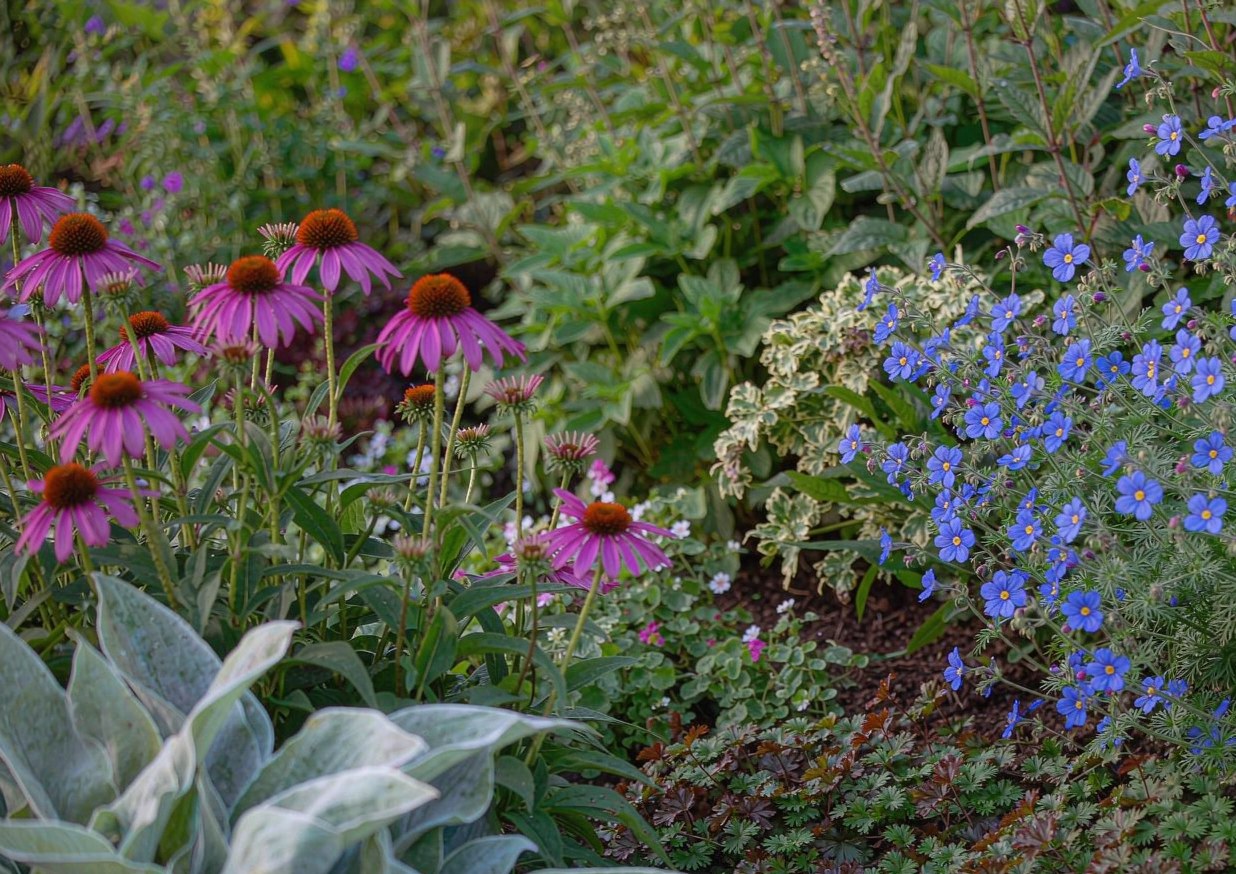 Photo generated for this article
Hardiness zone explained
The most important line on any perennial plant tag is the hardiness zone — the range of winter lows a plant can survive. Plant outside your zone and you’re betting on a miracle every winter.
I garden in zone 6, so I look for plants rated for zones 4-8, which gives me a margin of safety against the occasional brutal winter. The zone map is published by the USDA and your state extension repeats it; the NC State Extension Gardener Handbook is a solid reference for the basics. The mistake I made early on was buying a gorgeous lavender rated only to zone 7 and watching it melt over a cold February — pretty, but wrong plant for my yard. Match the zone first, then worry about color. A plant that can’t survive your winter is the most expensive “bargain” in the nursery.
Microclimates can bend the zone map by a full number in either direction, and learning yours is worth the effort. The south side of my house stays a zone warmer than the open yard because it’s sheltered and radiates heat, so I can grow a slightly tender cultivar there that would struggle out in the wind. Conversely, a low spot where cold air pools can be a zone colder and frosts earlier. I note where snow melts first in spring and where ice lingers, because those are my warm and cold pockets. Use the zone tag as your baseline, then adjust for the specific corner of your yard, and you’ll stop losing plants to ‘should have been fine’ surprises.
Sun and soil requirements
The second line that decides whether a perennial thrives is its sun and soil need: “full sun” means six or more hours of direct light, “part shade” means three to six, and “shade” means little direct sun. Plant a sun-lover in shade and it stretches, flops and refuses to bloom.
This is the rule that saved my hostas: I stopped trying to grow them in the blazing front bed and moved them under the maple, where they’d been begging to go. Meanwhile my coneflowers went to the open south side where they get eight hours. Soil matters too — most of my seven like well-drained soil and hate wet feet, so I work compost in but I don’t create a bog. The RHS Plants database is handy for checking a specific plant’s conditions before you commit. Read those two lines and you’ll avoid the most common reason perennials fail: wrong place, not wrong plant.
Soil texture and drainage matter more than the tag lets on. Most of my seven are happiest in a well-drained loam, but hostas and peonies tolerate a bit more clay than people expect as long as it isn’t wet. I do a simple squeeze test — a handful of damp soil should form a loose ball that breaks apart, not a sticky lump or a crumble that won’t hold — and amend with compost accordingly. I avoid piling on lime or sulfur without a test, because guessing pH is how you create a problem you didn’t have. A basic soil test told me my bed was already fine, saving me a season of unnecessary additives. Get the soil roughly right and these seven forgive almost everything else.
Seven Perennials I’d Plant Again Tomorrow
The shortlist at a glance
If I had to fill a beginner border from scratch, these are the seven perennials I’d buy without hesitation, because each one has survived my neglect and still looks good: coneflower (Echinacea), black-eyed Susan (Rudbeckia), daylily (Hemerocallis), hosta, peony (Paeonia), sedum (stonecrop), and catmint (Nepeta).
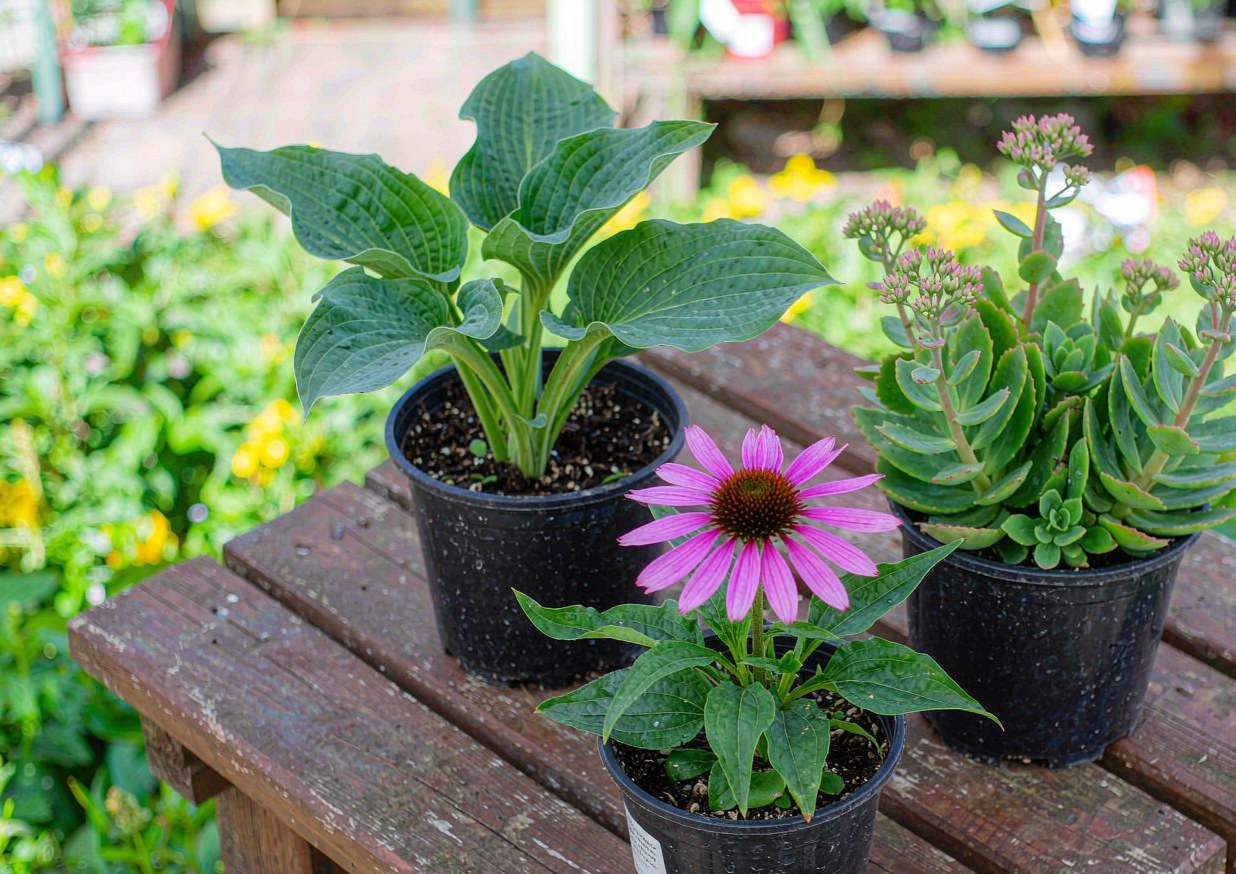 Photo generated for this article
Here’s why each earns its spot. Coneflower and black-eyed Susan are prairie natives that shrug off heat and drought once established and feed pollinators. Daylilies are nearly indestructible and bloom in ugly clay. Hostas are the go-to for shade and ask for almost nothing. Peonies are a once-in-a-lifetime planting that can outlive you. Sedum (especially ‘Autumn Joy’) is the late-season anchor that looks good dried. Catmint is a blue-cloud edger that blooms for weeks and deer mostly leave alone. Together they cover sun and shade, early and late season, and none of them needs coddling. The table below sums up where each wants to live.
A word on deer and rabbits, because in many gardens they decide what survives more than the weather does. Of the seven, catmint, coneflower and rudbeckia are the ones four-legged visitors usually walk past, while hostas are famously the first thing a deer will eat. I learned that the hard way one June when a single visit stripped every hosta to nubs; now the hostas live in a fenced side bed and the deer-resistant seven fill the open border. If you have pressure, weight your planting toward the resistant types and save the tempting ones for protected spots. Knowing your local wildlife is as important as knowing your zone.
| Perennial | Light | Bloom time | Why beginners love it |
|---|---|---|---|
| Coneflower (Echinacea) | Full sun | Mid-late summer | Drought-tough, pollinator magnet |
| Black-eyed Susan (Rudbeckia) | Full sun | Summer-fall | Long bloom, self-seeds gently |
| Daylily (Hemerocallis) | Sun-part shade | Early-mid summer | Survives clay, neglect, division |
| Hosta | Shade | Summer (foliage) | The easy answer for shady spots |
| Peony (Paeonia) | Full sun | Late spring | Decades of blooms, one planting |
| Sedum (stonecrop) | Full sun | Late summer-fall | Drought-proof late color |
| Catmint (Nepeta) | Sun | Late spring-summer | Long bloom, deer-resistant edge |
How I narrowed the list
The reason this seven made the cut and dozens didn’t is a simple filter: could a distracted first-year gardener ignore it for a week and still have it alive? Most “specialty” perennials fail that test.
I dropped plants that need precise watering (many alpines), plants that demand perfect drainage I don’t have (lavender in my clay), and plants that are slow to establish and tempting to over-help (gentians). The seven here are the ones that tolerate a missed watering, a late mulch, and a beginner’s enthusiasm to “help” with too much fertilizer. The Missouri Botanical Garden Plant Finder is where I check a candidate’s real-world toughness before buying. My advice: start with these seven, learn their rhythms for a season, and only then add the divas. Build confidence first, collection second.
Planting Perennials the Right Way
When to plant: spring vs. fall
You can plant perennials in spring or fall, and both work, but they favor different goals. Spring planting gives a full first season of growth; fall planting (about six weeks before first frost) lets roots establish in cool soil with less watering stress.
I plant most of mine in spring because I’m impatient to see them, but I’ve come to love fall for peonies and hostas, when the heat is gone and the plants settle in quietly. The mistake is planting in the dead of summer without committing to watering — a fresh perennial in August needs steady moisture or it sulks. Whatever the season, avoid planting right before a forecast heat wave. One July I planted a flat of rudbeckia before a 95°F week and lost half of them to heat before they rooted. Spring and early fall are the gentle windows; summer is the hard one.
The hole-and-soil method
The planting technique that gives perennials their best start is boring but it works: dig a hole twice as wide as the pot and no deeper than the root ball, loosen the sides, set the plant so the top of the root ball sits at soil level, backfill with the native soil mixed with a little compost, and water deeply.
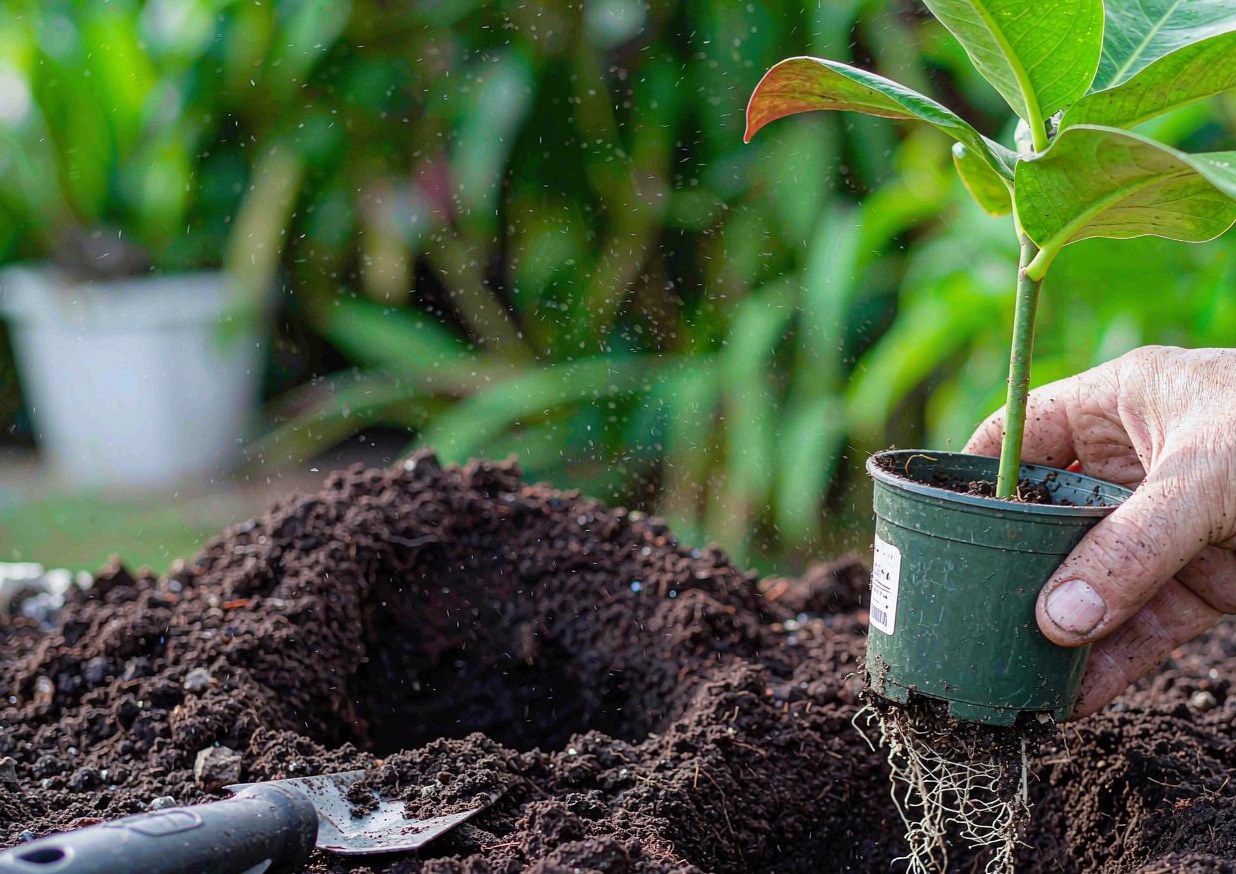 Photo generated for this article
The error I see most — and made myself — is planting too deep, which smothers the crown and invites rot, especially on peonies and sedum. Peonies in particular must be planted with the buds (eyes) no more than an inch or two below the surface, or they simply won’t bloom, and I wasted two years before I learned that. I also loosen the hole sides so roots don’t circle in a slick, undug wall of clay. A $15 plant deserves a $0 hole done right. Set the crown at the right depth, firm the soil, water, and the plant does the rest.
I also resist the urge to amend the planting hole into a rich pocket that differs sharply from the surrounding soil, because a root ball sitting in a ‘pot’ of fluffy compost will never venture into the native ground and the plant stays small and dependent. I mix only a little compost into the backfill and let the roots learn to grow into my real soil. For heavy clay I widen the hole more and add grit so water doesn’t pool; for sandy soil I add a bit more compost to hold moisture. The aim is a gentle transition, not a luxury liner. A plant eased into its real conditions is a plant that thrives for years, not just the first season.
Watering and Feeding in the First Year
The first-year rule
The one rule that decides whether a perennial survives is this: the first year, water it like a needy houseguest; after that, barely at all. Year one is all about roots, and roots need consistent moisture to spread.
I water new plantings about twice a week in the first season (more in heat), aiming for a slow soak that reaches deep rather than a daily sprinkle that trains roots to the surface. The plants on this list are drought-tolerant once established, but “established” means a full year of root growth, and skipping water in year one is the fastest way to lose them. My daylilies shrugged off a dry July in year three that would have finished them in year one. So be generous early, then back off. The plant tells you it’s established when it sails through a dry week without wilting — that’s your signal to relax.
A soaker hose or drip line makes the first year almost foolproof, because it delivers water slowly at the root zone without wetting foliage or running off. I laid a cheap drip line down my new perennial row on a timer for two mornings a week, and my establishment rate went from ‘most’ to ‘all.’ The alternative — a sprinkler or a hurried watering-can splash — either wets the leaves or never reaches deep enough. If you’re planting more than a handful, the small upfront cost of drip pays for itself in saved plants. In year two I cut the timer back to ‘only if it hasn’t rained in ten days,’ and by year three I’d forgotten where it even was.
What to feed and when
Perennials mostly don’t need much feeding, and over-fertilizing is a real beginner trap that produces floppy, weak growth and fewer blooms. A single application of compost in spring, or a light balanced fertilizer, is plenty for most of the seven.
I top-dress with an inch of compost each spring and skip liquid feed entirely for coneflower, rudbeckia and sedum, which actually bloom better in lean soil. Hostas and peonies get a little slow-release feed because they’re heavier feeders, but even then I keep it modest. The year I dumped a high-nitrogen lawn fertilizer on the border, everything grew tall and flopped and the coneflowers made leaves instead of flowers. Less is more here. A handful of compost and patience beats a bottle of miracle mix, and your blooms will prove it.
Cutting Back and Dividing Over the Years
When to cut back
To keep perennials tidy and healthy, cut spent foliage back at the right moment: most die-back types get cleaned up in late fall or early spring, while a few (like sedum and ornamental seed heads) are better left for winter interest and cut in spring.
I do a big cleanup in March, once the worst of the cold is past but before new growth hides the old. The mistake is cutting everything to the ground in August because it looks tired — that’s fine for catmint (which rewards a shear with a second bloom) but wrong for peony foliage you should let die back naturally. Catmint in particular is a star: I shear it by a third after its first flush and it bursts into bloom again in weeks. Leave sedum and coneflower seed heads up for the birds in winter, then tidy in spring. Knowing what to cut and when keeps the border looking deliberate instead of abandoned.
How to divide a crowded clump
When a perennial gets crowded and blooms shrink to the edges — usually every three to five years — it’s time to divide: dig the clump, split it into smaller pieces, and replant the healthiest. Division is how one plant becomes five, for free.
I divide hostas, daylilies and rudbeckia in early spring or fall, using a spade to slice the root mass into chunks each with a shoot and roots. The center of an old clump is often dead anyway, so I compost that and keep the vigorous outer pieces. My daylily border started as three pots and is now fifteen because I divide without mercy. The Oregon State Extension gardening pages cover general perennial care if you want more detail. Divide on schedule and your plants stay vigorous instead of fading from the middle out.
Keeping Perennials Healthy Without Chemicals
Mulch and air flow
The two non-chemical habits that keep perennials healthy are mulching and spacing for air flow. A 2-3 inch layer of mulch holds moisture, suppresses weeds, and keeps soil from splashing onto leaves (which spreads disease), while good spacing lets foliage dry after rain.
I mulch every spring with shredded bark or compost and keep it pulled an inch off the crowns so I don’t trap moisture against them. The year I piled mulch against my peony stems, the crown rotted; now I treat mulch like a donut, not a volcano. Spacing matters just as much — coneflowers and rudbeckia in tight clumps get powdery mildew, while the same plants given elbow room stay clean. None of this needs a spray bottle. Cultural care beats chemicals for these seven, and your back (and the pollinators) will thank you.
Spotting trouble early
Most perennial problems are slow enough that a weekly glance catches them while they’re still cheap to fix. Yellowing, holes, or a flop in the middle of a clump are all early signals worth acting on.
For hostas, the early signal is slug damage — ragged holes in the leaves — and the fix is a morning patrol or a shallow dish of beer, not a chemical. For peonies, reddish blotches (botrytis) mean cut and trash the affected stems in spring; don’t compost them. For coneflowers, a sudden lean usually means a crowded center that needs dividing, not a disease. I walk the border with my coffee and deal with things the day I see them, which is why I rarely need drastic measures. The habit of looking is the whole secret — a problem caught at “a few holes” stays a non-event instead of becoming “the whole plant died.”
Common Beginner Mistakes With Perennials
Planting too deep
The mistake that silently kills more perennials than cold does is planting too deep, especially peonies, sedum and anything with a crown. Bury the crown and it suffocates or rots before it can establish.
I learned this the hard way with two peony roots I buried like bulbs; they produced leaves for two seasons and never a flower, because the eyes were three inches down instead of one. Dug them up, reset them shallow, and they bloomed the very next year. The rule I now follow: the top of the root ball or the crown sits at, or a hair above, soil level — never below. For bare-root plants, lay them on the soil and barely cover. It feels wrong to leave them so high, but the plant wants its crown in the air, not the earth. Plant shallow and you remove the most common failure mode in one move.
Forgetting the mature size
The other classic perennial blunder is ignoring the “mature spread” on the tag and planting everything cheek-by-jowl, so by year three the bed is a brawl and the smaller plants vanish.
I once planted hostas and coneflowers six inches apart because they looked tiny in their pots, and within two years the hostas had swallowed the coneflowers entirely. Now I read the spread, mentally multiply the pot size by three, and give each plant the room its tag promises. Crowding also brings the disease and flopping problems from earlier sections, so spacing is doing double duty. A border planned with mature size in mind looks intentional from year one and stays that way; a border planted by pot size looks great in May and Chaos by July. Plan for the plant it will become, not the plant in the pot.
Troubleshooting: Symptoms, Causes and Fixes
Most perennial failures announce themselves early and trace back to one of six causes. This is the table I wish I’d had in year one.
| Symptom | Likely cause | Fix |
|---|---|---|
| Peony makes leaves but no flowers | Planted too deep (eyes buried) | Dig and reset with eyes 1-2 in below soil |
| Plant wilts and crown is soft/mushy | Planted too deep or overwatered | Replant shallow; cut watering; improve drainage |
| Blooms shrink to clump edges | Crowded, needs dividing | Dig and split every 3-5 years in spring/fall |
| White dust on coneflower/rudbeckia | Powdery mildew from crowding | Space for air, water at base, remove lower leaves |
| Hosta leaves full of holes | Slugs | Morning patrol, beer trap, or diatomaceous earth |
| Plant flops and won’t stand | Too much fertilizer or too much shade | Cut feeding; move to correct light; stake if needed |
FAQs
What are the easiest perennials to grow for beginners?
The easiest perennials for beginners are coneflower, black-eyed Susan, daylily, hosta, peony, sedum and catmint. All seven are hardy, low-pest, and return yearly with minimal care once their first year of watering is behind them. They cover both sun and shade and spread across the season, so a border built from them looks good from late spring to fall. Start with these and add fussier plants only after you’ve learned their rhythms for a season. The key is matching each to its light and zone, then mostly leaving it alone.
Do perennials come back every year?
Yes — that’s the definition of a perennial: the roots survive the winter and send up new growth each spring, often for many years. Peonies in particular can live for decades from a single planting. The exception is that a perennial planted outside its hardiness zone, or planted too deep, may not return, so the “comes back” promise depends on getting the basics right. Once established in the right spot, these seven should greet you every spring with no replanting. Think of them as a one-time effort that compounds.
When is the best time to plant perennials?
The best times to plant perennials are spring and early fall, about six weeks before your first hard frost for fall planting. Both windows let roots establish in mild conditions with less watering stress than summer. Avoid planting in the heat of midsummer unless you can commit to steady watering, because fresh plants in hot weather struggle to root before they cook. Spring gives a full first season of growth; fall lets the plant settle in quietly and burst out early next year. Either is fine — just stay clear of summer’s worst heat.
How often should I water new perennials?
Water new perennials about twice a week in their first season, aiming for a deep soak that reaches the root zone rather than a light daily sprinkle. The first year is all about roots, and consistent moisture is what gets them established. Once a plant is a year old and has spread its roots, most of these seven are drought-tolerant and need watering only in extended dry spells. The mistake is treating them like annuals and overwatering forever, which leads to rot and weak growth. Water well in year one, then back off.
Are these perennials safe around pets?
Most of the seven are not on the major toxicity lists, but a couple deserve caution: hostas are known to be toxic to dogs and cats if eaten, and peony can cause mild stomach upset. The others on the list are generally not flagged as dangerous, but I still keep chewers away from any plant. Before bringing something indoors as a cut flower or letting a pet graze the border, I check the ASPCA toxic and non-toxic plant list. This is general gardening information and not veterinary advice — if a pet actually eats a plant and acts ill, call your vet or the ASPCA Animal Poison Control Center at (888) 426-4435.
Sources and Further Reading
- Missouri Botanical Garden — Plant Finder
- Royal Horticultural Society (RHS) — Plants
- NC State Extension — Extension Gardener Handbook
- Oregon State University Extension — Gardening
- ASPCA — Toxic and Non-Toxic Plants List
About the author
Samantha has been gardening and arranging her own cut flowers for more than ten years, and has built more than 30 centerpieces from grocery-store bunches, clippings off the cedars behind her house, and a handful of dollar-store experiments that didn’t work. She writes practical, low-cost guides for beginners, including the versions that failed. Prices quoted in her articles are what she actually paid at US grocery and craft stores; nothing is sponsored and no brand pays for a mention. She is not a certified florist, a veterinarian or a horticulturist, and says so wherever a topic touches on plant safety or pet health.
Published: Oct 24, 2026 · Last updated: Oct 24, 2026.
{
“@context”: “https://schema.org”,
“@graph”: [
{
“@type”: “Article”,
“headline”: “Best Perennials for Beginners: 7 That Come Back Every Year”,
“description”: “Seven low-fuss perennials — coneflower, black-eyed Susan, daylily, hosta, peony, sedum and catmint — that return yearly with almost no work. A beginner’s planting and care plan.”,
“image”: [
“images/perennials-hero-clean.jpg”,
“images/perennials-plants-clean.jpg”,
“images/perennials-border-clean.jpg”
],
“author”: { “@type”: “Person”, “name”: “Samantha” },
“publisher”: { “@type”: “Organization”, “name”: “gmmur.com” },
“datePublished”: “2026-10-24”,
“dateModified”: “2026-10-24”,
“mainEntityOfPage”: {
“@type”: “WebPage”,
“@id”: “https://gmmur.com/best-perennials-for-beginners-7-that-come-back”
}
},
{
“@type”: “FAQPage”,
“mainEntity”: [
{
“@type”: “Question”,
“name”: “What are the easiest perennials to grow for beginners?”,
“acceptedAnswer”: {
“@type”: “Answer”,
“text”: “The easiest perennials for beginners are coneflower, black-eyed Susan, daylily, hosta, peony, sedum and catmint. All seven are hardy, low-pest, and return yearly with minimal care once their first year of watering is behind them. They cover both sun and shade and spread across the season. Start with these and add fussier plants only after you have learned their rhythms for a season.”
}
},
{
“@type”: “Question”,
“name”: “Do perennials come back every year?”,
“acceptedAnswer”: {
“@type”: “Answer”,
“text”: “Yes, that is the definition of a perennial: the roots survive the winter and send up new growth each spring, often for many years. Peonies can live for decades from a single planting. The exception is a perennial planted outside its hardiness zone or planted too deep, which may not return. Once established in the right spot, these seven should greet you every spring with no replanting.”
}
},
{
“@type”: “Question”,
“name”: “When is the best time to plant perennials?”,
“acceptedAnswer”: {
“@type”: “Answer”,
“text”: “The best times to plant perennials are spring and early fall, about six weeks before your first hard frost for fall planting. Both windows let roots establish in mild conditions with less watering stress than summer. Avoid planting in midsummer heat unless you can commit to steady watering. Spring gives a full first season; fall lets the plant settle in quietly and burst out early next year.”
}
},
{
“@type”: “Question”,
“name”: “How often should I water new perennials?”,
“acceptedAnswer”: {
“@type”: “Answer”,
“text”: “Water new perennials about twice a week in their first season, aiming for a deep soak that reaches the root zone rather than a light daily sprinkle. The first year is about roots, and consistent moisture establishes them. Once a plant is a year old, most of these seven are drought-tolerant and need water only in extended dry spells. Overwatering forever leads to rot and weak growth, so water well in year one, then back off.”
}
},
{
“@type”: “Question”,
“name”: “Are these perennials safe around pets?”,
“acceptedAnswer”: {
“@type”: “Answer”,
“text”: “Most of the seven are not on the major toxicity lists, but hostas are toxic to dogs and cats if eaten, and peony can cause mild stomach upset. The others are generally not flagged as dangerous, but keep chewers away from any plant. Before bringing a plant indoors or letting a pet graze the border, check the ASPCA toxic and non-toxic plant list. This is general gardening information, not veterinary advice: if a pet eats a plant and acts ill, call your vet or the ASPCA Animal Poison Control Center at (888) 426-4435.”
}
}
]
}
]
}